
Vraj Fresh App
Faster ordering & live tracking

Get the Vraj Fresh app for
Live tracking • Exclusive offers

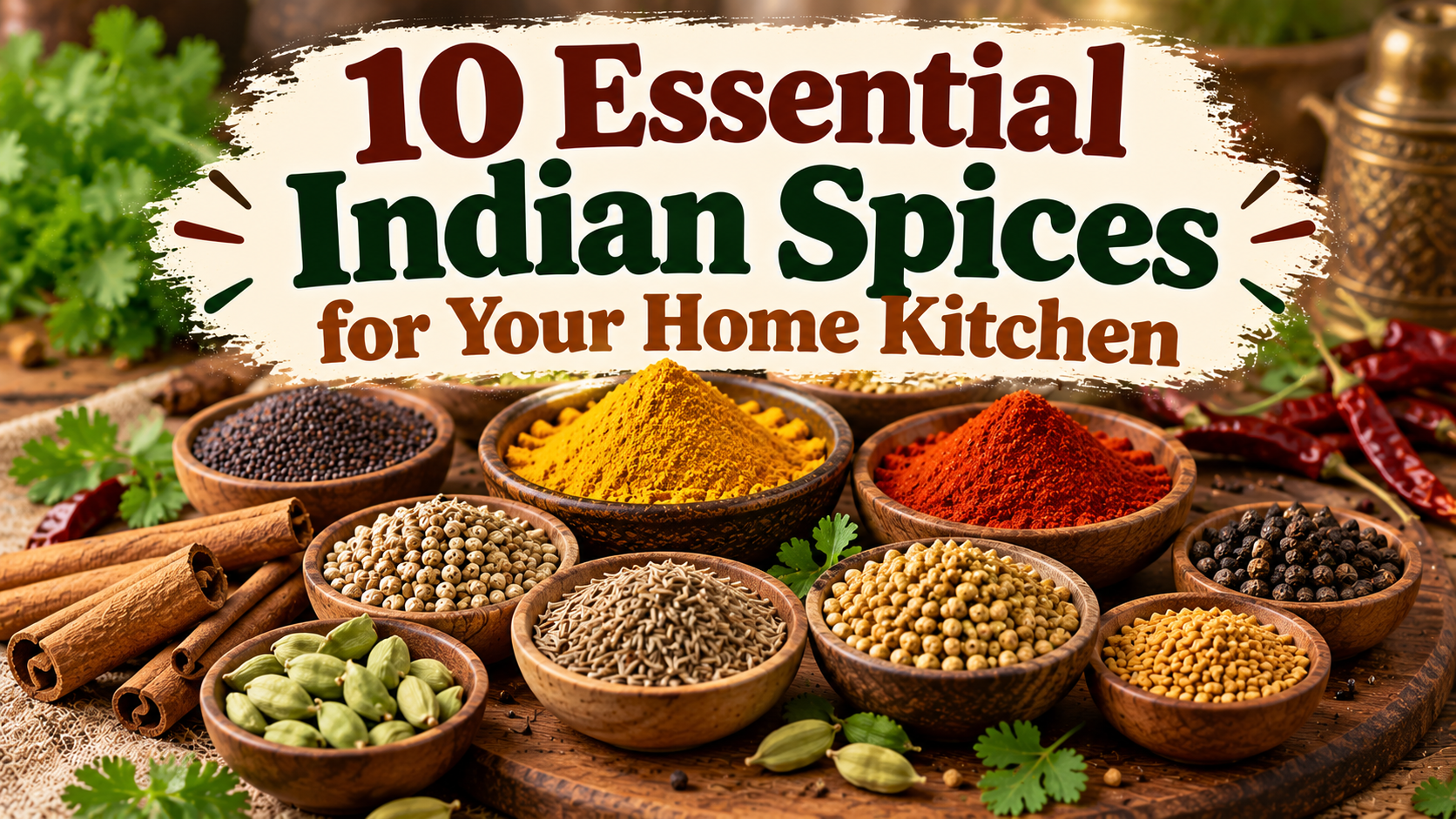
Have you ever wondered why a simple Indian dal, vegetable curry, or rice dish can have so much flavor? One of the biggest secrets is the combination of spices used during cooking.
Indian cuisine uses a wide variety of spices to build aroma, warmth, color, and depth. The good news is that you don't need dozens of spice jars to get started. With just a few essential Indian spices in your kitchen, you can prepare many familiar dishes, from everyday lentils and vegetable sabzi to flavorful curries and biryani.
Whether you're new to Indian cooking or restocking your pantry, knowing which spices to buy first can make grocery shopping easier and help you follow recipes with confidence.
In this guide, we'll cover 10 essential Indian spices for your home kitchen, including their Indian names, flavor profiles, cooking uses, and practical tips for using them.
The best Indian spice collection starts with versatile ingredients you can use in multiple recipes. You don't need every regional spice immediately; begin with the basics and expand your collection as you explore different dishes.
Here are the 10 spices and spice blends worth keeping in your kitchen:
| Spice | Indian Name | Main Flavor | Common Uses |
|---|---|---|---|
| Turmeric | Haldi | Earthy and slightly bitter | Dal, curries, rice, vegetables |
| Cumin | Jeera | Warm, earthy, and nutty | Tempering, curries, lentils |
| Coriander | Dhania | Citrusy, mild, and warm | Curries, gravies, marinades |
| Red chili powder | Lal mirch | Hot and pungent | Curries, sabzi, spice rubs |
| Mustard seeds | Rai or sarson | Pungent and nutty when cooked | Tempering, pickles, vegetables |
| Garam masala | Garam masala | Warm and aromatic | Curries, paneer, lentils |
| Black pepper | Kali mirch | Sharp and peppery | Soups, curries, vegetables |
| Cardamom | Elaichi | Sweet, floral, and aromatic | Biryani, chai, desserts |
| Cinnamon | Dalchini | Sweet and woody | Rice, curries, chai |
| Fenugreek | Methi | Earthy and slightly bitter | Curries, dals, spice blends |
These spices provide a flexible starting point for many Indian recipes. Their exact use varies by region and dish, so you won't necessarily need all ten in every meal.
Turmeric is a bright yellow spice made from the underground rhizome of the turmeric plant. It is widely used in Indian cooking for its golden color and earthy flavor.
In many kitchens, turmeric is one of the first spices added to a dish. A small amount can give dal, vegetable curries, and rice a distinctive golden appearance.
Turmeric has an earthy, slightly bitter, and mildly peppery flavor. It is not usually added to make a dish spicy; instead, it contributes color and a subtle background flavor.
Turmeric works well in:
Dal and lentil soups
Vegetable sabzi
Chickpea and bean curries
Rice dishes
Marinades for paneer and vegetables
Cooking tip: Start with a small amount, such as ¼ teaspoon in a modest home-cooked dish, and adjust according to the recipe. Too much turmeric can make food taste bitter.
You can buy turmeric as a ground powder or, less commonly for everyday pantry use, as a fresh rhizome.
Cumin is one of the most versatile spices in Indian cooking. It is available as whole seeds and ground powder, and both forms are useful for different purposes.
Whole cumin seeds are commonly added to hot oil or ghee at the beginning of cooking. This technique, often called tadka or tempering, releases their aroma and distributes their flavor throughout the dish.
Ground cumin is convenient for spice mixtures, marinades, and sauces.
Cumin has a warm, earthy, nutty flavor with slightly smoky notes. When toasted, its aroma becomes more pronounced.
Use cumin in:
Jeera rice
Dal and lentil dishes
Chana masala
Vegetable curries
Yogurt-based raita
Homemade spice blends
Cooking tip: Keep both whole cumin seeds and ground cumin if you regularly cook Indian food. Whole seeds are especially useful for tempering, while ground cumin is convenient for seasoning.
Coriander is another everyday essential. In Indian cooking, the term can refer to the dried seeds, ground coriander powder, or fresh coriander leaves, depending on the context.
Coriander seeds have a warm, slightly sweet, citrusy flavor. Ground coriander is widely used in Indian curries and vegetable dishes because it adds depth without the intense heat of chili powder.
Fresh coriander leaves, known as cilantro in the United States, are commonly used as a garnish or blended into chutneys.
Ground coriander is useful for:
Vegetable curries and sabzi
Chana masala
Paneer gravies
Lentil dishes
Marinades and dry spice rubs
Whole coriander seeds can be toasted and ground for homemade masalas.
Cooking tip: Keep ground coriander in an airtight container. If you use it frequently, buying whole seeds and grinding small quantities can help preserve their aroma.
Red chili powder adds heat and color to Indian dishes. However, not every variety has the same level of spiciness.
Some chili powders are relatively mild and valued for their vibrant red color, while others are much hotter. The variety and grind can make a significant difference to the finished dish.
Red chili powder is commonly used in:
Vegetable curries
Dal and bean dishes
Chana masala
Marinades
Dry vegetable preparations
Homemade spice blends
Cooking tip: If you're unfamiliar with a particular chili powder, start with less than the recipe calls for and taste as you cook. You can usually add more heat, but reducing it after adding too much is difficult.
For a milder dish with a rich red color, look for a variety specifically sold for its color and comparatively mild heat. Always check the product description because spice levels vary.
Mustard seeds are small but flavorful. They are particularly common in tempering, pickling, and regional Indian recipes.
Different varieties of mustard seeds have different characteristics. Black and brown mustard seeds are often used for their pungent flavor, while yellow mustard seeds tend to be milder.
When mustard seeds are added to sufficiently hot oil, they begin to pop and release their aroma.
Mustard seeds are useful for:
South Indian tempering
Vegetable sabzi
Lentil dishes
Indian pickles
Certain chutneys
Regional curries
Cooking tip: Use a lid or splatter guard if necessary when tempering mustard seeds, because they can pop out of the pan. Avoid overheating them until they burn, as this can make the dish bitter.
If you enjoy making Indian food regularly, whole mustard seeds are a practical pantry staple.
Garam masala is different from the other entries on this list because it is a spice blend rather than a single spice.
Its ingredients vary by household, region, and manufacturer. Common ingredients include cumin, coriander, cardamom, cinnamon, cloves, and black pepper.
Garam masala provides a warm, aromatic finish to many Indian dishes. It can be especially useful when you want to add complexity without measuring several individual spices.
Try it in:
Vegetable curries
Paneer dishes
Chana masala
Dal preparations
Rice dishes
Homemade masala gravies
Cooking tip: Many recipes add garam masala toward the end of cooking to preserve its aroma, although the ideal timing depends on the blend and recipe.
Start with a small quantity, taste, and add more if needed. Different blends can vary significantly in strength and flavor.
Black pepper is one of the world's most widely used spices and has an important place in Indian cooking.
It adds a sharp, warm, peppery taste that can complement both simple dishes and complex spice mixtures. Whole peppercorns and ground black pepper are both useful pantry options.
Black pepper works well in:
Vegetable soups
Rasam and other pepper-forward dishes
Curries
Potato preparations
Rice dishes
Homemade spice blends
Cooking tip: Freshly ground black pepper generally has a more pronounced aroma than pepper that has been ground and stored for a long time.
Keep whole peppercorns in an airtight container and grind them when needed for the freshest flavor.
Cardamom is a fragrant spice used in both savory and sweet Indian recipes.
Green cardamom has a distinctive floral, sweet, and aromatic flavor. Black cardamom is different: it is larger and has a deeper, smokier character.
For a beginner's pantry, green cardamom is a useful starting point, particularly if you enjoy Indian tea and desserts.
Green cardamom is commonly used in:
Masala chai
Biryani
Pulao
Kheer
Indian sweets
Aromatic curries
Cooking tip: Lightly crush a green cardamom pod to release its aroma. Depending on the recipe, you can add the whole pod during cooking and remove it before serving.
Ground cardamom is convenient for baking and desserts, but whole pods tend to retain their aroma longer during storage.
Cinnamon adds a sweet, woody aroma to food. In Indian cooking, it is often used as a whole spice in rice dishes, biryani, pulao, and selected curries.
It is also popular in chai and desserts.
Cinnamon can contribute warmth without making a dish spicy in the same way that chili powder does.
Keep cinnamon available for:
Biryani and pulao
Masala chai
Vegetable and legume curries
Rice puddings
Indian desserts
Homemade spice blends
Cooking tip: A small piece of cinnamon can add plenty of flavor. Remove whole cinnamon sticks before serving if their texture would be unpleasant to eat.
Cinnamon is sold as sticks and ground powder. Choose the form that best suits your cooking habits.
Fenugreek is an important ingredient in many Indian kitchens. It is available in several forms, including seeds, dried leaves, and fresh leaves.
These forms have different flavors and uses, so it is helpful to understand the label before purchasing.
Fenugreek seeds have a strong, earthy, slightly bitter flavor. Dried fenugreek leaves, often sold as kasuri methi, are valued for their distinctive aroma and are commonly added to curries.
Fenugreek is useful for:
Vegetable curries
Dal preparations
Selected spice blends
Indian gravies
Paneer dishes
Pickles and regional recipes
Cooking tip: Crush a small amount of dried fenugreek leaves between your palms before adding them to a dish. This helps release their aroma.
Use fenugreek sparingly at first because its bitterness can become noticeable when too much is added.
When stocking an Indian kitchen, you may find the same spice sold whole, ground, or in a prepared blend. The best choice depends on how you cook.
| Feature | Whole Spices | Ground Spices |
|---|---|---|
| Examples | Cumin seeds, mustard seeds, cardamom pods | Turmeric, chili, coriander, cumin powder |
| Best for | Tempering, infusing, toasting | Seasoning sauces, marinades, and spice mixes |
| Convenience | May need crushing or grinding | Ready to use |
| Aroma over storage | Often retain aroma longer when stored well | Usually lose aroma more quickly after grinding |
| Preparation | May require toasting or grinding | Easy to measure and mix |
If you're just starting, ground turmeric, ground coriander, red chili powder, and garam masala are convenient choices.
Whole cumin and mustard seeds are particularly useful for tempering. Whole cardamom and cinnamon are practical if you frequently make biryani, pulao, chai, or desserts.
You don't have to buy every spice in both forms immediately. Start with the form used most often in your favorite recipes.
Learning how to use spices is just as important as choosing which ones to buy.
For an everyday vegetable curry, you might use cumin, turmeric, coriander powder, and a little red chili powder. Each ingredient has a distinct purpose, and the quantities can be adjusted to your taste.
You don't need to add all ten spices to every dish.
Whole cumin and mustard seeds are often added to hot oil at the beginning of cooking. This process releases their aromas into the cooking fat.
However, spices can burn quickly. Use appropriate heat and add the next ingredients at the right time.
Ground spices can burn if exposed to very hot oil for too long. Many recipes add them after the onions have softened or combine them with a little liquid to help prevent scorching.
Follow the cooking sequence in your recipe rather than adding every spice at once.
Different brands and varieties can have different levels of heat and aroma. Start with the recommended quantity, taste the dish, and adjust gradually.
Garam masala can add a final layer of aroma, but it doesn't automatically replace every individual spice in a recipe. Use it according to the dish rather than treating it as an all-purpose replacement for all seasonings.
Proper storage helps maintain the flavor and aroma of your spice collection.
Follow these simple practices:
Use airtight containers: Keep spices protected from air and moisture.
Store away from heat: Avoid keeping spice jars directly above a stove or next to other hot appliances.
Keep them away from sunlight: A cool, dark cupboard is generally a good choice.
Use dry spoons: Moisture can cause powders to clump and affect their quality.
Buy quantities you can use: Smaller purchases can be practical if you cook Indian food only occasionally.
Check aroma and appearance: Spices gradually lose flavor over time. Replace them when their aroma becomes weak or their quality deteriorates.
Whole spices often retain their aroma longer than ground spices when stored properly, but both forms benefit from cool, dry storage.
Ready to stock your kitchen for your favorite Indian recipes? Explore Vraj Fresh for Indian grocery essentials and pantry staples in the USA.
Building an Indian spice collection doesn't have to be complicated. Start with a few versatile essentials, learn what each one contributes, and gradually expand your pantry as you try new recipes.
Turmeric adds color and earthiness, cumin brings warmth, coriander adds a mild citrusy note, and red chili powder provides heat. Whole spices such as mustard seeds, cardamom, and cinnamon contribute aroma, while garam masala helps bring several flavors together.
With these 10 essential Indian spices in your home kitchen, you'll have a practical foundation for preparing dal, vegetable curries, rice dishes, paneer recipes, and many other Indian favorites.
Ten useful options are turmeric, cumin, coriander, red chili powder, mustard seeds, garam masala, black pepper, cardamom, cinnamon, and fenugreek. Together, they provide a versatile starting point for many Indian recipes.
Start with turmeric, cumin, coriander powder, red chili powder, and garam masala. Add mustard seeds, black pepper, cardamom, cinnamon, and fenugreek as you explore more dishes.
There is no single spice used most often in every Indian kitchen. Turmeric, cumin, coriander, and chili are widely used in many everyday recipes, but usage varies by region and dish.
Cumin has a warm, earthy, and slightly smoky flavor, while coriander has a milder, citrusy, and slightly sweet flavor. Both are commonly used in Indian curries and spice blends.
No. Garam masala is a spice blend. Its ingredients and proportions vary, but many blends include spices such as cumin, coriander, cardamom, cinnamon, cloves, and black pepper.
Both are useful. Whole cumin and mustard seeds work well for tempering, while ground turmeric, coriander, and chili powder are convenient for everyday seasoning. Choose according to the recipes you prepare most often.
Spices gradually lose their aroma and flavor during storage. Whole spices generally retain their quality longer than ground spices, but shelf life depends on the spice, packaging, and storage conditions. Follow package guidance and check for changes in aroma, appearance, or quality.
Most dry spices do not need refrigeration. A cool, dry cupboard away from sunlight and heat is generally suitable. Refrigeration can introduce condensation when containers are opened, so avoid exposing spices to moisture.
No. Many spices contribute aroma, earthiness, sweetness, or color rather than heat. Turmeric, coriander, cumin, cinnamon, and cardamom have different flavor roles. Red chili powder is the main source of heat in many recipes, although its intensity varies.
Begin with five versatile staples: turmeric, cumin, coriander powder, red chili powder, and garam masala. Add whole cumin and mustard seeds if you enjoy tempering, then expand into cardamom, cinnamon, black pepper, and fenugreek based on the dishes you want to prepare.


