


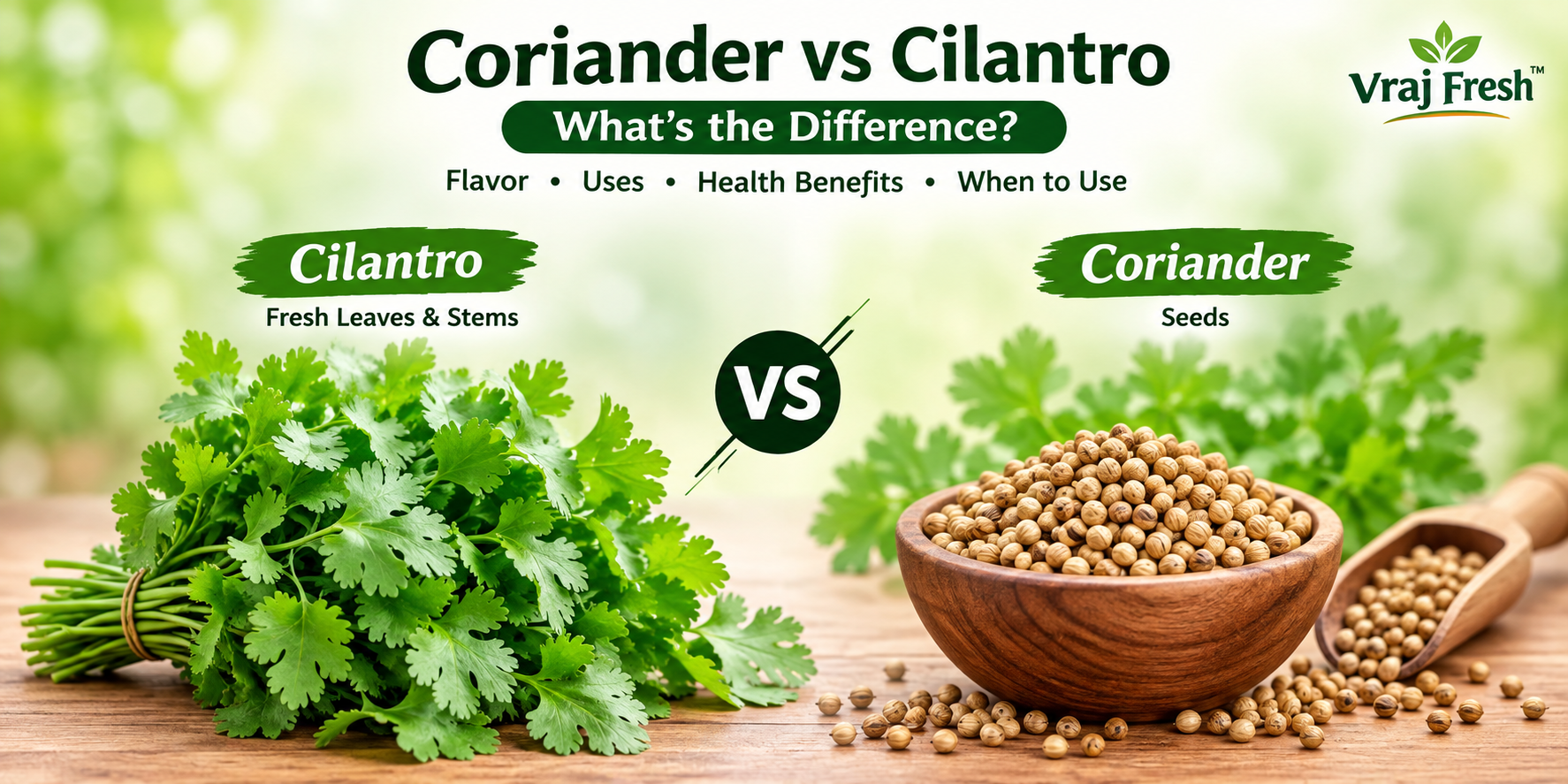
If you've ever followed an international recipe, you've probably come across both coriander and cilantro and wondered whether they're the same ingredient. The answer is both yes and no. While coriander and cilantro come from the same plant (Coriandrum sativum), the names refer to different parts of the plant depending on the country and recipe.
Understanding the difference between coriander and cilantro can help you choose the right ingredient, enhance the flavor of your dishes, and avoid common cooking mistakes. In this guide, we'll compare coriander vs cilantro, including their appearance, flavor, culinary uses, nutrition, and when to use each.
Cilantro refers to the fresh green leaves and tender stems of the coriander plant. It has a bright, citrusy, and slightly peppery flavor that adds freshness to many dishes. Cilantro is commonly used as a garnish or mixed into recipes just before serving to preserve its delicate taste.
Besides its distinctive flavor, cilantro is a staple herb in Mexican, Indian, Thai, Vietnamese, and Middle Eastern cuisines. It pairs beautifully with spicy foods because its fresh taste balances heat and richness.
Interestingly, some people perceive cilantro as tasting like soap due to a genetic variation that affects how certain natural compounds are detected. Despite this, it remains one of the world's most widely used culinary herbs.
The term coriander usually refers to the dried seeds of the same plant. These seeds are harvested once the plant flowers and matures, then dried before being used whole or ground into coriander powder.
Unlike cilantro, coriander has a warm, nutty, citrus-like flavor with subtle sweetness. Toasting the seeds before grinding enhances their aroma and releases natural oils that make them even more flavorful.
Coriander is a key ingredient in Indian, Middle Eastern, Mediterranean, North African, and many Asian spice blends. It adds depth without overpowering other spices.
| Feature | Cilantro | Coriander |
|---|---|---|
| Plant Part | Leaves and stems | Seeds |
| Flavor | Fresh, citrusy, peppery | Warm, nutty, citrusy |
| Color | Bright green | Light brown |
| Texture | Soft leaves | Hard seeds |
| Used Fresh or Dried | Mostly fresh | Mostly dried or ground |
| Best For | Garnishing | Cooking and seasoning |
| Common Cuisine | Mexican, Thai, Indian | Indian, Middle Eastern, Mediterranean |
Although both come from the same plant, cilantro refers to the fresh leaves and stems, while coriander refers to the dried seeds. Because different parts of the plant are harvested, they contribute completely different textures, aromas, and flavors to recipes.
Fresh cilantro is delicate and best enjoyed uncooked or added just before serving, whereas coriander seeds are designed to withstand long cooking times and develop deeper flavors as they cook.
Many traditional recipes use both ingredients together, allowing the fresh herb and aromatic spice to complement one another.
Cilantro has a fresh, vibrant flavor with citrus and peppery notes that brighten dishes instantly. It adds freshness without making recipes overly spicy or rich, making it an excellent finishing herb.
Coriander seeds offer a warm, earthy flavor with hints of citrus, nuts, and subtle sweetness. Their mellow taste blends well with cumin, turmeric, fennel, cinnamon, cloves, and other spices found in curry powders and masalas.
Because their flavor profiles are so different, they are rarely interchangeable.
Cilantro has soft, bright green leaves with thin stems that resemble flat-leaf parsley. Its fresh aroma is instantly recognizable and fades quickly after harvesting, which is why it's best used fresh.
Coriander seeds are small, round, and light brown with a firm outer shell. They can be used whole, crushed, or ground into powder depending on the recipe.
Their long shelf life makes coriander one of the most commonly stocked spices in kitchens around the world.
Cilantro is typically sprinkled over finished dishes to preserve its fresh aroma and vibrant color. Adding it too early during cooking causes much of its flavor to disappear.
Coriander seeds are usually toasted or sautéed with oil at the beginning of cooking. This process releases aromatic oils that create the flavorful foundation for curries, soups, stews, and marinades.
Using each ingredient at the right stage of cooking helps maximize its flavor.
Fresh cilantro is highly perishable and generally lasts about one week when refrigerated properly. Storing the stems in a glass of water and loosely covering the leaves helps keep them fresh for longer.
Whole coriander seeds, however, can remain flavorful for up to two years when stored in an airtight container away from sunlight, moisture, and heat.
Ground coriander has a shorter shelf life and is best used within six to twelve months for maximum flavor.
Fresh cilantro provides vitamins A, C, and K while adding virtually no calories to meals. It also contains antioxidants and beneficial plant compounds that contribute to overall wellness.
Coriander seeds are rich in dietary fiber, iron, magnesium, manganese, and natural antioxidants. Because they are used as a spice rather than a vegetable, they're consumed in smaller amounts but still contribute nutritional value.
Both ingredients can be part of a healthy, balanced diet.
Although coriander and cilantro come from the same plant, they are not direct substitutes because their flavors and culinary roles are completely different.
Replacing fresh cilantro with coriander powder will result in a warm, earthy flavor instead of the bright freshness most recipes require. Likewise, using fresh cilantro in place of coriander seeds won't provide the depth needed in curries, spice blends, or marinades.
If you're out of cilantro, flat-leaf parsley can provide a similar fresh appearance, although the flavor is milder. If you're out of coriander powder, cumin can be used in some savory dishes, but the taste will be noticeably different.
Both ingredients work best when used for their intended purpose, helping each recipe achieve its authentic flavor.
Cilantro is an excellent source of vitamins A, C, and K, which play important roles in maintaining healthy vision, supporting the immune system, and promoting strong bones. Adding fresh cilantro to your meals is an easy way to boost your daily nutrient intake while enhancing flavor naturally.
Cilantro contains natural antioxidants that help protect the body's cells from damage caused by free radicals. These beneficial plant compounds support overall health and may contribute to healthy aging when consumed as part of a balanced diet.
Cilantro has been traditionally used in many cultures to aid digestion and promote gut health. It may help reduce bloating and discomfort after meals while adding a refreshing taste to a variety of dishes.
Fresh cilantro is naturally low in calories, making it an excellent herb for anyone looking to maintain a healthy diet. It provides plenty of flavor without adding excess fat, sugar, or sodium to your meals.
Instead of relying on heavy sauces or extra salt, cilantro adds a fresh, citrusy flavor that brightens everything from salads and tacos to curries and soups. It's a simple way to make meals more vibrant while keeping them nutritious.
Coriander seeds are packed with antioxidants that help protect the body against oxidative stress. These natural compounds contribute to overall wellness and make coriander a valuable addition to a balanced diet.
Coriander seeds contain dietary fiber, which supports healthy digestion and helps maintain regular bowel movements. Fiber also promotes a feeling of fullness, making it a beneficial ingredient in everyday cooking.
Coriander provides important minerals such as iron, magnesium, calcium, and manganese. These nutrients support normal body functions, including bone health, energy production, and muscle function.
For generations, coriander has been used in traditional cuisines to support healthy digestion. It's commonly added to spice blends because its natural compounds complement hearty meals and may help reduce digestive discomfort.
Ground or whole coriander seeds provide warm, aromatic flavor without adding significant calories. They allow you to create rich, flavorful dishes while reducing the need for excess salt or high-calorie seasonings.
Fresh cilantro is one of the key ingredients in homemade salsa, adding brightness and balancing the acidity of tomatoes and lime juice.
A handful of chopped cilantro enhances the creamy texture of guacamole with fresh herbal notes that pair perfectly with avocados.
Cilantro and fresh lime juice transform plain rice into a flavorful side dish that's perfect for burrito bowls, tacos, and grilled vegetables.
Fresh cilantro is commonly sprinkled over Thai curries just before serving, adding freshness that balances the rich coconut-based sauce.
Cilantro forms the base of many Indian green chutneys, blending beautifully with mint, green chilies, lemon juice, and spices.
Whether filled with vegetables, chicken, or seafood, tacos benefit from the fresh, citrusy flavor of chopped cilantro.
Vietnamese pho is traditionally served with fresh cilantro, adding aroma and freshness to the rich broth.
Cilantro complements rice, beans, grilled vegetables, and proteins, making it a popular topping for healthy burrito bowls.
Ground coriander is one of the essential spices in garam masala, contributing warm citrus notes that balance stronger spices.
Most curry powder blends contain coriander because it provides depth and ties together ingredients like turmeric, cumin, and fenugreek.
Coriander powder enhances the creamy tomato sauce of butter chicken by adding mild citrusy warmth without overpowering other spices.
Lentil dishes often use coriander seeds or powder to create a rich and aromatic flavor profile.
Sprinkling coriander over vegetables before roasting adds warmth and subtle sweetness that complements carrots, potatoes, cauliflower, and squash.
Whole coriander seeds are commonly added to homemade pickles, contributing flavor while infusing the brine.
Coriander is an important spice in biryani masala, adding aromatic depth to the layers of rice and vegetables or meat.
Ground coriander works exceptionally well in dry rubs for grilled vegetables, chicken, lamb, and seafood.
Store fresh cilantro in the refrigerator immediately after purchasing it. Place the stems in a jar with a small amount of water and loosely cover the leaves with a plastic bag. This method helps keep cilantro fresh for up to one week.
Before using, rinse the leaves thoroughly under cold water and pat them dry with a paper towel.
Store coriander seeds in an airtight container in a cool, dry place away from direct sunlight. Whole seeds retain their flavor much longer than ground coriander and can stay fresh for up to two years.
For the best aroma, grind coriander seeds only when needed using a spice grinder or mortar and pestle.
Choose cilantro if you want:
Choose coriander if you want:
Explore Vraj Fresh for fresh cilantro, coriander seeds, premium spices, and everyday pantry essentials to bring authentic flavors to your kitchen.
???? Shop Fresh Herbs, Premium Spices & Grocery Essentials at Vraj Fresh Today
Although cilantro and coriander come from the same plant, they offer completely different flavors, textures, and culinary uses. Cilantro delivers a fresh, citrusy finish that's perfect for garnishing and brightening dishes, while coriander seeds provide a warm, earthy spice that forms the foundation of countless recipes around the world.
Knowing when to use each ingredient will help you follow recipes more accurately and create meals with balanced, authentic flavors. Whether you're preparing Mexican salsa, Indian curries, Mediterranean marinades, or Asian stir-fries, understanding the difference between coriander vs cilantro will make you a more confident home cook.
They come from the same plant, but cilantro refers to the fresh leaves and stems, while coriander usually refers to the dried seeds.
In the United States and Canada, the leaves are called cilantro and the seeds are called coriander. In many other countries, the entire plant is commonly referred to as coriander.
No. Fresh cilantro and coriander seeds have completely different flavors and are not suitable substitutes for one another in most recipes.
Both are nutritious. Cilantro is rich in vitamins A, C, and K, while coriander seeds provide dietary fiber, minerals, and antioxidants.
Some people carry a genetic variation that makes them more sensitive to natural compounds found in cilantro, causing it to taste soapy.
Yes. The same coriander plant produces fresh cilantro leaves during its early growth and coriander seeds after it flowers and matures.


