
Vraj Fresh App
Faster ordering & live tracking

Get the Vraj Fresh app for
Live tracking • Exclusive offers

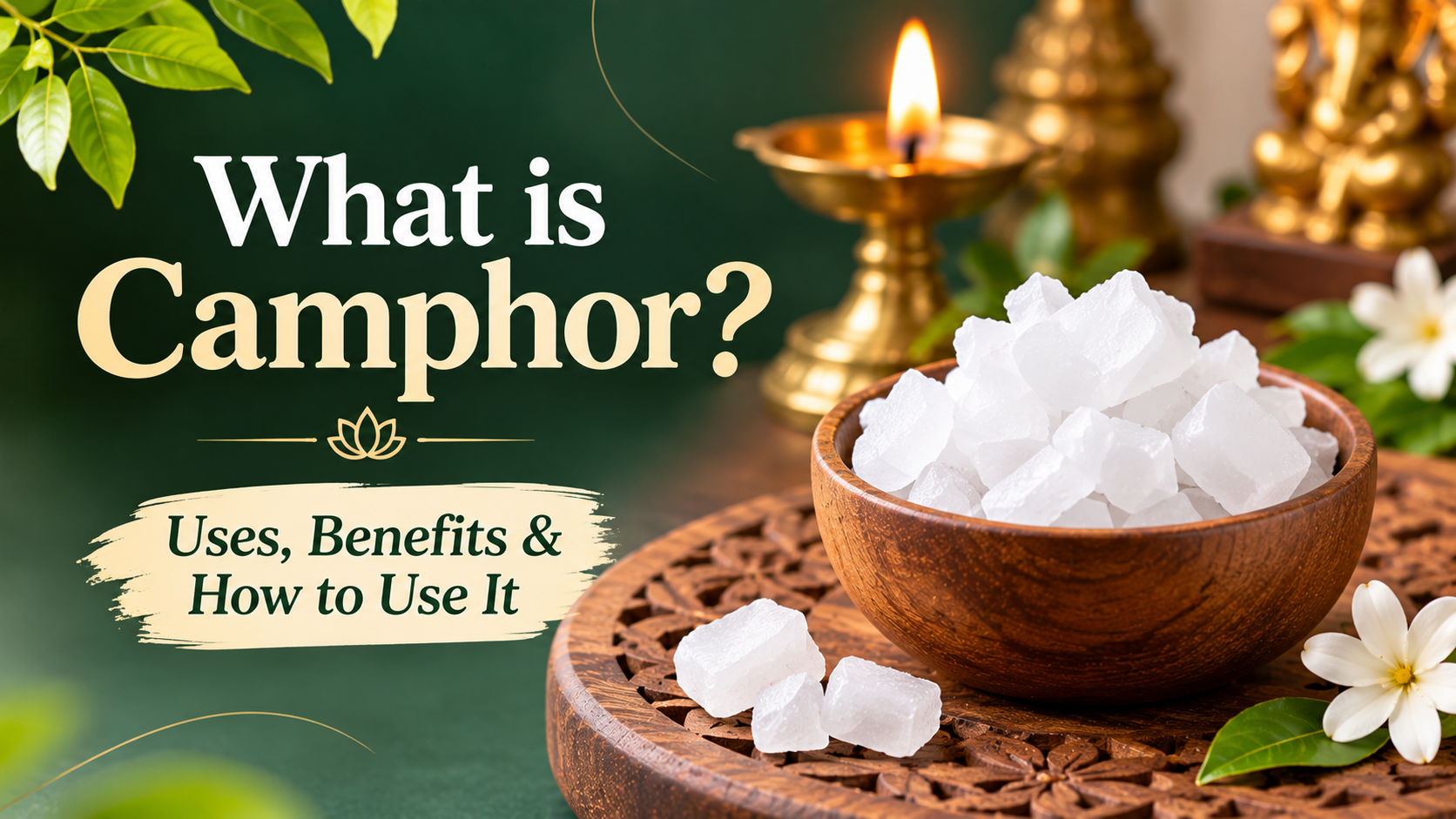
If you have ever attended an aarti, you know the scent of camphor. The small white tablet catches fire in an instant, burns with a bright, steady flame, and fills the room with a cool, sharp fragrance. In Indian homes, camphor (known as kapur or karpur) is an everyday puja essential, and it also shows up in balms, chest rubs, and even a few traditional sweets.
But what exactly is camphor, where does it come from, and is it safe? In this guide, we explain what camphor is, the different types of camphor, why it is used in puja, how to use camphor for aarti, the difference between edible and regular camphor, and important safety tips for using camphor at home.
Camphor is a white, waxy, crystalline substance with a strong, cooling aroma. It is highly flammable and slowly turns from a solid directly into a vapor at room temperature, which is why a camphor tablet left in the open gradually shrinks and disappears.
Camphor was traditionally obtained from the wood of the camphor tree (Cinnamomum camphora), an evergreen tree native to East Asia. Today, most commercial camphor, including the tablets used for puja, is synthetic camphor made from turpentine oil. Natural and synthetic camphor have the same characteristic smell and burn in the same way.
Not all camphor is the same. The type you choose depends on how you plan to use it.
| Type | What it is | Main use | Can it be eaten? |
|---|---|---|---|
| Camphor tablets and blocks (kapur) | Usually synthetic camphor pressed into tablets, blocks, or fine granules | Aarti, puja, havan, and home fragrance | No |
| Bhimseni camphor | A natural camphor-like substance (borneol), traditionally from the Borneo camphor tree | Puja and temple rituals; valued for its pure fragrance | No, unless clearly labeled food-grade |
| Edible camphor (pachai karpooram) | Food-grade camphor sold specifically for cooking | A tiny pinch in sweets like sakkarai pongal and temple prasadam | Only in very small amounts |
| Camphor oil | Essential oil distilled from camphor tree wood | Diluted topical use and aromatherapy | No, never swallow |
| Camphor in creams and rubs | Camphor blended with other ingredients in over-the-counter products | Topical use as directed on the label | No |
Camphor tablets are the most common form in Indian homes. Choose from Char Minar camphor tablets for daily aarti, Char Minar super fine camphor for quick lighting, or Maa Shakti smokeless camphor for a cleaner burn indoors.
Edible camphor, called pachai karpooram in Tamil, is a food-grade variety used in tiny amounts to flavor South Indian sweets and temple prasadam. Look for packaging clearly labeled edible, such as Swad edible camphor, Raghav edible camphor, or Pooja Hut edible camphor.
Camphor holds a special place in Hindu worship for several reasons:
Setting up your home altar? See our pooja items checklist, and learn more about lamps in our guide to diyas for Diwali.
Tip: Camphor produces some smoke and soot. Open a window or use smokeless camphor in small rooms.
| Feature | Edible camphor (pachai karpooram) | Regular camphor (puja kapur) |
|---|---|---|
| Purpose | Cooking, in tiny amounts | Burning for aarti, havan, and fragrance |
| Labeling | Clearly labeled edible or food-grade | Labeled for puja or external use |
| Typical form | Small crystals or granules | Tablets, blocks, or fine powder |
| Safe to eat? | Only a tiny pinch | Never |
Important: Never use puja camphor tablets in food. If you are not sure whether a product is edible, do not cook with it.
Camphor is safe for everyday puja when used carefully, but it can be harmful if swallowed or misused. Keep these safety points in mind:
If someone swallows camphor, call Poison Control at 1-800-222-1222 right away, or call 911 if they are having trouble breathing or a seizure.
No. Camphor is one of the active ingredients in Vicks VapoRub, but the product also contains menthol and eucalyptus oil. Pure camphor tablets used for puja are not a substitute for these rubs and should not be applied to the skin.
No. Most mothballs sold in the US are made from naphthalene or paradichlorobenzene, which are different chemicals. Camphor is sometimes used as a traditional, natural alternative for repelling moths, but camphor and mothballs are not the same product.
Browse our full range of camphor, agarbatti, dhoop, and diyas in the pooja items collection.
Find camphor tablets, smokeless camphor, edible camphor, agarbatti, dhoop, and aarti thalis at Vraj Fresh, delivered to 100+ zip codes across New Jersey and New York.
Camphor is a small tablet with a big role in Indian homes. It lights the aarti, freshens the air, and adds a unique fragrance to traditional sweets when used in its edible form. Knowing the difference between puja camphor, Bhimseni camphor, and edible camphor helps you use each one correctly.
Most importantly, treat camphor with care. Burn it safely, store it out of reach of children, and never use regular camphor in food. With the right camphor and a few simple precautions, your daily puja and festive rituals can be both beautiful and safe.
Camphor is mainly used in puja and aarti, as a home fragrance, as a traditional moth repellent, to start havan fires, and as an ingredient in some topical creams and rubs. Food-grade edible camphor is used in tiny amounts in some sweets.
When applied to the skin in approved products, camphor creates a cooling sensation and is used for temporary relief of minor aches and itching. When swallowed, camphor can be toxic and may cause serious symptoms such as seizures.
Camphor is generally safe when burned carefully for puja or used on the skin as directed. It is not safe to swallow regular camphor or camphor oil, and it should be kept away from children.
No. Camphor is one ingredient in Vicks VapoRub, which also contains menthol and eucalyptus oil.
No. Most mothballs are made from naphthalene or paradichlorobenzene. Camphor is a different substance that is sometimes used as a natural moth repellent.
Edible camphor, or pachai karpooram, is food-grade camphor used in very small amounts to flavor South Indian sweets and temple prasadam. It is different from the camphor tablets used for aarti.
Bhimseni camphor is a natural camphor-like substance traditionally obtained from the Borneo camphor tree. It is prized in puja for its pure fragrance.
Camphor burns completely without leaving residue, which symbolizes the dissolving of ego. Its bright flame represents knowledge and light, and its fragrance is believed to purify the space.


