
Vraj Fresh App
Faster ordering & live tracking

Get the Vraj Fresh app for
Live tracking • Exclusive offers

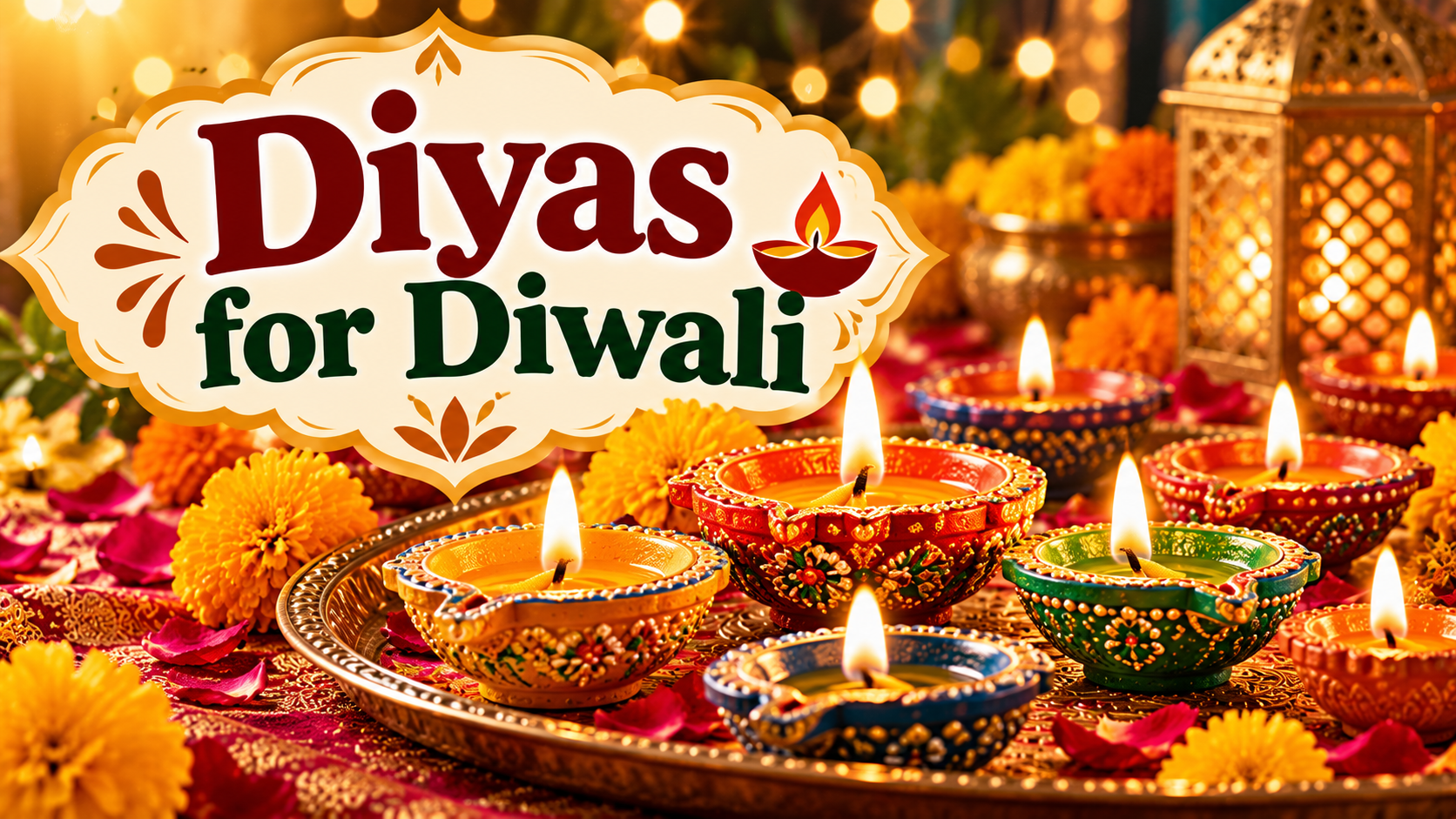
No Diwali is complete without the warm glow of diyas. Rows of small flickering lamps along doorways, windowsills, and balconies are the most recognizable sight of the Festival of Lights, and lighting them is one of the oldest Diwali traditions. Whether you are setting up your first Diwali in the United States or looking for new ways to decorate, choosing the right diyas makes a big difference.
In 2026, Diwali is celebrated from Friday, November 6 (Dhanteras) to Tuesday, November 10 (Bhai Dooj), with the main Lakshmi Puja on Sunday, November 8.
In this guide, we explain what diyas are and why they are lit, the different types of diyas for Diwali, which oil or ghee to use, how many diyas to light on each day, and easy diya decoration ideas. We also share safety tips for lighting diyas in American homes and apartments.
A diya (also spelled deeya, and called deepam or deepak) is a small oil lamp traditionally made of clay. It has a shallow, cup-like body that holds oil or ghee and a pinched edge that holds a cotton wick. When lit, the wick draws up the fuel and burns with a steady, golden flame.
Diyas are used year-round in Hindu, Jain, and Sikh homes for daily prayers, but they are most closely associated with Diwali. The name Deepavali itself means "row of lamps," which comes from the Sanskrit words deepa (lamp) and avali (row).
Lighting diyas on Diwali symbolizes the victory of light over darkness and good over evil. The tradition carries several meanings across communities:
Diyas come in many materials, shapes, and styles. Here are the most popular types and how to use each one.
Plain clay diyas are the most traditional choice for Diwali. Made from natural terracotta, they are affordable, eco-friendly, and easy to light in large numbers. Simple red clay diyas are perfect for lining entrances, steps, and balconies.
Best for: Traditional puja, entrance decoration, and lighting many diyas at once.
Fuel: Ghee, sesame oil, or mustard oil with a cotton wick.
Decorated diyas are clay lamps painted in bright colors and finished with mirrors, kundan stones, or gold outlines. They add a festive pop of color to your home even before they are lit. Choose from colored diyas, designed diyas, or red sand design diyas.
Best for: Puja altars, tablescapes, rangoli centers, and gifting.
Brass diyas are durable, reusable lamps with a warm golden shine. Many families keep a brass diya for daily puja and use it as the main lamp on Lakshmi Puja night.
Best for: Home temples and the main puja lamp.
Fuel: Ghee is the most common choice.
Silver diyas are often bought on Dhanteras, when purchasing metal items is considered auspicious. They are usually kept for puja and passed down as family heirlooms.
Best for: Lakshmi Puja and Dhanteras purchases.
A panchmukhi diya has five spouts for five wicks. It is commonly used during aarti and special pujas, and the five flames are often associated with the five elements.
Best for: Aarti and the main Diwali puja.
An akhand diya is a covered lamp designed to burn continuously. Its glass or metal chimney protects the flame from drafts. Some families keep an akhand diya burning through Diwali night.
Best for: Long-burning lamps on puja night. Never leave any flame unattended.
Hanging diyas are suspended from chains or brackets and look beautiful in doorways and on porches. Metal hanging lamps with bells are especially popular in South Indian homes.
Best for: Entrances, porches, and temple corners.
Floating diyas are placed in a wide bowl or urli filled with water, often with flower petals. The reflections of the flames on the water create a stunning centerpiece.
Best for: Living room and dining table centerpieces.
Wax-filled diyas come pre-filled with wax and a wick, so there is no oil to pour or spill. Unscented tealight candles can also be placed inside decorative diyas or glass holders for an easy, mess-free glow.
Best for: Busy households, outdoor steps, and quick decorating.
LED diyas use batteries or electricity to imitate a flickering flame. They are a safe option for apartments, dorms, homes with young children or pets, and buildings that do not allow open flames.
Best for: Renters, kids' rooms, and decorating near curtains or fabric.
A diya thali is a decorative plate that holds a diya along with kumkum, rice, flowers, and sweets for puja and aarti. A small diya thali is ideal for Bhai Dooj tilak and daily prayers.
Best for: Lakshmi Puja, aarti, and Bhai Dooj.
The kuthu vilakku is a tall brass or bronze lamp with multiple wicks, traditionally lit in South Indian homes for Deepavali and other auspicious occasions.
Best for: South Indian Deepavali celebrations and home temples.
| Type of diya | Material | Fuel | Reusable | Best use |
|---|---|---|---|---|
| Clay diya | Terracotta | Ghee or oil | Yes, with cleaning | Puja and entrance decor |
| Decorated diya | Painted clay | Ghee, oil, or tealight | Yes | Altar and table decor |
| Brass diya | Brass | Ghee | Yes, for years | Main puja lamp |
| Panchmukhi diya | Brass or clay | Ghee | Yes | Aarti |
| Akhand diya | Metal or glass | Ghee or oil | Yes | Long-burning lamp |
| Floating diya | Wax or clay | Wax or oil | Sometimes | Centerpieces |
| Wax diya / tealight | Wax | Wax | No | Quick, mess-free decor |
| LED diya | Plastic | Battery | Yes | Apartments and kids' rooms |
Both ghee and oil diyas are traditional, and the right choice often depends on the ritual and your family's custom.
| Fuel | Traditionally used for | Notes |
|---|---|---|
| Ghee | Main puja lamp, Lakshmi Puja, aarti | Considered the most auspicious; burns with a bright, clean flame. Ready ghee batti saves time. |
| Sesame (til) oil | Decorative diyas, South Indian Deepavali | Widely used for rows of diyas; burns steadily. |
| Mustard oil | Outdoor and entrance diyas, Choti Diwali | Common in North Indian homes; affordable for many diyas. |
| Lamp oil (deepam oil) | Everyday and decorative lamps | A blend made specifically for lamps; convenient for large batches. |
Many families use a ghee diya at the altar and oil diyas for the rest of the house. For more on ghee, read our guide to ghee vs butter.
There is no single rule, and customs vary by region and family. Many households light an odd number of diyas, such as 5, 7, 11, 21, or 51, while others simply light as many as needed to brighten every corner of the home. Here is a common guide for each day of Diwali 2026:
| Day | Date (2026) | Common diya tradition |
|---|---|---|
| Dhanteras | Friday, Nov 6 | Many families light one Yama Deepam outside the home, facing south, in the evening. Some also light 13 diyas. |
| Choti Diwali (Naraka Chaturdashi) | Saturday, Nov 7 | In many North Indian homes, 14 diyas are lit around the house. |
| Diwali / Lakshmi Puja | Sunday, Nov 8 | One main ghee diya at the altar, plus diyas at the entrance, windows, kitchen, water source, and near the tulsi plant. |
| Govardhan Puja | Monday, Nov 9 | Diyas are lit around the Annakut offering and in the home temple. |
| Bhai Dooj | Tuesday, Nov 10 | A diya is placed on the aarti thali for the brother's tilak. |
Follow your family's tradition or your local temple's guidance. Puja muhurat timings also vary by city.
New clay diyas are porous and absorb a lot of oil. A little preparation helps them burn longer and more cleanly.
Diyas look beautiful almost anywhere, but a little planning creates a big impact. Try these ideas:
Painting diyas is a fun Diwali activity for the whole family, especially kids. Here is a simple way to get started:
Diya painting ideas: red and gold traditional patterns, pastel ombre, white dots on terracotta, peacock colors, or each child's initials for personalized family diyas.
Open flames need extra care, especially in wooden homes and apartment buildings. Keep these tips in mind:
| Item | Why you need it |
|---|---|
| Clay or decorated diyas | For puja and home decoration |
| Cotton wicks or ghee batti | Round and long wicks for different diyas |
| Ghee and lamp oil | Ghee for the main diya, oil for decorative diyas |
| Diya thali | For aarti and Lakshmi Puja |
| Tealights or LED diyas | For quick, mess-free, or flame-free decorating |
| Matchbox or long lighter | For lighting many diyas safely |
| Kumkum, rangoli colors, and flowers | For decorating around your diyas |
Setting up your Lakshmi Puja altar? Our pooja items checklist covers everything you need. And once your home is glowing, try these easy Diwali recipes for the festive table.
Shop clay diyas, decorated diyas, diya thalis, cotton wicks, ghee batti, and lamp oil at Vraj Fresh, delivered to 100+ zip codes across New Jersey and New York.
Diyas are the heart of Diwali. Whether you choose simple clay diyas for tradition, colorful painted diyas for decor, a brass diya for puja, or LED diyas for safety, each lamp you light carries the same message of hope, prosperity, and light over darkness.
Stock up on diyas, wicks, and ghee a few days before Dhanteras, soak your clay diyas in advance, and plan where each one will go. That way, on Sunday, November 8, all you need to do is light them and enjoy the glow with your family.
Wishing you a bright and joyful Diwali!
Diyas are small oil lamps, traditionally made of clay, that are lit during Diwali. They hold ghee or oil and a cotton wick, and they symbolize the victory of light over darkness and the welcoming of Goddess Lakshmi.
Most families light a ghee diya, often clay or brass, as the main lamp for Lakshmi Puja, and clay diyas with sesame or mustard oil to decorate the rest of the home. Follow your family's tradition if you have one.
There is no fixed number. Many families light an odd number such as 5, 11, 21, or 51 on the main Diwali night, one Yama Deepam on Dhanteras, and 14 diyas on Choti Diwali. Customs vary by region and family.
In the US, packs of 6 to 7 clay diyas typically cost around $5 to $10 at Indian grocery stores, while brass and silver diyas cost more depending on size and design.
Yes. Soaking new clay diyas in water for a few hours and letting them dry completely helps them absorb less oil, so they burn longer and more evenly.
For puja, many families face the diya flame east or north. On Dhanteras, the Yama Deepam is traditionally placed outside the home facing south.
Yes. Clean them thoroughly and dry them before storing. Many families still prefer to use new clay diyas for Diwali puja each year.
LED diyas are a good choice for decorating apartments, kids' rooms, and areas where open flames are not allowed. Many families still light at least one real ghee or oil diya for puja.


