
Vraj Fresh App
Faster ordering & live tracking

Get the Vraj Fresh app for
Live tracking • Exclusive offers

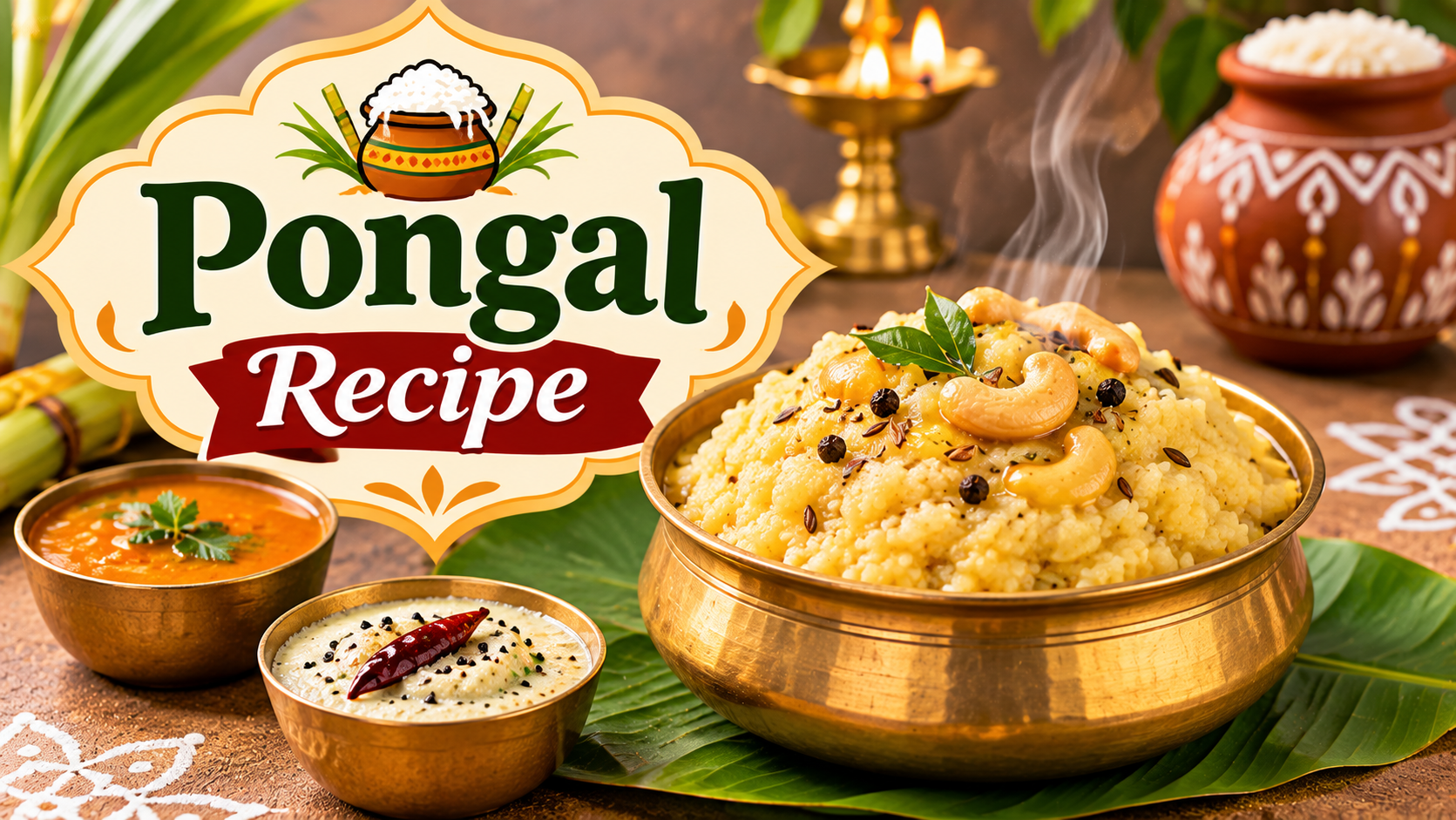
Pongal is one of the most comforting dishes in South Indian cooking. Soft rice and moong dal are cooked together until creamy, then finished with a fragrant tempering of ghee, black pepper, cumin, ginger, and cashews. Served with coconut chutney and sambar, it is a beloved breakfast in Tamil Nadu and a favorite temple offering.
Pongal is also the name of the Tamil harvest festival celebrated every January. During the festival, families cook pongal in a new pot until it boils over, a symbol of abundance and prosperity for the year ahead.
In this guide, you will learn how to make both types of pongal: savory Ven Pongal (Khara Pongal) and sweet Sakkarai Pongal (Chakkara Pongal). We cover the ingredients, pressure cooker, Instant Pot, and stovetop methods, tips for the perfect texture, what to serve with pongal, and the Pongal 2027 festival dates.
Pongal is a South Indian dish made by cooking rice and split yellow moong dal together until soft and creamy. The word pongal comes from the Tamil word for "to boil" or "to overflow." In English, it is sometimes described as a savory rice and lentil porridge, similar in texture to a creamy risotto or khichdi.
There are two main types of pongal:
Pongal is a four-day harvest festival celebrated by Tamil communities to thank the Sun God, nature, and farm animals for a good harvest. In India, Thai Pongal (the main day) falls on Friday, January 15, 2027. Because of the time difference, many US panchangs list Thai Pongal on Thursday, January 14, 2027, so confirm the date with your local temple.
| Day | Date in India (2027) | What happens |
|---|---|---|
| Bhogi Pongal | Thursday, Jan 14 | Old items are discarded in a bonfire and homes are cleaned |
| Thai Pongal (main day) | Friday, Jan 15 | Sakkarai pongal is cooked in a new pot until it boils over and is offered to the Sun God |
| Mattu Pongal | Saturday, Jan 16 | Cattle are bathed, decorated, and honored |
| Kaanum Pongal | Sunday, Jan 17 | Family visits, outings, and community gatherings |
Pongal is celebrated around the same time as Makar Sankranti, Lohri, and Uttarayan in other parts of India.
| Ingredient | Ven Pongal | Sakkarai Pongal |
|---|---|---|
| Short-grain rice (Sona Masoori or raw rice) | ½ cup | ½ cup |
| Split yellow moong dal | ¼ cup | ¼ cup |
| Water | 3½ to 4 cups | 2 cups |
| Milk | Optional, ½ cup | ½ cup |
| Ghee | 3 to 4 tbsp | 3 to 4 tbsp |
| Whole black pepper | 1 tsp | - |
| Cumin seeds | 1 tsp | - |
| Fresh ginger | 1 inch, finely chopped | - |
| Curry leaves | 1 sprig | - |
| Hing | A pinch | - |
| Cashews | 10 to 12 | 10 to 12 |
| Jaggery | - | ¾ to 1 cup, grated |
| Raisins | - | 1 tbsp |
| Cardamom | - | ¼ tsp powder |
| Nutmeg | - | A pinch (optional) |
| Edible camphor (pachai karpooram) | - | A tiny pinch (optional) |
| Salt | To taste | A pinch |
Tip: Short-grain rice like Sona Masoori or raw rice gives pongal its soft, creamy texture. Long-grain basmati does not break down as well. Browse our rice and dal and beans collections for more options.
Serves: 3 to 4 | Time: about 30 minutes
Dry roast the moong dal in a pan on low heat for 2 to 3 minutes until it smells nutty and turns very lightly golden. This step adds a lovely aroma to the pongal.
Combine the roasted dal with the rice and rinse two to three times until the water runs mostly clear.
Add 3½ to 4 cups water and a little salt. Cook using one of these methods:
Mash the cooked rice and dal lightly with the back of a ladle until creamy.
Heat 3 tbsp ghee in a small pan. Add the cashews and fry until golden. Add lightly crushed black pepper and cumin seeds and let them sizzle. Add chopped ginger, curry leaves, and hing, and fry for a few seconds.
Pour the tempering over the pongal and mix well. Add hot water or milk if it is too thick, since pongal thickens as it cools. Finish with an extra spoon of ghee and serve hot.
Serves: 3 to 4 | Time: about 35 minutes
Dry roast the moong dal, rinse it with the rice, and cook with 2 cups water and ½ cup milk for 4 to 5 whistles (or 12 minutes in an Instant Pot). Mash until soft.
Melt the grated jaggery with ¼ cup water on low heat until it dissolves. Strain to remove any impurities.
Let the syrup cool slightly, then add it to the mashed rice and dal. Cook on low heat for 3 to 5 minutes, stirring, until thick and glossy. Adding very hot syrup directly to milky rice can occasionally cause curdling.
Add cardamom powder, a pinch of nutmeg, and a very tiny pinch of edible camphor if using. Fry cashews and raisins in ghee until golden and pour everything over the pongal. Mix and serve warm.
Important: Use only food-grade edible camphor (pachai karpooram), never the regular camphor tablets used for aarti. Add just a tiny pinch, as too much makes it bitter.
| Feature | Ven Pongal | Sakkarai Pongal |
|---|---|---|
| Taste | Savory and peppery | Sweet and rich |
| Key flavors | Black pepper, cumin, ginger, curry leaves | Jaggery, cardamom, edible camphor |
| Served as | Breakfast or temple prasadam | Festival offering and dessert |
| Served with | Coconut chutney, sambar, gotsu | Eaten on its own |
| Main occasion | Everyday breakfast | Thai Pongal |
Want to learn more about chutneys? Read our guide on what is chutney.
Ghee is key to great pongal. Learn how to store it properly in our guide does ghee go bad.
Shop Sona Masoori rice, moong dal, ghee, jaggery, cashews, and spices at Vraj Fresh, delivered to 100+ zip codes across New Jersey and New York.
Whether you are making savory ven pongal for a cozy weekend breakfast or sweet sakkarai pongal for the Thai Pongal festival, this simple rice and moong dal dish is full of comfort and tradition. With good short-grain rice, fresh moong dal, plenty of ghee, and a fragrant tempering, you can make temple-style pongal at home in about 30 minutes.
This January, cook a pot of pongal, let it bubble over for good luck, and share it with family and friends. Pongalo Pongal!
Pongal is made with short-grain rice, split yellow moong dal, water, salt, and ghee. Ven pongal is tempered with black pepper, cumin, ginger, curry leaves, hing, and cashews, while sakkarai pongal uses jaggery, cardamom, cashews, and raisins.
The two main types are Ven Pongal (Khara Pongal), a savory dish with pepper and cumin, and Sakkarai Pongal, a sweet dish made with jaggery and ghee.
Pongal does not have a direct English name. It is often described as a South Indian rice and lentil porridge. Ven pongal is sometimes called savory pongal, and sakkarai pongal is called sweet pongal.
The four days of the Pongal festival are Bhogi Pongal, Thai Pongal, Mattu Pongal, and Kaanum Pongal. In 2027, they fall on January 14 to 17 in India.
In India, Thai Pongal is on Friday, January 15, 2027. Many US panchangs list it on Thursday, January 14, 2027, due to the time difference, so check with your local temple.
Short-grain rice such as Sona Masoori, Ponni, or raw rice works best because it cooks soft and creamy.
Yes. Cook rinsed rice and moong dal with water on high pressure for 12 minutes, allow natural pressure release, then add the ghee tempering.
Ven pongal is a filling combination of rice and moong dal that provides carbohydrates and plant protein. Use ghee in moderation, or try millet pongal for more fiber.


