


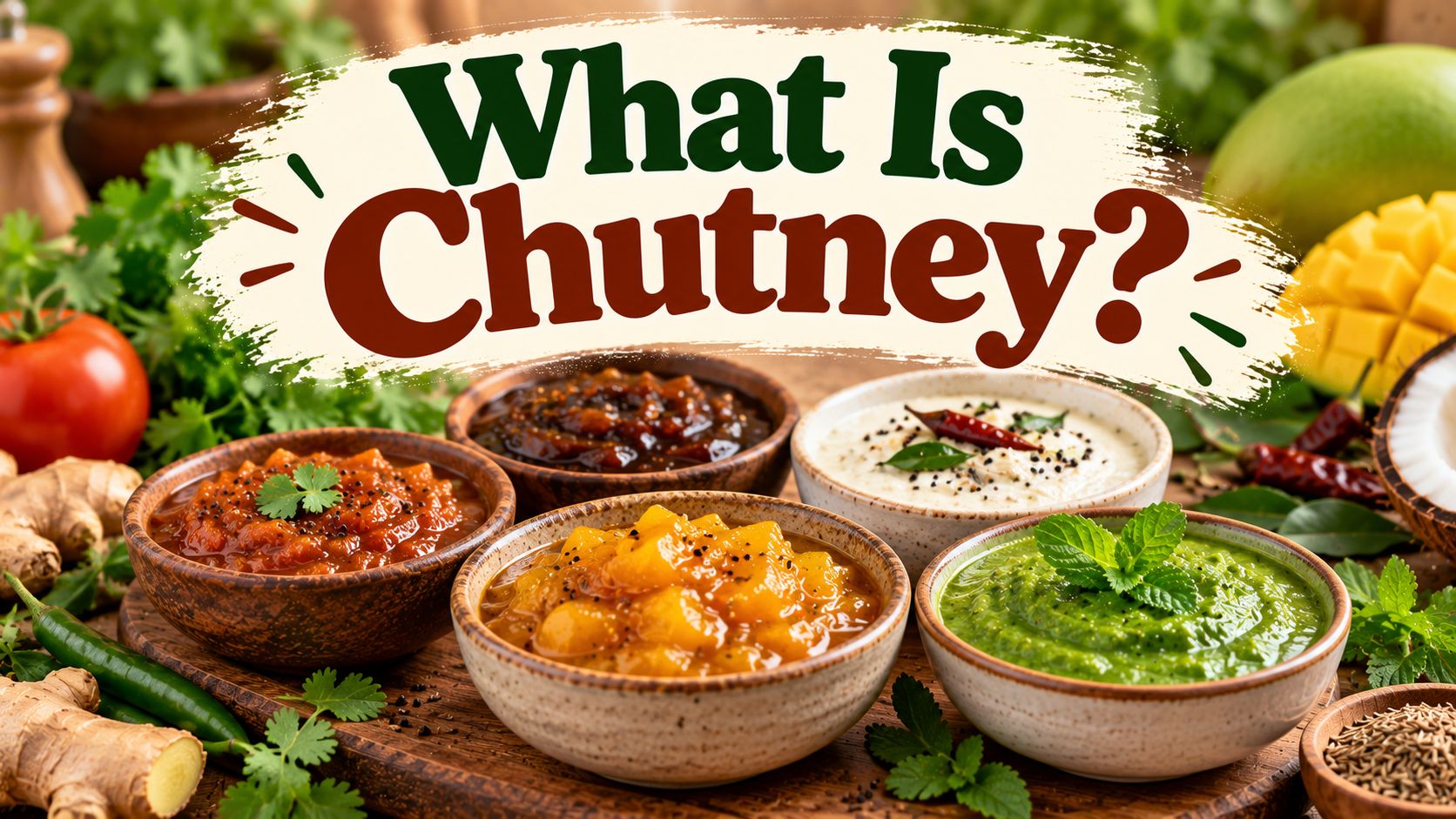
If you've ever eaten samosas with a green dipping sauce, enjoyed mango chutney with a curry, or noticed a jar of chutney beside cheese and crackers, you may have wondered: What is chutney, and what makes it different from other sauces? Chutney is a condiment traditionally associated with Indian cuisine. It is made from ingredients such as herbs, fruits, vegetables, spices, and souring agents. Depending on the recipe, chutney can be fresh and spicy, sweet and tangy, savory and earthy, or a combination of these flavors.
Unlike ketchup or mayonnaise, chutney doesn't have one standard recipe or texture. Some varieties are freshly blended, while others are slowly cooked into thick, fruit-based preserves.
Chutney is commonly served with Indian snacks, curries, rice dishes, and breads. It can also add flavor to sandwiches, wraps, roasted vegetables, and cheese boards.
In this guide, you'll learn what chutney is made of, the most popular types, what chutney tastes like, how it differs from salsa and relish, and the best ways to enjoy it at home.
Chutney is a flavorful condiment made from fruits, vegetables, herbs, spices, or combinations of these ingredients. Depending on the variety, it may be blended into a smooth sauce, ground into a thick paste, or cooked into a chunky preserve.
The word chutney comes from the Hindi word chatni. The condiment has deep roots in the Indian subcontinent, where different regions developed their own preparations using locally available ingredients.
In Indian cooking, chutney often provides a contrasting flavor alongside a meal. A spicy green chutney can add freshness to a savory snack, while sweet-and-sour tamarind chutney balances the flavors of chaat and fried foods.
In the United States, the word often brings to mind a jar of sweet, tangy mango chutney. However, that is only one variety. Indian chutneys include fresh herb sauces, coconut-based preparations, tomato chutneys, peanut chutneys, and many others.
The easiest way to understand chutney is to think of it as a broad family of condiments rather than one particular sauce.
There is no single list of ingredients used in every chutney. The ingredients depend on the variety, regional tradition, and desired flavor.
Some chutneys use only a handful of fresh ingredients, while others combine fruit, spices, sweeteners, and vinegar.
Here are the most common ingredient categories.
| Ingredient Category | Common Examples | Purpose |
|---|---|---|
| Fruits | Mango, apple, dates, tamarind, pineapple | Add sweetness, tartness, body, or texture |
| Vegetables | Tomato, onion, green chilies | Create savory flavor and substance |
| Fresh herbs | Cilantro, mint, curry leaves | Provide fresh, herbal, and aromatic notes |
| Nuts and seeds | Peanuts, sesame seeds, coconut | Add richness, texture, and depth |
| Spices | Cumin, mustard seeds, coriander, turmeric | Build aroma and complexity |
| Aromatics | Ginger, garlic, onion | Add pungency and savory flavor |
| Souring ingredients | Tamarind, lemon juice, lime juice, vinegar | Provide acidity and balance |
| Sweeteners | Sugar, jaggery, dates | Balance sourness and heat |
Not every chutney contains all these ingredients.
For example, fresh mint chutney may combine mint, cilantro, chilies, lemon juice, salt, and spices. A traditional cooked mango chutney may contain mango, vinegar, sugar, ginger, and warming spices.
The ingredients and preparation method determine whether the finished chutney is sweet, spicy, sour, savory, or somewhere in between.
Chutney can taste sweet, tangy, spicy, savory, fresh, or earthy, depending on its ingredients. There is no single flavor that describes every variety.
Fruit-based chutneys often have a sweet-and-sour taste. Fresh herb chutneys are generally more herbal and may be spicy. Tomato and onion chutneys can have a deeper savory flavor.
Here is how different varieties compare.
| Type of Chutney | Typical Flavor | Texture |
|---|---|---|
| Mango chutney | Sweet, tangy, and mildly spiced | Thick and sometimes chunky |
| Mint chutney | Fresh, herbal, and potentially spicy | Smooth or slightly textured |
| Cilantro chutney | Bright, herbal, and savory | Usually blended |
| Tamarind chutney | Sweet, sour, and fruity | Smooth and syrupy |
| Coconut chutney | Mild, nutty, and savory | Creamy or slightly coarse |
| Tomato chutney | Tangy, savory, and sometimes spicy | Smooth or chunky |
| Peanut chutney | Nutty, rich, and savory | Thick or creamy |
| Garlic chutney | Pungent, bold, and spicy | Paste-like or dry, depending on the style |
It can be either, or both.
Mango chutney is often sweet and tangy, although some versions contain noticeable chili heat. Mint and cilantro chutneys are commonly savory and spicy, especially when made with fresh green chilies.
Tamarind chutney usually combines sweetness with a pronounced sour flavor. Coconut chutney is generally savory and mild, although the addition of chilies can make it hotter.
If you're new to chutney, start with a mild mango chutney or coconut chutney. If you prefer bold, fresh flavors, try mint or cilantro chutney.
Indian cuisine features many regional chutneys, each with its own ingredients and uses. These ten varieties are a useful introduction.
Mango chutney is one of the most familiar varieties in American grocery stores.
It is commonly prepared by cooking mango with ingredients such as vinegar, sugar, ginger, garlic, and spices. The result is a thick condiment with a balance of sweetness, acidity, fruitiness, and gentle spice.
Mango chutney is especially useful for people who enjoy sweet-and-savory flavor combinations.
Best served with:
Mint chutney is a fresh, herbal condiment commonly served with Indian snacks.
Recipes often combine fresh mint, cilantro, green chilies, lemon or lime juice, salt, and spices. Some versions also contain ginger or yogurt.
Its fresh flavor contrasts particularly well with fried or rich foods.
Best served with:
Cilantro chutney, also called coriander-leaf chutney, is made primarily with fresh cilantro.
Depending on the recipe, it may contain green chilies, ginger, lemon juice, cumin, and other seasonings. Some recipes combine cilantro with mint.
It has a fresh, herbal flavor that works well with savory foods.
Best served with:
Tamarind chutney is known for its distinctive sweet-and-sour taste.
Tamarind pulp provides its characteristic tartness. Dates, jaggery, or sugar may be added for sweetness, along with spices such as cumin and chili.
This variety is especially popular in Indian chaat, where its tangy sweetness complements crunchy, savory, and spicy ingredients.
Best served with:
Coconut chutney is a popular accompaniment to South Indian dishes.
It commonly contains grated coconut, chilies, and seasonings. Some recipes include roasted chana dal, ginger, or other ingredients. A tempering of mustard seeds and curry leaves may be added for extra aroma.
Its mild, nutty flavor pairs well with foods that are savory or lightly spiced.
Best served with:
Tomato chutney is a savory preparation made with tomatoes, spices, and often onion, garlic, or chilies.
Some versions are tangy and spicy, while others are milder and slightly sweet. The tomatoes may be cooked until soft and then blended or mashed to create the desired texture.
Best served with:
Peanut chutney uses peanuts as its primary ingredient.
Depending on the recipe, the peanuts may be roasted and blended with chilies, garlic, tamarind, or other seasonings. Water is often added to create a spoonable consistency.
It has a rich, nutty flavor that makes it a good companion for mild and savory dishes.
Best served with:
Allergy note: Peanut chutney contains peanuts unless prepared with a different ingredient. Always check the ingredients if you have a food allergy.
Garlic chutney is a bold condiment made with garlic and other seasonings.
Some versions use fresh garlic and chilies, while others use dried red chilies and ground spices. Dry garlic chutney is particularly well known in parts of western India.
Its intense flavor means that a small quantity can make a noticeable difference to a dish.
Best served with:
Onion chutney is made using onions combined with spices and other ingredients. Some recipes cook the onions until soft and sweet, while others include chilies and tamarind for a sharper taste.
The exact flavor depends on the cooking method and regional recipe.
Best served with:
Date chutney uses dates to create a naturally sweet base. It may also contain tamarind, spices, and other ingredients to balance the sweetness.
Some varieties are smooth and thick, while others retain a little texture.
Date-based chutneys can be particularly useful when you want sweetness alongside tangy or savory flavors.
Best served with:
Chutney is often compared with salsa, relish, and sauce because all four can be used to add flavor to food.
However, they are not exactly the same.
| Feature | Chutney | Salsa | Relish | Sauce |
|---|---|---|---|---|
| Main ingredients | Fruits, vegetables, herbs, spices | Often vegetables, fruits, herbs, and chilies | Usually chopped vegetables or fruits | Varies widely |
| Flavor | Sweet, sour, spicy, savory, or herbal | Often fresh, tangy, and sometimes spicy | Often tangy, sweet, or savory | Depends on the recipe |
| Texture | Smooth, paste-like, or chunky | Fresh and chunky or cooked and smooth | Often finely chopped | Thin, thick, smooth, or creamy |
| Preparation | Freshly blended, ground, or cooked | Often fresh, but can also be cooked | Chopped, pickled, or cooked | Prepared using many different methods |
| Common pairings | Indian snacks, curries, breads, and sandwiches | Tortilla chips, tacos, and Mexican dishes | Burgers, hot dogs, and sandwiches | Depends on the type |
No. They are different types of condiments, although some varieties can have overlapping ingredients and uses.
Salsa is commonly associated with Mexican and Latin American cuisines. Many familiar salsas contain tomatoes, onions, chilies, cilantro, and lime juice.
Chutney has deep roots in the Indian subcontinent and encompasses a much broader range of preparations, including fresh herb pastes, coconut-based condiments, and cooked fruit preserves.
For example, fresh cilantro chutney and green salsa may both contain cilantro and chilies, but their seasonings, flavor profiles, and culinary traditions can differ considerably.
Not exactly.
Both chutney and relish can contain chopped fruits or vegetables, seasonings, and acidic ingredients. However, chutney can take many forms, including smooth sauces and freshly ground pastes.
Relish often emphasizes chopped pieces of vegetables or fruits, while many cooked fruit chutneys have a thicker, softer, more preserve-like texture.
The distinction is not absolute, and some preparations overlap.
One of the best things about chutney is its versatility. You don't need to limit it to traditional Indian meals.
The right pairing depends on whether your chutney is sweet, spicy, tangy, nutty, or herbal.
Green chutney and tamarind chutney are classic accompaniments for samosas, pakoras, and other savory Indian snacks.
Green chutney provides a fresh, herbal contrast, while tamarind chutney adds sweetness and acidity.
Coconut chutney is a popular choice for dosa and idli. Tomato, peanut, and other savory chutneys also work well.
Try serving two varieties together if you want contrasting flavors on the same plate.
Mango chutney can complement vegetable curries and rice dishes by adding sweetness and tanginess.
Fresh chutneys can also accompany lentils, rice, and other savory meals, depending on the regional tradition and the ingredients used.
Spread a small amount of mango chutney or cilantro chutney on bread before adding vegetables, cheese, or your favorite filling.
Sweet chutney pairs well with savory ingredients, while fresh herb chutney can provide a bright, tangy flavor.
Cooked fruit chutneys, such as mango or apple chutney, can pair nicely with cheese and crackers.
Their sweet-and-tangy flavor provides a contrast to rich or sharp cheeses.
Try serving a spoonful of mint or cilantro chutney alongside roasted potatoes, cauliflower, or other vegetables.
You can also mix a little chutney into a suitable dressing or sauce to add extra flavor.
Whether chutney is a nutritious choice depends on its ingredients, preparation, and serving size.
Fresh chutneys made with herbs, vegetables, spices, and citrus juice can contribute flavor without requiring large amounts of added sugar. Fruit-based chutneys may provide some nutrients from their fruit ingredients.
However, some prepared chutneys contain substantial amounts of added sugar or salt. Ingredients such as coconut, nuts, and oil can also affect the calorie content.
Here are a few things to consider when choosing chutney:
Chutney can be part of a balanced diet, but its nutritional value depends on the specific product or recipe. It should not automatically be considered low-calorie or sugar-free.
Many chutneys are naturally vegan and gluten-free, but this depends on the ingredients used.
Fresh mint, cilantro, tomato, tamarind, and coconut chutneys can often be prepared without animal-derived ingredients or gluten-containing grains.
However, certain recipes may contain yogurt, honey, or other ingredients that do not fit every vegan diet. Packaged chutneys may also contain ingredients or additives that require checking.
If you have celiac disease, a wheat allergy, or another dietary restriction, check the product label and cross-contact information rather than assuming every chutney is suitable.
Storage depends on how the chutney was prepared.
Fresh herb chutneys and many other freshly blended varieties are perishable.
Because ingredients and preparation methods vary, there is no single storage period that applies to every fresh chutney.
Commercially packaged chutney should be stored according to the label.
Before opening, follow the manufacturer's storage instructions. After opening, refrigerate the product if directed and use it within the stated period.
Important: A homemade cooked chutney is not automatically shelf-stable. If you want to preserve chutney in jars at room temperature, use a tested canning recipe and follow its processing instructions. Do not assume that adding vinegar or sugar alone makes a homemade chutney safe for long-term storage.
Chutney is a condiment made from ingredients such as fruits, vegetables, herbs, and spices. It can be fresh or cooked and may taste sweet, tangy, spicy, savory, or herbal.
Chutney can contain mango, tomatoes, onions, mint, cilantro, coconut, peanuts, tamarind, chilies, ginger, garlic, spices, and other ingredients. The exact ingredients depend on the variety.
Chutney can taste sweet, sour, spicy, savory, or fresh. Mango chutney is often sweet and tangy, mint chutney is herbal and sometimes spicy, and coconut chutney is generally nutty and savory.
No. Some chutneys are mild and sweet, while others contain green chilies, red chilies, or other spicy ingredients. The heat level depends on the recipe.
Chutney is served with Indian snacks, curries, rice dishes, dosa, idli, and flatbreads. It can also be used as a sandwich spread, dip, or accompaniment to cheese and crackers.
Mango chutney is usually fruit-based, sweet, and tangy, while mint chutney is generally made with fresh herbs and has a bright, herbal flavor. Mint chutney may also be spicy if it contains green chilies.
No. Chutney and Indian pickle are different preparations, although their ingredients and flavors can sometimes overlap. Chutney may be freshly blended or cooked into a sauce or preserve, while Indian pickles often involve preserving fruits or vegetables in salt, oil, spices, or other ingredients.
Yes. Many chutneys, including fresh mint and cilantro varieties, are intended to be eaten without further cooking. Other varieties are cooked during preparation. Follow the product instructions and refrigerate perishable chutneys appropriately.
It depends on the ingredients and serving size. Fresh herb-based chutneys may contain relatively little added sugar, while some fruit chutneys contain substantial amounts. Check the nutrition label or recipe to understand its sugar, sodium, and calorie content.
Many chutneys are vegan, but not all. Some recipes include yogurt, honey, or other animal-derived ingredients. Check the ingredient list if you follow a vegan diet.
Discover the ingredients that bring Indian cooking to life. From everyday pantry staples to spices and other grocery essentials, Vraj Fresh helps make it easier to prepare your favorite Indian-inspired meals at home in the USA.
So, what is chutney? It is a versatile family of condiments that can transform an ordinary meal with fresh herbs, warming spices, fruity sweetness, or tangy flavor.
From mint and cilantro chutney served with samosas to coconut chutney paired with dosa and sweet mango chutney spread on a sandwich, each variety offers a different way to enjoy food.
If you're new to chutney, start with a familiar variety such as mango chutney or mint chutney. Then explore coconut, tamarind, tomato, and peanut chutneys to discover which flavors you enjoy most.
Once you understand the different varieties, you'll find plenty of ways to use chutney beyond the traditional dipping bowl.


