


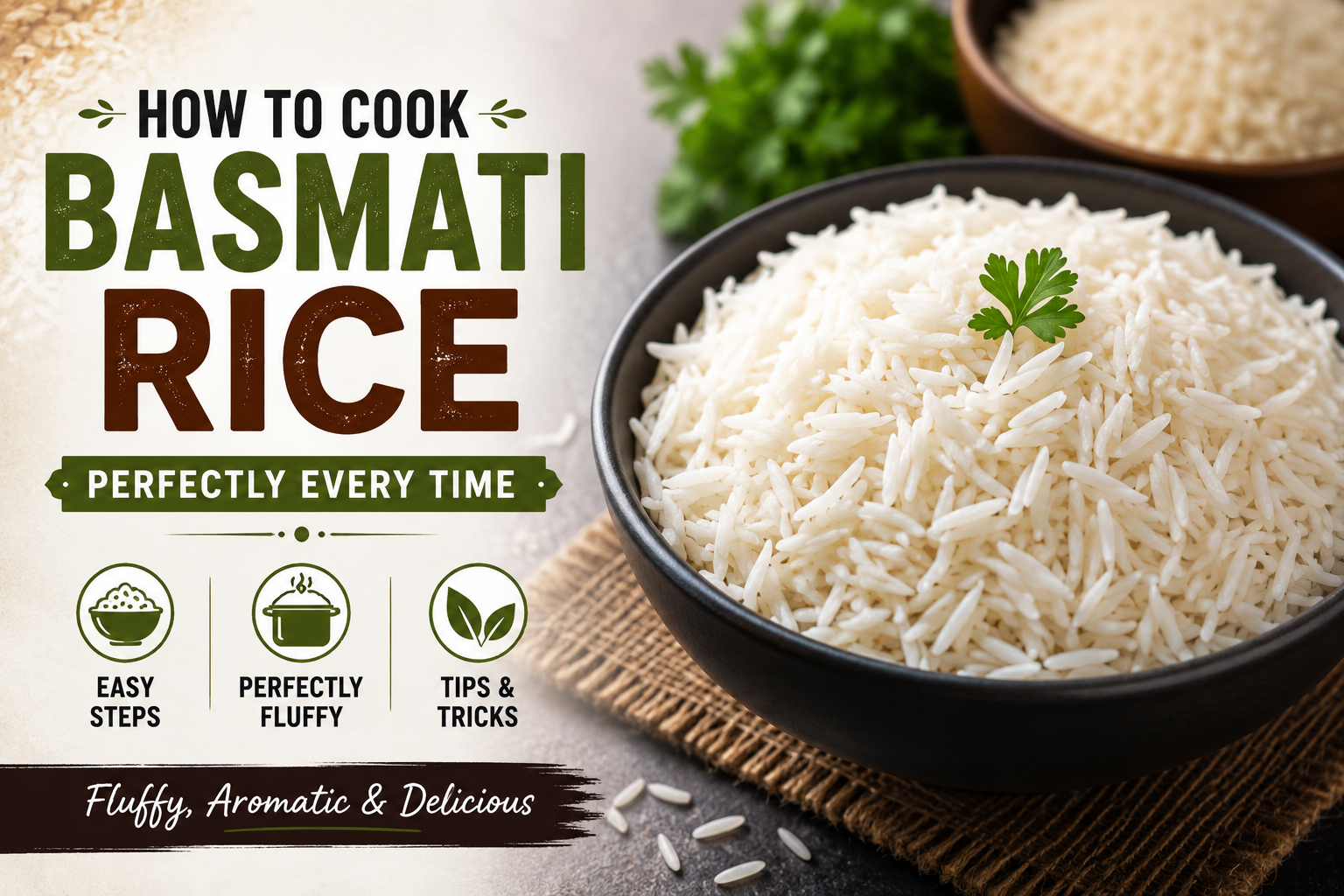
Basmati rice is one of the most popular long-grain rice varieties known for its delicate aroma, fluffy texture, and distinct flavor. Whether you're preparing biryani, pulao, curry, or a simple rice bowl, cooking basmati rice correctly can significantly improve your meal. In this guide, you'll learn how to cook basmati rice perfectly using different methods, along with expert tips to achieve light, separate grains every time.
Basmati rice is a premium long-grain rice primarily grown in India and Pakistan. The word "Basmati" means "fragrant" in Hindi, reflecting its naturally aromatic qualities.
Long, slender grains
Distinct nutty aroma
Fluffy and non-sticky texture
Rich in carbohydrates and essential nutrients
Ideal for Indian, Middle Eastern, and Asian dishes
1 cup basmati rice
1½ to 2 cups water
½ teaspoon salt (optional)
1 teaspoon oil or ghee (optional)
Measure the desired amount of basmati rice. One cup of uncooked rice typically yields about three cups of cooked rice.
Place the rice in a bowl and rinse it under cold water 3–4 times until the water runs mostly clear.
Why rinse?
Removes excess starch
Prevents rice from becoming sticky
Produces fluffier grains
Soak the rice in water for 20–30 minutes.
Benefits of soaking:
Longer grains after cooking
Faster cooking time
Improved texture
Drain the soaking water completely using a fine mesh strainer.
Add 1½ to 2 cups of water per cup of rice to a pot and bring it to a boil.
Add the drained rice to the boiling water. Stir gently once.
Reduce the heat to low and cover the pot with a tight-fitting lid.
Cook for 12–15 minutes without lifting the lid.
Turn off the heat and let the rice rest for 10 minutes with the lid on.
This allows the steam to finish cooking the rice evenly.
Use a fork to gently fluff the rice before serving.
1 cup basmati rice
1½ cups water
Rinse and soak the rice for 20–30 minutes.
Drain and transfer it to the rice cooker.
Add water.
Close the lid and start the cooking cycle.
Once cooked, let the rice sit for 5–10 minutes.
Fluff and serve.
1 cup basmati rice
1¼ cups water
Rinse and soak the rice.
Add rice and water to the Instant Pot.
Close the lid and set the valve to sealing.
Pressure cook on High for 6 minutes.
Allow natural pressure release for 10 minutes.
Open the lid, fluff, and serve.
Excess water can make rice mushy and sticky.
Unrinsed rice contains surface starch that can lead to clumping.
This releases steam and affects the cooking process.
Resting allows moisture to distribute evenly throughout the rice.
Always rinse before cooking.
Soak for at least 20 minutes.
Use a heavy-bottomed pot.
Keep the lid closed during cooking.
Fluff with a fork, not a spoon.
Let the rice rest before serving.
| Nutrient | Amount |
|---|---|
| Calories | 190–210 |
| Carbohydrates | 45g |
| Protein | 4–5g |
| Fat | Less than 1g |
| Fiber | 0.5–1g |
Values may vary depending on the brand and cooking method.
Chicken Biryani
Vegetable Pulao
Butter Chicken
Dal Tadka
Paneer Butter Masala
Rajma Curry
Chole Masala
Thai Curry
Want fluffy, aromatic basmati rice every time? Start with the finest quality rice. Explore our collection of premium basmati rice and bring authentic taste and fragrance to your meals.
Learning how to cook basmati rice is simple when you follow the right steps. Rinsing, soaking, using the correct water ratio, and allowing the rice to rest are the secrets to achieving fluffy, aromatic grains every time. Whether you're cooking on the stovetop, in a rice cooker, or using an Instant Pot, these techniques will help you prepare restaurant-quality basmati rice at home.
For stovetop cooking, use 1½ to 2 cups of water per cup of rice.
Yes, soaking for 20–30 minutes helps the grains expand and cook more evenly.
Sticky rice is usually caused by insufficient rinsing, too much water, or overcooking.
On the stovetop, basmati rice typically takes 12–15 minutes after the water starts simmering.
Yes, but soaking improves texture, grain length, and overall results.
Store cooked rice in an airtight container in the refrigerator for up to 4 days. Reheat thoroughly before serving.


