
Vraj Fresh App
Faster ordering & live tracking

Get the Vraj Fresh app for
Live tracking • Exclusive offers

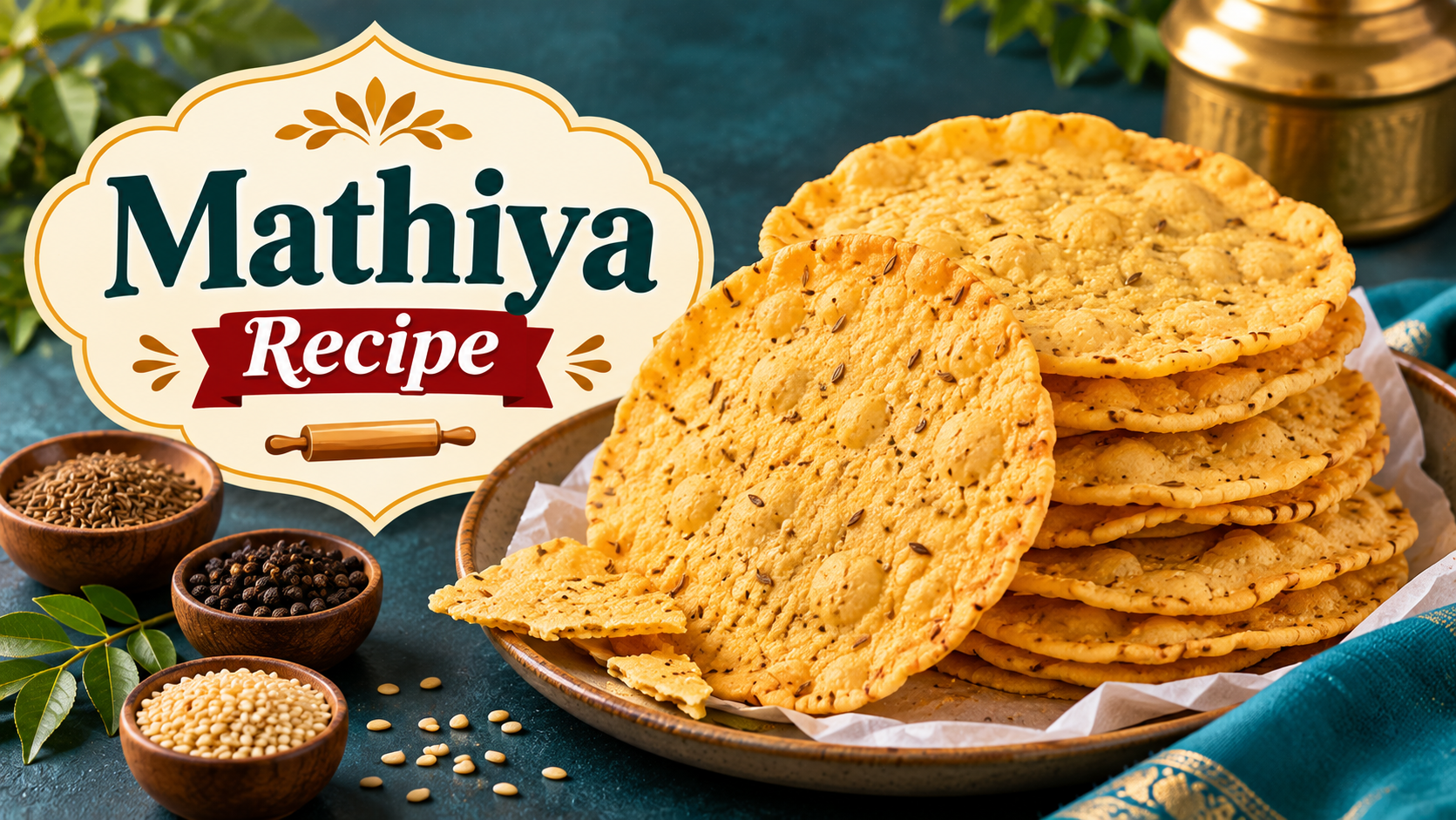
In Gujarati homes, Diwali preparations are not complete until a stack of crisp, golden mathiya sits in the snack tin. These paper-thin, papad-like crackers are made from mathiya flour, gently spiced with ajwain and pepper, and fried until they puff up with tiny bubbles. Many families still make them together, with one person rolling, another frying, and everyone sneaking a few hot from the kadai.
Mathiya are traditionally served on Diwali and Bestu Varas (Gujarati New Year), offered to guests along with chorafali, ghughra, and mohanthal. They are also a favorite during Uttarayan and as a crunchy side with tea all winter long.
In this guide, you will learn how to make crispy Gujarati mathiya at home, what mathiya flour is, the exact ingredients and ratios, step-by-step instructions, tips for getting them perfectly thin and crisp, popular variations, and how to store them.
Mathiya (also spelled mathia or mathiyaa) is a traditional Gujarati snack similar to a thin papad. The dough is made from mathiya flour, which is ground from moth beans, and is often mixed with a little urad dal flour. It is lightly sweetened, seasoned with ajwain, pepper, and hing, rolled paper-thin, and deep-fried until crisp.
Unlike regular papad, which is sun-dried and stored for months before cooking, mathiya are usually rolled and fried within a short time and eaten as a ready-to-serve festive snack.
Mathiya flour (mathiya no lot) is made from moth beans, also called matki or dew beans, a small brown legume widely grown in western India. The flour has a slightly nutty, earthy flavor and creates a dough that can be rolled extremely thin without tearing, which is what gives mathiya their delicate crunch.
Most Indian grocery stores in the US sell ready mathiya flour, and some blends already include urad flour. Popular options include Swad Mathia Flour, Deep Mathia Flour, and Jalpur Mathia Flour.
This recipe makes about 30 to 35 medium mathiya.
| Ingredient | Quantity | Why it's used |
|---|---|---|
| Mathiya flour | 2 cups | Main flour; gives the classic flavor and stretch |
| Urad dal flour | ½ cup | Adds crispness and helps the dough roll thin |
| Sugar | ¼ cup | Light sweetness, typical of Gujarati mathiya |
| Salt | 1 tsp | Seasoning |
| Papad khar or cooking soda | ½ tsp papad khar or ¼ tsp soda | Helps mathiya puff and turn crisp |
| Ajwain (carom seeds) | 1 tsp | Flavor and easier digestion |
| White pepper or black pepper (crushed) | ½ tsp | Gentle heat |
| Hing (asafoetida) | ¼ tsp | Savory aroma |
| White sesame seeds (optional) | 1 tbsp | Extra crunch |
| Green chili paste (optional) | 1 to 2 tbsp | For spicy masala mathiya |
| Ghee or oil | 2 tbsp + extra for kneading | Softens the dough |
| Warm water | About ½ to ⅔ cup | To bind the dough |
| Peanut or sunflower oil | For deep frying | High smoke point for quick frying |
Dissolve the sugar, salt, and papad khar (or cooking soda) in about ½ cup warm water. Stir until the sugar fully dissolves.
In a large bowl, combine mathiya flour, urad flour, ajwain, crushed pepper, hing, and sesame seeds. Add the ghee and rub it into the flour with your fingertips. Add green chili paste now if you are making spicy mathiya.
Add the sweet water a little at a time and knead into a very firm, stiff dough. It should be much tighter than roti dough. Add a spoonful of extra water only if the flour will not come together.
This is the traditional secret to great mathiya. Place the dough on a sturdy surface and pound it with a pestle, a heavy rolling pin, or the back of a steel bowl for 8 to 10 minutes. Fold it over and keep pounding, greasing with a little oil as needed, until the dough becomes smooth, slightly glossy, and stretchy. You can also knead it in a stand mixer with the dough hook.
Cover the dough and rest it for 10 to 15 minutes. Roll it into a log and cut it into small, marble-sized pieces. Keep the pieces covered so they don't dry out.
Lightly oil your rolling surface and pin. Roll each ball into a very thin circle, about 6 to 7 inches wide. It should be thin enough that you can almost see through it. Use oil instead of dry flour, since flour burns in the frying oil.
Spread the rolled mathiya on a clean cloth or parchment for 10 to 15 minutes, until the surface feels dry but they are still flexible. Do not let them dry until brittle, or they will crack.
Heat oil to about 350 to 375°F. Slide in one mathiya at a time. It will puff and bubble within seconds. Flip once, fry for just a few more seconds, and remove before it turns brown. The whole process takes about 10 to 15 seconds per mathiya.
Drain the mathiya upright or on paper towels. Let them cool completely before stacking and storing so they stay crisp.
Increase the sugar slightly and skip the green chili. Sweet mathiya are a favorite with kids and pair well with spicy chorafali on a Diwali snack platter.
Add green chili paste and a little extra pepper to the dough for a spicier version with a fresh kick.
Use coarsely crushed black pepper instead of white pepper for a bold, peppery flavor.
Knead extra white or black sesame seeds into the dough for added crunch and a toasty taste, perfect for Uttarayan.
For a lighter snack, fully dry the rolled mathiya and roast them like papad, either directly over a low gas flame with tongs or in the microwave for about 30 to 60 seconds, watching closely. Roasted mathiya are less puffy but still crisp.
| Snack | Main flour | Shape and texture | When it's eaten |
|---|---|---|---|
| Mathiya | Mathiya (moth bean) flour, urad flour | Thin round, crisp and bubbly | Diwali, Bestu Varas, Uttarayan |
| Chorafali | Besan and urad flour | Thin strips, puffy, dusted with chorafali masala | Diwali |
| Papad | Urad or moong dal flour | Sun-dried rounds, roasted or fried later | Year-round with meals |
| Fafda | Besan | Long, crisp strips | Dussehra and Sunday breakfast with jalebi |
Serve mathiya as part of a Gujarati Diwali faral platter with chorafali, ghughra, mohanthal, and chevdo. They are also delicious with a hot cup of tea; try them with our masala chai recipe. Looking for more festive snacks? See our Diwali recipes and farali chevdo guides, or browse more Indian snacks for tea time.
Get mathiya flour, urad flour, ajwain, hing, and frying oil from Vraj Fresh, delivered to 100+ zip codes across New Jersey and New York.
Homemade mathiya take a little patience, but the result is a crisp, light, and flavorful snack that tastes like a Gujarati Diwali at home. The keys are a stiff, well-pounded dough, paper-thin rolling, and quick frying in hot oil.
Gather your family, set up a rolling and frying station, and enjoy making this festive tradition together. With good mathiya flour and a few pantry spices, you can make a batch that lasts all season.
Mathiya are made from mathiya (moth bean) flour, often mixed with urad dal flour, plus sugar, salt, ajwain, pepper, hing, papad khar or soda, and a little ghee or oil.
Mathiya flour is flour made from moth beans (also called matki or dew beans). It has a nutty flavor and creates a stretchy dough that can be rolled very thin.
Yes. Use about ¼ tsp cooking soda (baking soda) instead of ½ tsp papad khar. The mathiya will still puff and turn crisp.
Mathiya turn chewy if they are rolled too thick, if the dough is too soft, or if the oil is not hot enough. Roll them paper-thin and fry quickly in hot oil.
There is no exact substitute. A mix of urad flour with a little besan can make a similar crisp papad, but the flavor and texture will be different from traditional mathiya.
Fried mathiya stay crisp for about 3 to 4 weeks when stored in an airtight container at room temperature.
Yes. Dry the rolled mathiya fully and roast them over a low flame or in the microwave for 30 to 60 seconds, like papad. They will be lighter but less puffy.
Mathiya are a traditional Gujarati snack made for Diwali and Bestu Varas (Gujarati New Year), and they are also enjoyed during Uttarayan and as a tea-time snack in winter.


