


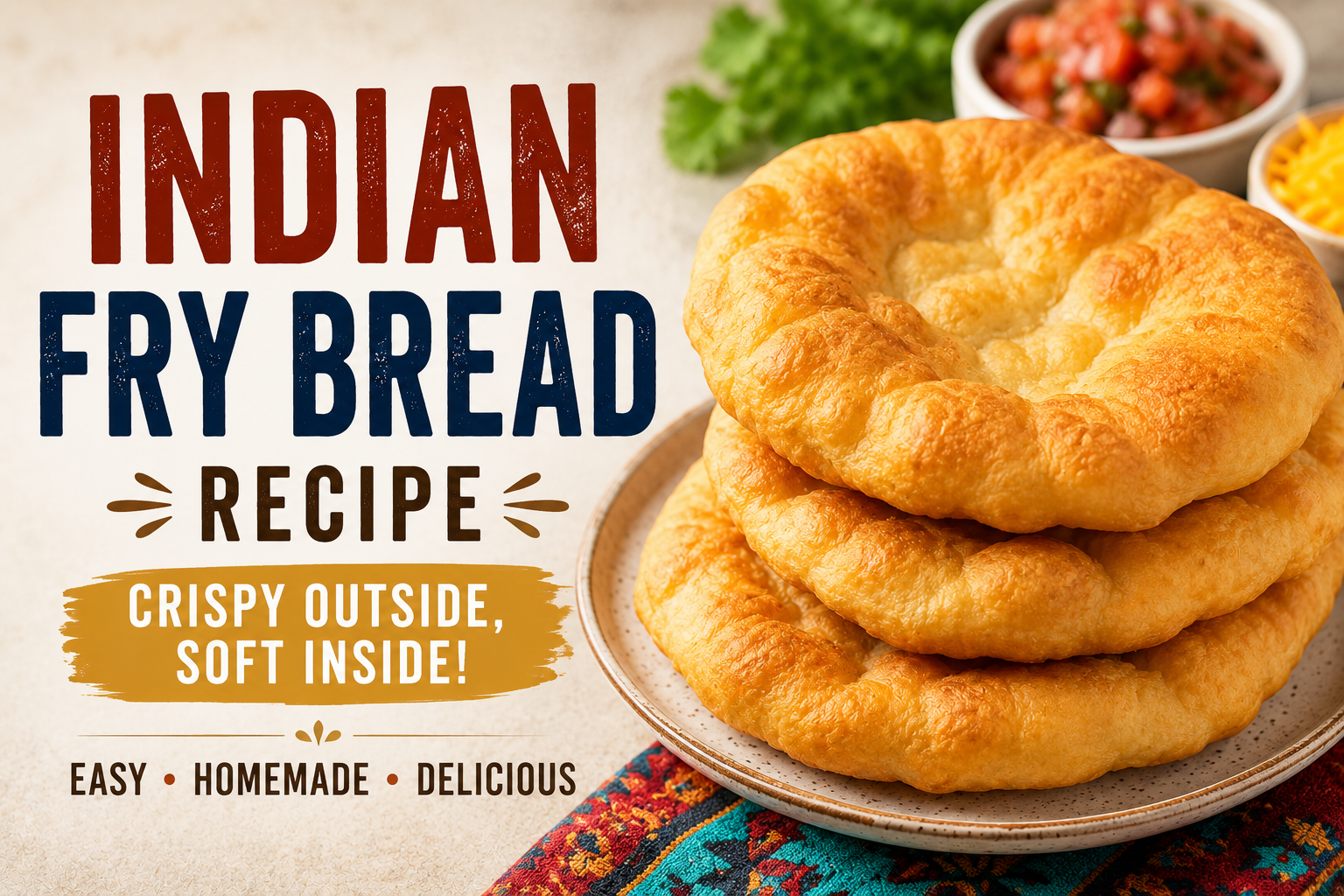
Looking for an easy Indian fry bread recipe that's crispy on the outside, soft and slightly chewy inside? This homemade fry bread uses simple pantry ingredients and can be served sweet with honey and powdered sugar or savory with beans, cheese, vegetables, and other toppings. Indian fry bread, also commonly called Native American fry bread, is a deep-fried flatbread associated with Native American communities and has many regional and family variations. This version uses a simple flour, baking powder, salt, and warm water dough.
Indian fry bread is a round piece of dough that is flattened and fried until golden brown. It typically becomes lightly crisp and bubbly on the outside while remaining soft and tender inside.
Recipes vary considerably. Some use only flour, baking powder, salt, and water, while others include milk, shortening, yeast, or other ingredients. The shape and thickness can also vary depending on the recipe and tradition.
Freshly fried fry bread has a mild, slightly savory flavor that allows it to work with both sweet and savory toppings. Its texture is one of its biggest attractions, with a crisp exterior and soft, fluffy center.
Because the dough itself is lightly seasoned, you can easily customize it after frying with honey, powdered sugar, cinnamon sugar, beans, cheese, chili, vegetables, or other toppings.
This recipe requires only a handful of basic ingredients and doesn't require yeast or a long rising process. The dough comes together quickly, making it a practical option when you want freshly fried bread without complicated preparation.
The bread can also be served in several ways. Use it as a base for savory Indian tacos or enjoy it as a sweet treat with honey or powdered sugar.
All-purpose flour provides the main structure for the dough. It creates a soft dough that can be flattened into rounds before frying.
Measure the flour carefully and avoid adding too much extra flour during kneading, as a very dry dough can produce tougher fry bread.
Baking powder helps the dough puff slightly when it hits the hot oil. It contributes to the lighter texture that makes fry bread different from a simple fried flatbread.
Salt adds flavor and balances the mild taste of the flour. Even a small amount makes a noticeable difference in the finished bread.
Warm water brings the dough together and helps create a soft, workable consistency. Add it gradually rather than pouring it all in at once.
Use a neutral oil suitable for frying, such as vegetable or canola oil. The oil should be hot enough to cook the dough quickly without burning the outside.
3 cups all-purpose flour
1 tablespoon baking powder
½ teaspoon salt
1½ cups warm water, approximately
Neutral oil, for frying
This ingredient ratio is based on a common simple preparation using flour, baking powder, salt, warm water, and frying oil.
Add the flour, baking powder, and salt to a large mixing bowl. Whisk or stir everything together until the ingredients are evenly distributed.
Mixing the dry ingredients first helps ensure that the baking powder and salt are spread throughout the dough.
Gradually pour the warm water into the flour mixture while stirring. Continue mixing until a soft dough begins to form.
You may not need exactly the full amount of water, so add it gradually. The dough should be soft and workable without becoming excessively sticky.
Transfer the dough to a lightly floured surface and gently knead it until it becomes smooth.
Avoid over-kneading. Fry bread doesn't need the extensive kneading associated with yeast breads, and working the dough too aggressively can make the finished bread tougher.
Place the dough in a bowl and cover it with a clean kitchen towel. Let it rest for about 30 minutes.
Resting allows the dough to relax, making it easier to shape and flatten without constantly springing back.
Divide the dough into approximately 8 equal portions. Roll each portion gently into a ball.
The number of pieces can be adjusted depending on how large or small you want your fry bread to be.
Flatten each dough ball with your hands or a rolling pin until it forms a round disk. Aim for roughly ¼-inch thickness.
Make the center slightly thinner if desired, and create a small hole in the middle of each round. This can help the bread fry more evenly and prevent excessive puffing.
Pour enough oil into a heavy skillet or frying pan to provide sufficient depth for the dough to fry. Heat the oil to around 350°F.
Maintaining a consistent temperature is important. Oil that is too cool can make the bread greasy, while excessively hot oil can brown the outside before the inside cooks properly.
Carefully place one piece of flattened dough into the hot oil. Fry until the underside becomes golden brown, then carefully flip it.
Cook the second side until golden and puffed. Depending on the thickness and oil temperature, each piece may take only a few minutes to cook.
Remove the cooked fry bread with tongs or a slotted spoon and place it on a paper towel-lined plate or wire rack.
Allow excess oil to drain before serving. Continue frying the remaining dough while maintaining a consistent oil temperature.
The key to crispy fry bread is properly heated oil and appropriately thin dough. If the oil isn't hot enough, the dough can absorb too much oil before it turns golden.
Don't overcrowd the pan either. Frying too many pieces at once can cause the oil temperature to drop, resulting in greasy bread.
For softer fry bread, don't roll the dough excessively thin and avoid overcooking it. The interior should remain tender while the outside develops a light golden crust.
A soft, slightly moist dough also helps create a tender interior. Add the water gradually so you don't accidentally make the dough too dry.
Fry bread doesn't always puff dramatically, and the amount of puffing can vary depending on the dough, thickness, and frying temperature.
If you want a flatter bread, gently press or stretch the dough before frying. Creating a small hole in the center can also help control how the dough behaves in the oil.
Greasy fry bread is often caused by oil that isn't hot enough. When the oil temperature is low, the dough can absorb more oil before it develops a crisp exterior.
Maintain the oil around the recommended frying temperature and avoid overcrowding the pan. Drain the cooked bread immediately after removing it from the oil.
Fry bread can become hard if the dough is too dry, heavily kneaded, rolled too thin, or cooked for too long.
Use enough water to create a soft dough and knead only until it comes together smoothly. Fry each piece just until golden brown.
Drizzle warm fry bread with honey for a simple sweet version. The honey soaks slightly into the warm surface and creates a delicious contrast with the crisp exterior.
A light dusting of powdered sugar is one of the easiest ways to turn fry bread into a dessert or snack.
Mix cinnamon with sugar and sprinkle it over freshly fried bread. Add the topping while the bread is still warm so it adheres to the surface.
Spread a small amount of butter over hot fry bread and finish with honey. The combination is rich, sweet, and especially good when the bread is served warm.
Fry bread can be used as the base for Indian tacos, traditionally topped with ingredients such as chili or beans, cheese, lettuce, tomatoes, onions, and other toppings.
Top warm fry bread with seasoned beans and shredded cheese for a simple and filling meal. Add tomatoes, lettuce, salsa, or sour cream for additional flavor.
Use fry bread as an accompaniment to chili or place the chili directly on top. The bread provides a crisp, chewy base that works well with rich and saucy toppings.
For a lighter savory option, top fry bread with fresh vegetables, salsa, avocado, or your favorite toppings.
Indian fry bread is extremely versatile and can be served as a snack, side dish, dessert, or main meal depending on the toppings.
For a sweet preparation, serve it with honey, powdered sugar, or cinnamon sugar. For a savory meal, pair it with beans, chili, cheese, lettuce, tomatoes, salsa, or other taco-style toppings.
Indian fry bread and naan are very different breads despite both being popular flatbreads.
Indian fry bread is made from a simple dough and cooked by frying in oil, while naan is traditionally cooked in a very hot oven or tandoor. Naan is generally softer and more bread-like, whereas fry bread develops a fried, crisp exterior.
Indian fry bread and puri are also different preparations. Puri is an Indian deep-fried flatbread traditionally made with wheat flour and is usually rolled into small rounds before frying.
Indian fry bread generally uses all-purpose flour and baking powder and is typically larger and thicker. The two breads may look somewhat similar, but their ingredients, preparation, and culinary traditions are different.
Yes, some traditional and regional fry bread recipes use different leavening methods or ingredients, including yeast. However, the simple version in this recipe relies on baking powder for its characteristic texture.
If you're following a specific family or cultural recipe, use that recipe's ingredients and technique rather than treating all fry bread recipes as interchangeable. Regional and family variations are common.
You can prepare the dough ahead of frying, but freshly fried bread generally provides the best texture. Keep prepared dough covered so it doesn't dry out.
If you have leftover cooked fry bread, reheat it briefly before serving. The texture may not be exactly the same as freshly fried bread.
Allow leftover fry bread to cool before placing it in an airtight container. Keep it at room temperature for short-term storage or refrigerate it if you need to keep it longer.
When ready to eat, reheat it in a dry skillet, oven, or air fryer to help restore some of its crispness.
Yes, cooked fry bread can be frozen. Place cooled pieces in a freezer-safe container or bag with parchment between them to help prevent sticking.
Thaw and reheat before serving. A skillet, oven, or air fryer can help bring back some of the crisp exterior.
A soft dough produces better-textured fry bread. Add water gradually and stop once the dough becomes soft and workable.
Knead only until the dough becomes smooth. Excessive kneading can develop more gluten and make the bread tougher.
Allowing the dough to rest makes it easier to flatten and shape. It also reduces the tendency of the dough to spring back.
Keep the oil around 350°F while frying. If you notice the bread browning too quickly, reduce the heat slightly.
Fry only a few pieces at a time depending on the size of your pan. Too many pieces can lower the oil temperature and affect the texture.
Move the cooked bread onto paper towels or a wire rack as soon as it comes out of the oil. This helps remove excess oil while keeping the exterior crisp.
Extra flour can make the dough dry and difficult to work with. Add only enough flour to prevent excessive sticking.
Very thick dough can take longer to cook and may become overly dense. Keep the rounds reasonably thin and even.
Cold oil can result in greasy, undercooked bread. Make sure the oil has reached the proper temperature before frying.
Too many pieces at once can cause a sudden drop in oil temperature. Fry in batches for better results.
Once the bread is golden brown on both sides, remove it. Over-frying can make the bread dry and hard.
Prep Time: 30–40 minutes
Cook Time: 15 minutes
Total Time: About 45–55 minutes
Servings: 8
Cuisine: Native American
Course: Bread / Side Dish
Main Ingredient: All-purpose flour
Difficulty: Easy
Get authentic pantry essentials and Indian ingredients from Vraj Fresh to make delicious homemade recipes right in your kitchen.
This easy Indian fry bread recipe creates golden, crispy bread with a soft and tender center using just a few basic ingredients. The dough is simple to prepare, doesn't require yeast, and can be shaped and fried in your kitchen without specialized equipment.
Serve it sweet with honey, powdered sugar, or cinnamon sugar, or turn it into a savory meal with beans, chili, cheese, vegetables, and other toppings. The most important steps are keeping the dough soft, allowing it to rest, and maintaining the oil at the right temperature.
Because fry bread has many regional, community, and family variations, this recipe should be viewed as one simple home-style version rather than a single definitive traditional preparation.
A simple Indian fry bread recipe can be made with all-purpose flour, baking powder, salt, warm water, and oil for frying. Some variations use ingredients such as milk, shortening, or yeast.
No. Indian fry bread is fried in oil, while naan is traditionally cooked at very high heat, often in a tandoor or oven. They also use different dough preparations and have different textures.
No. Puri is an Indian fried flatbread generally made with wheat flour, while Native American fry bread commonly uses all-purpose flour and baking powder. Their culinary traditions are also different.
The most common reason is oil that is not hot enough. Maintain the frying temperature around 350°F and avoid overcrowding the pan.
Use properly heated oil, avoid making the dough excessively thick, and don't overcrowd the pan. Drain the bread immediately after frying.
Yes. Fry bread can be served as a sweet treat with honey, powdered sugar, cinnamon sugar, or butter.
Indian tacos are commonly made by using fry bread as the base and adding savory toppings such as chili or beans, cheese, lettuce, tomatoes, onions, and other ingredients.
Yes. The recipe above doesn't require yeast. Baking powder provides the leavening used in this simple version, while other fry bread recipes may use yeast or different ingredients.
A neutral oil with a suitable high smoke point, such as vegetable or canola oil, works well. Keep the oil at a consistent frying temperature for the best texture.
Store cooled fry bread in an airtight container. Reheat it in a skillet, oven, or air fryer to help restore some of its crispness before serving.


