


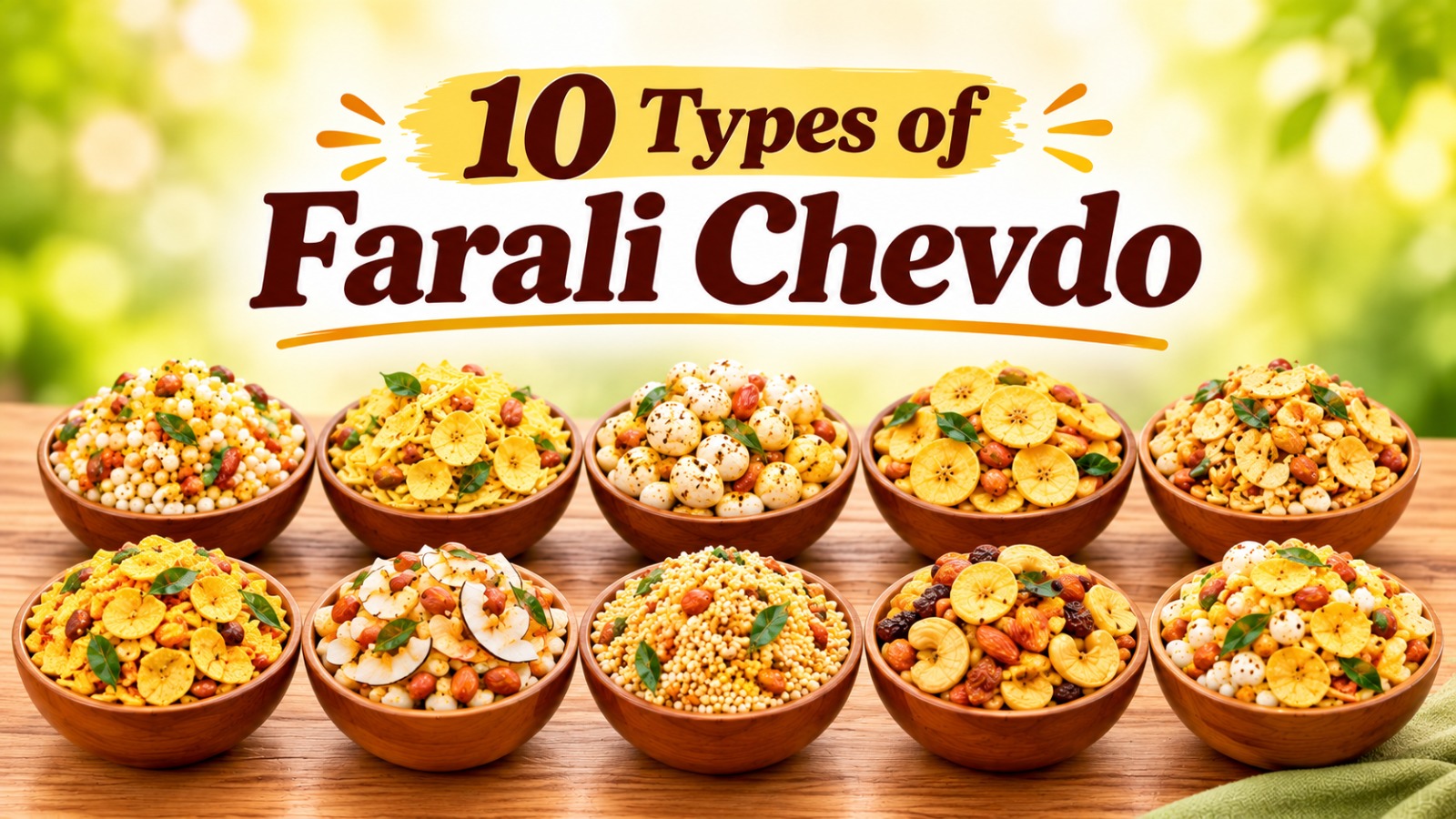
Farali chevdo is a popular Indian snack enjoyed during fasting days and religious occasions such as Navratri, Ekadashi, and Mahashivratri. Made with fasting-friendly ingredients such as potatoes, sabudana, peanuts, makhana, and spices, it offers a crunchy and flavorful alternative to regular snacks.
There are many ways to prepare farali chevdo depending on the ingredients and regional preferences. From crispy potato chevdo to crunchy sabudana and makhana varieties, each version has its own unique taste and texture. In this guide, we'll explore 10 delicious types of farali chevdo you can enjoy during fasting or as an everyday snack.
Farali chevdo is a crunchy Indian snack prepared using ingredients that are traditionally allowed during fasting. Regular grains and many commonly used ingredients are replaced with fasting-friendly options such as potatoes, sabudana, peanuts, makhana, and certain flours.
It is usually seasoned with rock salt, green chilies, cumin, black pepper, and other ingredients suitable for fasting. Depending on the recipe, farali chevdo can be mildly spicy, savory, crunchy, or slightly sweet.
Sabudana farali chevdo is made using crispy sabudana pearls, roasted or fried peanuts, and fasting-friendly seasonings. The crunchy texture of sabudana pairs beautifully with the nuttiness of peanuts.
It is especially popular during Navratri and other fasting occasions. A little cumin, green chili, and rock salt can give this chevdo a delicious savory flavor.
Potato farali chevdo is prepared with thinly sliced or grated potatoes that are fried or baked until crispy. The potato chips are then combined with peanuts and fasting spices for a crunchy snack.
Its simple ingredients make it an easy option for fasting days. You can also add a small amount of powdered sugar for a sweet-and-savory flavor.
Banana chips provide a naturally crisp texture and mild flavor to this type of farali chevdo. Thinly sliced raw bananas are fried or baked until crunchy and then seasoned with rock salt and spices.
Peanuts and a touch of green chili can be added for extra flavor. This version is a great choice if you enjoy a combination of crunch and mild sweetness.
Makhana, also known as fox nuts or lotus seeds, makes an excellent base for a lighter-style farali chevdo. The makhana can be roasted until crispy and mixed with peanuts, coconut, and fasting-friendly spices.
It has a light, crunchy texture and works well as a snack between meals. Roasting instead of deep-frying can make this version a convenient option for those looking for a lighter preparation.
Peanut farali chevdo focuses on roasted or fried peanuts combined with other fasting-friendly ingredients. Peanuts provide a rich, nutty taste and a satisfying crunch.
You can combine them with potato chips, sabudana, coconut slices, or makhana to create a more substantial snack. Rock salt, cumin, and chili add a simple but flavorful seasoning.
Sweet and spicy farali chevdo combines crunchy fasting ingredients with a balance of sweetness and heat. Potato chips, peanuts, sabudana, and coconut can be mixed with powdered sugar, green chili, and rock salt.
The combination of sweet and savory flavors makes this variety particularly enjoyable with tea or as a festive snack. You can adjust the sweetness and spice according to your preference.
Coconut farali chevdo uses crispy coconut slices or grated coconut along with peanuts, makhana, or potato chips. Coconut gives the mixture a mildly sweet, nutty flavor that pairs well with savory seasonings.
Roasted coconut can add extra aroma and crunch without overpowering the other ingredients. This variety is perfect for anyone who enjoys a slightly tropical twist in traditional Indian snacks.
Rajgira, also known as amaranth, is commonly used in fasting recipes and can be incorporated into a crunchy farali snack. Popped or prepared rajgira can be combined with peanuts and other fasting-friendly ingredients.
It gives the chevdo a distinctive texture and mild nutty flavor. Rajgira is also commonly used in fasting flour and other traditional farali preparations.
Dry fruit farali chevdo combines fasting-friendly crunchy ingredients with nuts such as almonds, cashews, and raisins. The nuts add richness, while raisins provide natural sweetness to balance the savory seasoning.
This version works particularly well as a festive snack or during long fasting periods. Since nuts and dried fruits are energy-dense, a small serving can be quite satisfying.
Mixed farali chevdo brings several fasting-friendly ingredients together in one crunchy snack. A typical mixture can include potato chips, sabudana, peanuts, makhana, banana chips, coconut, and spices.
The combination creates multiple textures and flavors in every bite. It is also a convenient option when you want to use several leftover fasting ingredients in one snack.
Potatoes are one of the most commonly used fasting ingredients and can be sliced into thin chips for extra crunch. They work particularly well with peanuts, rock salt, and mild spices.
Sabudana adds a distinctive crunchy texture when properly prepared. It is a popular ingredient in fasting recipes and pairs well with roasted peanuts and potatoes.
Peanuts provide a rich, nutty flavor and satisfying crunch. They are frequently combined with other ingredients to add texture and make the chevdo more filling.
Makhana creates a light and crispy texture when roasted. It can help add variety to the mixture while complementing stronger ingredients such as peanuts and potato chips.
Coconut contributes mild sweetness and a pleasant nutty aroma. Thinly sliced or roasted coconut works especially well in mixed farali chevdo.
The seasoning used in farali chevdo can vary depending on the recipe and fasting tradition. Rock salt (sendha namak) is commonly used instead of regular table salt during fasting.
Other commonly used seasonings include cumin, black pepper, green chili, red chili powder where permitted, and a small amount of sugar. Always follow the specific fasting guidelines you observe, as permitted ingredients can vary between traditions.
Use ingredients that are completely dry before frying or roasting them. Excess moisture can make the chevdo soft and reduce its shelf life.
Roast or fry each ingredient properly rather than cooking everything together at once. Allow the ingredients to cool completely before mixing and seasoning them.
Store homemade farali chevdo in a clean, airtight container once it has completely cooled. Keeping moisture away is essential for maintaining its crisp texture.
Place the container in a cool, dry pantry away from direct sunlight and heat. For the best taste and texture, consume homemade chevdo within a few days and check for any changes in smell or texture before eating.
Choose sabudana chevdo if you want:
Choose potato chevdo if you want:
Choose makhana chevdo if you want:
Choose mixed farali chevdo if you want:
Choose dry fruit chevdo if you want:
Looking for quality Indian snacks, spices, fasting essentials, and everyday grocery products? Vraj Fresh brings a wide selection of Indian pantry favorites to your doorstep.
Farali chevdo is a delicious way to enjoy a crunchy snack while following traditional fasting food preferences. With varieties made from sabudana, potatoes, peanuts, makhana, banana chips, coconut, rajgira, and dry fruits, there are plenty of options to suit different tastes.
Whether you prefer something spicy, mildly sweet, nutty, or extra crunchy, you can create your own farali chevdo by combining permitted ingredients and seasoning them with rock salt and fasting-friendly spices. Choose your favorite combination and enjoy this versatile Indian snack during fasting or whenever you want something crunchy.
Farali chevdo can be made with fasting-friendly ingredients such as potatoes, sabudana, peanuts, makhana, banana chips, coconut, rajgira, and dry fruits. The exact ingredients depend on the recipe and fasting tradition.
Many types of farali chevdo are prepared specifically for fasting using ingredients traditionally permitted during vrat. However, fasting rules vary, so check whether each ingredient is allowed according to your specific tradition.
Rock salt, commonly called sendha namak, is traditionally used in many fasting recipes instead of regular table salt.
Yes. Ingredients such as makhana, peanuts, and some chips can be roasted or baked instead of deep-fried. This can create a lighter version while maintaining a pleasant crunch.
Allow all ingredients to cool completely before mixing them and store the finished chevdo in a completely dry, airtight container. Avoid exposing it to moisture, as humidity can make the snack soft.
Sabudana, potato, peanut, and mixed farali chevdo are among the most popular varieties. The preferred type depends on regional taste and individual fasting traditions.


