


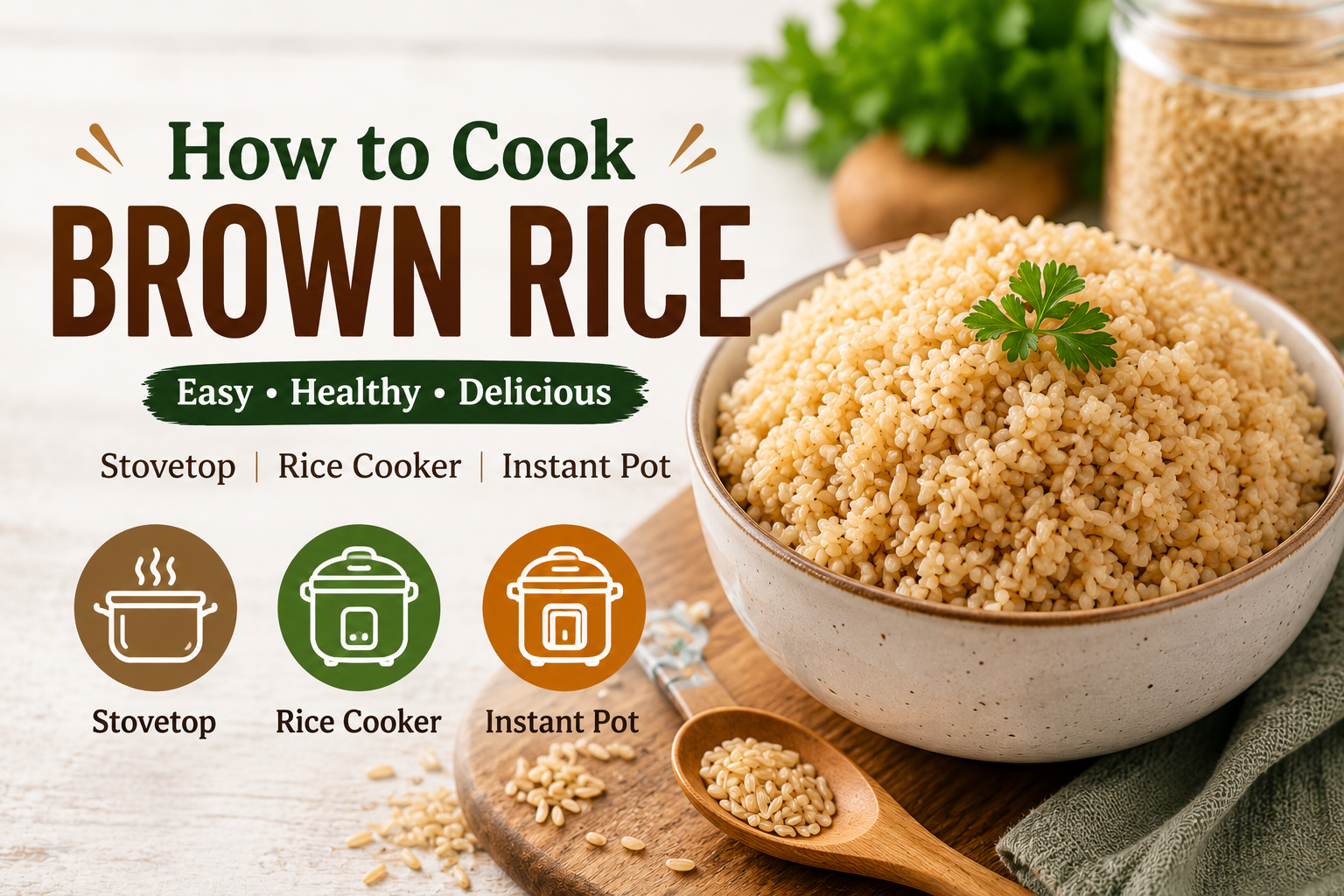
Brown rice is a nutritious whole-grain rice with a chewy texture and mildly nutty flavor. Because the outer bran layer remains intact, it generally takes longer to cook than white rice, but with the right water ratio and cooking method, you can make perfectly tender brown rice at home.
Whether you want to prepare brown rice for meal prep, rice bowls, curries, stir-fries, or everyday meals, this guide covers how to cook brown rice on the stovetop, in a rice cooker, and in an Instant Pot, along with tips to keep it fluffy and prevent common cooking mistakes.
Brown rice is a whole-grain form of rice that retains its bran and germ layers. These layers give it a slightly nutty flavor, firmer texture, and darker color compared with white rice.
Because the bran layer takes longer to soften, brown rice requires more cooking time and water than most white rice varieties. Long-grain, short-grain, and basmati brown rice can also vary slightly in cooking time and texture.
Brown rice has a mild, nutty flavor with a pleasantly chewy texture. Compared with white rice, it tends to be firmer and more substantial when cooked properly.
Its flavor works well with vegetables, beans, curries, grilled foods, stir-fries, and sauces. You can also season it with herbs, spices, broth, or a little butter or oil.
The biggest difference is how the rice is processed. Brown rice retains the bran and germ, while white rice has these outer layers removed during milling.
This difference affects cooking time and texture. Brown rice generally takes longer to cook and has a chewier bite, while white rice usually cooks faster and becomes softer and fluffier.
Use long-grain, short-grain, medium-grain, or brown basmati rice depending on the recipe. Make sure the rice is fresh and free from any unusual odor or moisture.
Water is the basic cooking liquid for brown rice. The exact amount depends on the variety and cooking method, so following the appropriate ratio for your method helps prevent rice that is either too dry or too mushy.
A small amount of salt can enhance the natural flavor of brown rice. You can add it directly to the cooking water or season the finished rice.
A small amount of oil or butter is optional but can add flavor and help make the finished rice taste richer. It is especially useful when serving brown rice as a side dish.
The stovetop method is simple and doesn't require any special equipment. The key is using enough liquid, keeping the pot covered while cooking, and allowing the rice to rest after the heat is turned off.
Measure the amount of brown rice you want to cook and place it in a bowl or measuring cup. For a basic recipe, 1 cup of uncooked brown rice generally makes about 3 cups of cooked rice, depending on the variety and cooking method.
Measuring the rice and water accurately helps produce consistent results every time.
Place the brown rice in a fine-mesh strainer and rinse it under cool running water. Gently move the grains around with your fingers while rinsing.
Continue until the water becomes relatively clear. Rinsing removes excess surface starch and can help improve the texture of the cooked rice.
Add the rinsed brown rice to a medium or large saucepan. For the stovetop method, start with approximately 2¼ cups of water for 1 cup of long-grain brown rice.
Add a pinch of salt if desired. You can also replace some or all of the water with vegetable or chicken broth for additional flavor.
Place the saucepan over medium-high heat and bring the water to a boil. Once it reaches a full boil, give the rice a quick stir.
Avoid repeatedly stirring the rice throughout the cooking process because excessive stirring can make the grains release more starch and become sticky.
Once the water starts boiling, reduce the heat to low. Cover the pot tightly with a lid and allow the rice to simmer gently.
Keeping the lid closed helps retain the steam needed to soften the brown rice. Avoid lifting the lid frequently because this allows heat and moisture to escape.
Let the brown rice simmer for approximately 40 to 45 minutes, depending on the variety and your stovetop. The rice should absorb most of the water and become tender while retaining a slight chew.
If the rice is still firm and the water has completely evaporated, add a small amount of hot water and continue cooking.
Turn off the heat once the rice is tender and let it sit covered for about 10 minutes. This resting period allows the remaining steam to finish cooking the grains.
Don't skip this step if you want better texture. Resting helps distribute moisture throughout the rice and makes it easier to fluff.
Remove the lid and gently fluff the rice using a fork. Separate the grains without aggressively stirring or pressing them.
Your brown rice is now ready to serve with curries, vegetables, beans, grilled dishes, or your favorite protein.
A rice cooker makes brown rice convenient because it automatically controls the cooking temperature and time. If your rice cooker has a dedicated Brown Rice setting, use that setting for the best results.
Rinse the brown rice thoroughly under cool water using a fine-mesh strainer. This helps remove excess surface starch and unwanted particles.
Place the rinsed rice into the rice cooker and add the amount of water recommended for brown rice by your rice cooker manufacturer. Different rice cookers can use different water measurements.
Add salt or broth if desired for additional flavor.
Close the lid and select the brown rice setting if your cooker has one. Brown rice usually requires a longer cooking cycle than white rice because of its intact bran layer.
Once the rice cooker finishes, allow the rice to remain covered for about 5 to 10 minutes if the cooker instructions permit it. This helps the moisture distribute evenly.
Open the lid and fluff the rice gently with a rice paddle or fork. Serve immediately or allow it to cool before storing it for meal prep.
The Instant Pot can significantly simplify brown rice preparation because it uses pressure to cook the grains evenly. It is particularly useful when you want consistent results without monitoring a pot on the stovetop.
Rinse the brown rice under cool water until the water is mostly clear. Drain it well before placing it into the Instant Pot.
Add 1 cup of brown rice and 1¼ cups of water to the Instant Pot as a starting ratio for standard brown rice. Add salt if desired.
Water requirements can vary by rice variety and pressure cooker, so adjust the ratio if your specific rice package recommends something different.
Secure the lid and cook on High Pressure for approximately 22 minutes. Allow the pressure to release naturally for around 10 minutes before carefully releasing any remaining pressure.
Cooking times can vary slightly depending on the type and age of the rice.
Open the lid after the pressure has been released and gently fluff the rice with a fork. Let it sit for a few additional minutes if it seems slightly moist.
For stovetop cooking, a useful starting point is 2¼ cups of water for every 1 cup of long-grain brown rice. However, different varieties can require different amounts of liquid.
Brown basmati, short-grain brown rice, and quick-cooking brown rice may require different ratios. Always check the package instructions first and adjust based on your preferred texture.
| Cooking Method | Brown Rice | Starting Liquid |
|---|---|---|
| Stovetop | 1 cup | 2¼ cups water |
| Rice Cooker | 1 cup | Follow cooker markings |
| Instant Pot | 1 cup | About 1¼ cups water |
These ratios are starting points rather than universal rules. The ideal amount can change depending on the rice variety, cooking equipment, altitude, and desired texture.
Brown rice generally takes longer to cook than white rice because the bran layer remains intact.
Always check the package instructions because cooking times can differ between brands and varieties.
Soaking brown rice is optional, but it can help reduce cooking time and may produce a softer texture. If you have time, soak the rice in water for about 30 minutes to several hours before cooking.
Drain the soaked rice thoroughly and adjust the cooking liquid because soaked grains already contain additional moisture.
Rinsing brown rice is recommended before cooking. It removes excess surface starch, dust, and loose particles from the grains.
Place the rice in a fine-mesh strainer and rinse under cool water until the water is mostly clear. Drain well before adding it to your pot or cooker.
Too much water can produce soft or mushy rice, while too little water can leave the grains hard. Start with the recommended ratio for your rice variety and cooking method.
During stovetop cooking, avoid opening the lid repeatedly. Steam plays an important role in finishing the cooking process.
Excessive stirring can release starch and make the rice sticky. Let the grains cook undisturbed and fluff them only after cooking.
Resting the cooked rice for about 10 minutes allows the remaining steam to distribute moisture evenly. This can make a noticeable difference in the final texture.
Use a fork to gently separate the grains rather than vigorously mixing them. This helps maintain the rice's texture and prevents it from becoming compressed.
Replacing some or all of the cooking water with vegetable, chicken, or mushroom broth can give brown rice a richer savory flavor.
A crushed garlic clove can add subtle flavor while the rice cooks. Remove it before serving or mix the softened garlic into the finished rice.
Fresh herbs such as cilantro, parsley, or green onions can brighten cooked brown rice. Add delicate herbs after cooking so their flavor remains fresh.
Cumin, black pepper, turmeric, paprika, or other spices can transform plain brown rice into a flavorful side dish.
A small squeeze of fresh lemon juice after cooking adds brightness and works particularly well with herbs, vegetables, grilled foods, and curries.
Brown rice pairs well with Indian curries because its nutty flavor and chewy texture complement rich sauces. Try it with dal, vegetable curry, chickpea curry, or paneer dishes.
Serve brown rice alongside broccoli, carrots, bell peppers, mushrooms, cabbage, and other stir-fried vegetables. Add soy sauce or another savory sauce for additional flavor.
Use cooked brown rice as the base for a filling bowl. Add vegetables, beans, tofu, chicken, avocado, sauces, and your favorite toppings.
Rice and beans make a simple and versatile meal combination. Season the rice with cumin, garlic, herbs, or broth to complement the beans.
If the rice remains hard after the cooking time, there may not have been enough liquid. Add a little hot water, cover the pot, and continue cooking until the grains soften.
Excess water can turn brown rice mushy. Measure your liquid carefully and avoid adding extra water unless the rice actually needs it.
Opening the lid releases steam and can interfere with the cooking process. Keep the lid closed until the recommended cooking time is complete.
Serving the rice immediately after cooking can result in uneven moisture. Letting it rest allows the grains to finish absorbing steam.
Cooking brown rice for much longer than necessary can make it overly soft. Start checking the texture near the end of the recommended cooking time.
Allow cooked brown rice to cool appropriately and transfer it to a clean, airtight container. Refrigerate it promptly rather than leaving cooked rice at room temperature for an extended period.
Use refrigerated cooked rice within a few days and reheat only the portion you plan to eat. For longer storage, cooked brown rice can also be frozen in portion-sized containers or freezer bags.
Yes, cooked brown rice freezes well when stored properly. Divide it into individual portions and place the cooled rice in airtight freezer-safe containers or bags.
When you're ready to eat it, reheat the portion until it is thoroughly hot. Adding a small splash of water before reheating can help restore moisture.
For microwave reheating, place the rice in a microwave-safe bowl and add a small splash of water. Cover loosely and heat until steaming hot, stirring halfway through if needed.
You can also reheat brown rice in a saucepan over low heat with a small amount of water. Keep the pan covered so the steam helps soften the grains.
Brown rice is convenient for meal preparation because it can be cooked in a large batch and portioned for several meals. It works well as a base for rice bowls, curries, vegetables, beans, and proteins.
Prepare a batch at the beginning of the week, store it properly in the refrigerator, and combine it with different toppings and sauces to create varied meals.
Choose long-grain brown rice if you prefer separate, chewy grains that work well with curries and rice bowls.
Choose short-grain brown rice if you prefer a softer and slightly stickier texture. It can work well in bowls and dishes where the rice needs to hold together.
Choose brown basmati rice if you want a fragrant rice with long, slender grains. It pairs particularly well with Indian curries, dal, biryani-style dishes, and spiced vegetables.
Pair your brown rice with delicious Indian dals, curries, spices, and more. Shop your favorite Indian groceries at VrajFresh and get them delivered to your door.
Learning how to cook brown rice is simple once you understand the right water ratio, cooking time, and resting period. The stovetop method is easy and reliable, while a rice cooker or Instant Pot can make the process even more convenient.
For the stovetop method, start with 1 cup of brown rice and approximately 2¼ cups of water, simmer it covered for around 40 to 45 minutes, and let it rest for about 10 minutes before fluffing. With a little practice, you can make tender, flavorful brown rice that's perfect for curries, vegetables, rice bowls, and meal prep.
Brown rice typically takes around 40 to 45 minutes on the stovetop. Cooking time can vary depending on the variety, brand, soaking time, and cooking method.
A common stovetop starting point is 2¼ cups of water for every 1 cup of long-grain brown rice. The exact ratio can vary by rice variety and cooking method.
Yes, rinsing brown rice before cooking can remove excess surface starch and loose particles. Rinse it under cool water and drain thoroughly before cooking.
Brown rice can remain hard if it hasn't received enough water or cooking time. Add a little hot water, cover the pot, and continue simmering until the grains become tender.
Mushy brown rice is often caused by too much water, overcooking, or excessive stirring. Measure the cooking liquid carefully and allow the rice to cook undisturbed.
Yes. Many rice cookers have a dedicated brown rice setting that adjusts the cooking cycle for the longer cooking time brown rice requires.
Yes. Brown rice can be cooked in an Instant Pot under high pressure. A common starting point is 1 cup brown rice with about 1¼ cups water and approximately 22 minutes of high-pressure cooking.
Yes. Cooked brown rice can be frozen in airtight, freezer-safe containers or bags. Portioning it before freezing makes it easier to reheat later.
Use sufficient cooking liquid and allow the rice to cook until fully tender. Soaking the rice before cooking can also help produce a softer texture.
Brown rice pairs well with Indian curries, dal, vegetables, beans, tofu, chicken, stir-fries, grilled foods, and rice bowls. It can also be seasoned with herbs, spices, broth, or lemon.


