


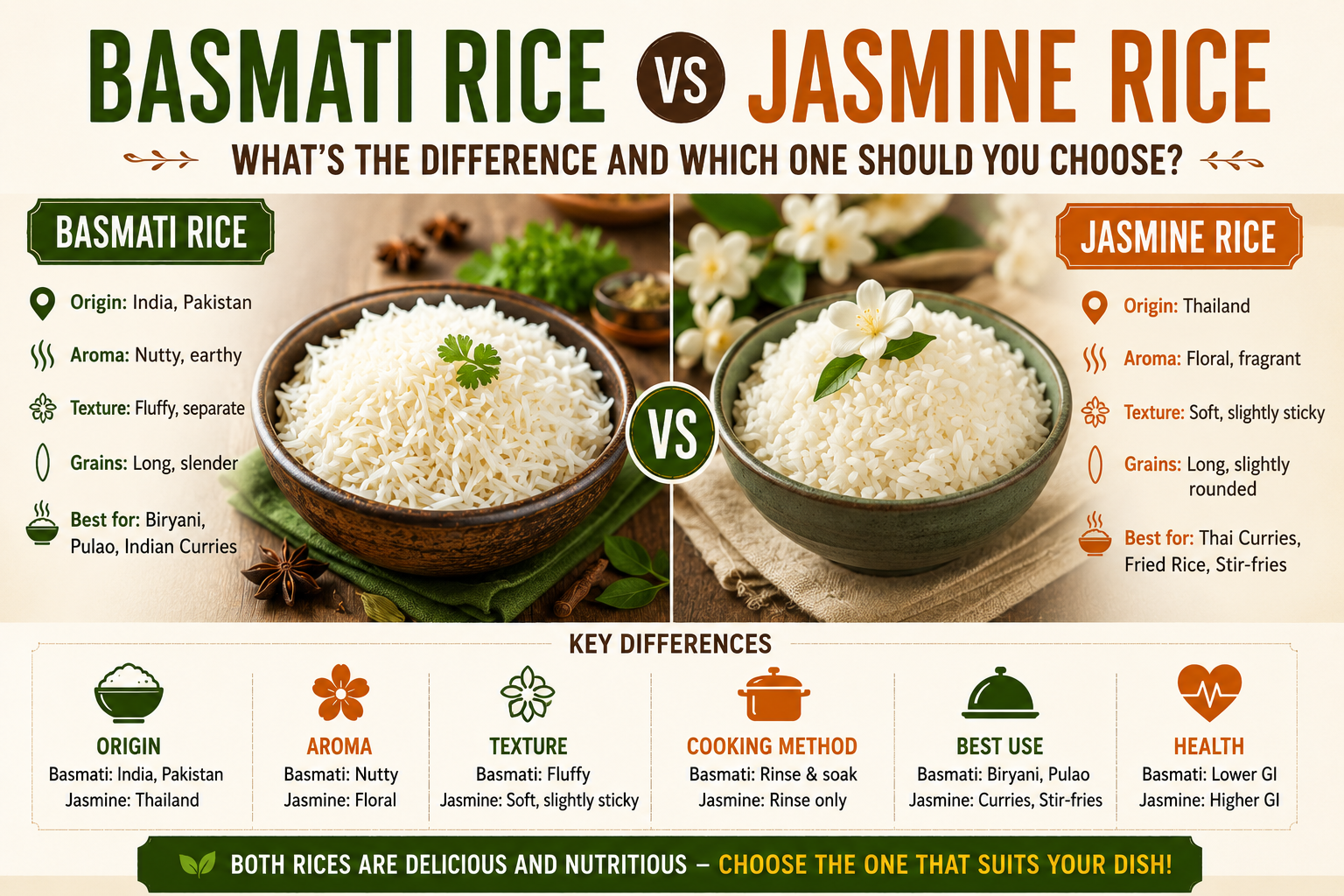
Basmati rice and jasmine rice are two of the world's most popular long-grain rice varieties. Both are known for their unique aroma, delicate texture, and versatility in cooking, but they differ significantly in flavor, appearance, nutrition, and ideal culinary uses.
If you're wondering basmati vs jasmine rice, this guide compares their origins, taste, texture, nutritional value, cooking methods, and best uses to help you choose the right rice for every meal.
Basmati rice is a premium long-grain rice traditionally grown in the foothills of the Himalayas, primarily in India and Pakistan. It is famous for its nutty aroma, fluffy texture, and extra-long grains that expand significantly during cooking.
Basmati rice is widely used in Indian, Middle Eastern, and Persian cuisine.
Long, slender grains
Distinct nutty aroma
Light and fluffy texture
Low to medium glycemic index (depending on variety)
Ideal for curries, biryanis, and pulao
Jasmine rice is a fragrant long-grain rice primarily grown in Thailand, Cambodia, and Vietnam. It has a naturally floral aroma and a soft, slightly sticky texture after cooking.
Jasmine rice is commonly used in Thai, Vietnamese, Chinese, and other Southeast Asian cuisines.
Long grains with rounded edges
Floral aroma
Soft, tender texture
Slightly sticky after cooking
Perfect for stir-fries, curries, and grilled dishes
| Feature | Basmati Rice | Jasmine Rice |
|---|---|---|
| Origin | India & Pakistan | Thailand |
| Grain Length | Extra long | Long |
| Aroma | Nutty | Floral |
| Texture | Fluffy and separate | Soft and slightly sticky |
| Color | White or brown | White or brown |
| Glycemic Index | Lower | Higher |
| Best For | Biryani, pulao, curries | Thai curry, fried rice, stir-fries |
Basmati rice has a mild, nutty flavor with an earthy aroma. The grains remain separate after cooking, making it perfect for dishes where texture matters.
Best Served With
Biryani
Pulao
Butter Chicken
Dal
Paneer Curry
Kebabs
Jasmine rice has a naturally sweet and floral aroma with a softer bite. Its slightly sticky texture helps absorb sauces beautifully.
Best Served With
Thai Green Curry
Red Curry
Stir-Fried Vegetables
Teriyaki Chicken
Grilled Seafood
Fried Rice
Basmati rice originates from India and Pakistan and has been cultivated for centuries. It is considered one of the finest rice varieties in South Asian cuisine.
Jasmine rice comes mainly from Thailand and is a staple ingredient in Southeast Asian cooking. It is valued for its floral aroma and tender texture.
Basmati rice has a distinctive nutty fragrance that becomes more pronounced after cooking. Its aroma complements rich Indian spices and gravies.
Jasmine rice offers a naturally sweet, floral scent similar to jasmine flowers. This delicate fragrance pairs perfectly with Thai curries and lighter dishes.
Cooked basmati rice is light, fluffy, and non-sticky, with each grain remaining separate. This makes it ideal for layered rice dishes like biryani.
Jasmine rice becomes softer and slightly sticky after cooking. The grains cling together gently, making it easier to eat with chopsticks.
Basmati grains are extra-long and become even longer after cooking without becoming thick.
Jasmine rice grains are slightly shorter and plumper. They soften more during cooking while maintaining their delicate texture.
Basmati rice generally has a lower glycemic index than jasmine rice, especially brown basmati. It may be a better option for people monitoring blood sugar levels.
Jasmine rice provides similar carbohydrates and calories but typically has a higher glycemic index. Brown jasmine rice offers more fiber than white jasmine rice.
Basmati rice is usually rinsed and soaked before cooking to achieve fluffy, separate grains.
Jasmine rice is typically rinsed but not soaked. Using slightly less water helps preserve its soft texture without making it mushy.
| Nutrient | Basmati Rice | Jasmine Rice |
|---|---|---|
| Calories | 121 | 129 |
| Carbohydrates | 25g | 28g |
| Protein | 3.5g | 2.7g |
| Fat | 0.4g | 0.3g |
| Fiber | 0.6g | 0.4g |
Values are approximate and may vary by brand and variety.
Both varieties can be part of a balanced diet, but the healthier choice depends on your nutritional goals.
Lower glycemic index
Light and fluffy texture
Easier to pair with Indian meals
Available in nutritious brown varieties
Naturally aromatic
Soft texture
Excellent for Southeast Asian cuisine
Brown jasmine rice contains more fiber than white varieties
Chicken Biryani
Vegetable Pulao
Butter Chicken
Dal Tadka
Rajma
Chole
Lamb Curry
Thai Green Curry
Thai Red Curry
Pineapple Fried Rice
Garlic Shrimp
Sweet and Sour Chicken
Stir-Fried Vegetables
Store both basmati and jasmine rice in airtight containers in a cool, dry place away from direct sunlight. Properly stored uncooked rice can last for months while maintaining its quality and aroma.
Fluffy, separate grains
Authentic Indian cuisine
Biryani and pulao
Lower glycemic index
Soft and tender rice
Thai and Southeast Asian dishes
Slightly sticky texture
Floral aroma
Whether you're cooking an authentic biryani with basmati rice or a delicious Thai curry with jasmine rice, choosing premium-quality rice makes all the difference. Explore Vraj Fresh's selection of high-quality rice varieties and enjoy freshness, aroma, and authentic taste delivered to your doorstep.
When comparing basmati vs jasmine rice, neither is better than the other—they simply excel in different cuisines and recipes. Basmati rice is the preferred choice for Indian and Middle Eastern dishes thanks to its fluffy texture and nutty aroma, while jasmine rice shines in Thai and Southeast Asian cooking with its soft texture and floral fragrance. Understanding these differences will help you choose the perfect rice for every meal.
Basmati rice generally has a lower glycemic index, making it a better option for people looking to manage blood sugar levels.
Basmati rice is the preferred choice because of its long grains, fluffy texture, and ability to remain separate after cooking.
Yes, but the texture and flavor will be different. Jasmine rice is softer and slightly stickier than basmati rice.
Jasmine rice has a sweet floral aroma, while basmati rice has a distinctive nutty fragrance.
Yes. Jasmine rice becomes naturally soft and slightly sticky after cooking, unlike basmati rice, which remains fluffy.
Basmati rice is traditionally used in most Indian dishes, including biryani, pulao, and curries, because of its aroma and texture.


