


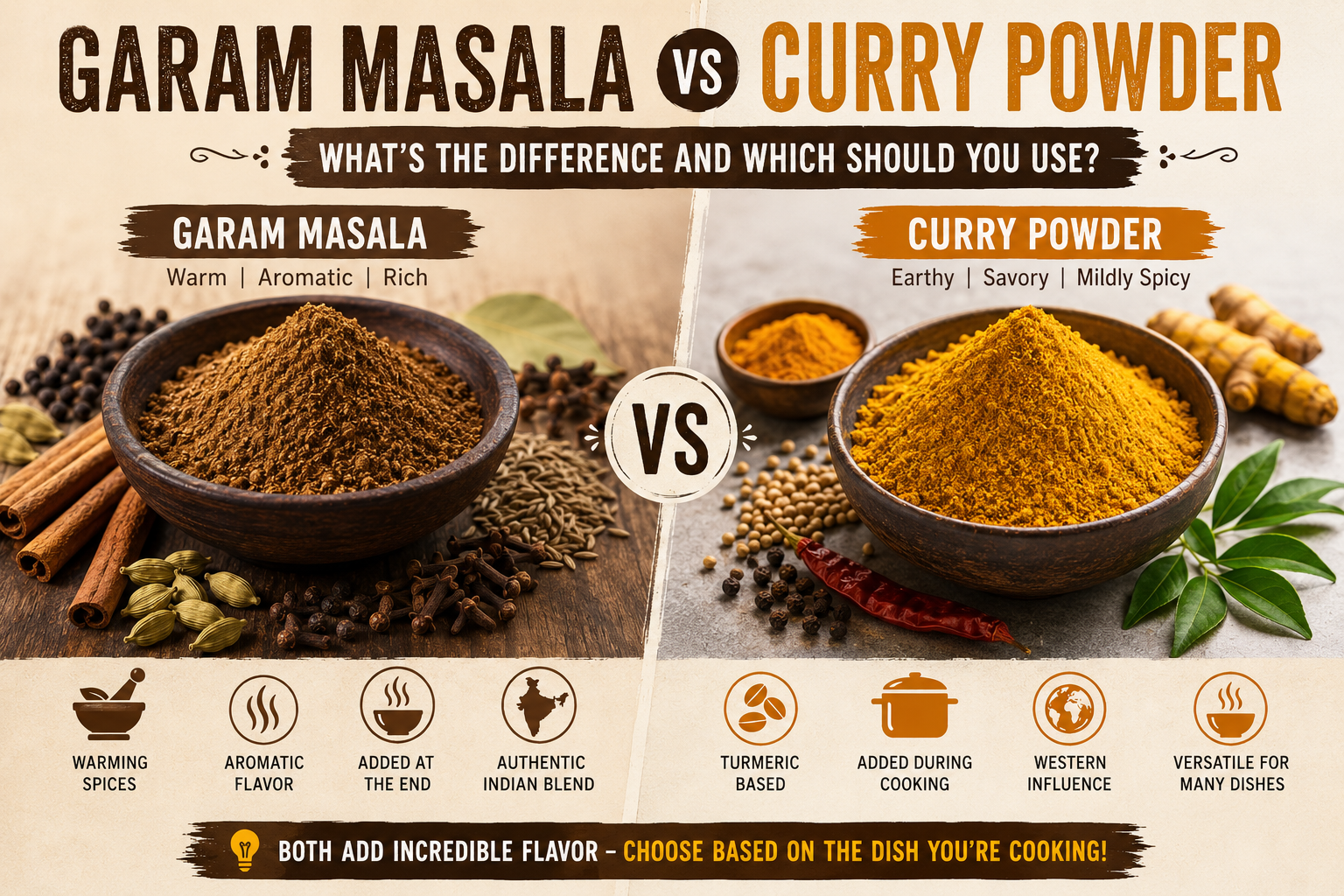
If you've ever cooked Indian food or explored the spice aisle, you've likely come across garam masala and curry powder. While both are popular spice blends that add depth and flavor to dishes, they are far from the same. Many home cooks mistakenly use them interchangeably, only to end up with a completely different taste than expected.
In this guide, we'll compare garam masala vs curry powder, covering their ingredients, flavor profiles, uses, nutritional value, and when to use each in your cooking.
Garam masala is a traditional Indian spice blend made by roasting and grinding whole spices. The word "garam" means "warming," referring to its warming effect in Ayurveda rather than its heat level.
Unlike curry powder, garam masala usually doesn't contain turmeric, which gives it a darker brown color.
Coriander seeds
Cumin seeds
Black pepper
Cardamom
Cinnamon
Cloves
Nutmeg
Bay leaves
Mace
The exact ingredients vary by region and family recipe.
Curry powder is a spice blend created during the British colonial era to replicate Indian curry flavors in a convenient form. It is not traditionally used in Indian households in the same way.
Curry powder usually has a bright yellow color due to turmeric and contains a milder, more earthy flavor.
Turmeric
Coriander
Cumin
Fenugreek
Mustard seeds
Ginger
Black pepper
Chili powder
Garlic powder
| Feature | Garam Masala | Curry Powder |
|---|---|---|
| Origin | India | British-inspired |
| Color | Brown | Yellow |
| Main Flavor | Warm, aromatic, slightly sweet | Earthy, savory, mildly spicy |
| Contains Turmeric | Usually No | Yes |
| Cooking Stage | Added near the end | Added during cooking |
| Heat Level | Mild | Mild to Medium |
| Best For | Indian curries, dals, biryani | Soups, curries, marinades |
Garam masala has a rich aroma with warm notes of cinnamon, cloves, and cardamom. It enhances the overall flavor without dominating the dish.
Perfect for:
Butter Chicken
Paneer Butter Masala
Dal Tadka
Biryani
Chole
Rajma
Curry powder has a brighter, earthier taste because of turmeric and fenugreek. It creates the classic yellow curry flavor found in many Western-style curries.
Ideal for:
Vegetable Curry
Chicken Curry
Lentil Soup
Marinades
Roasted Vegetables
Garam masala is made primarily from warming whole spices such as cinnamon, cardamom, cloves, cumin, coriander, and black pepper. It usually does not contain turmeric.
Curry powder, on the other hand, typically includes turmeric, coriander, cumin, fenugreek, mustard seeds, ginger, and other spices. The blend varies by brand, giving it a broader and more savory flavor profile.
Garam Masala: Dark brown
Curry Powder: Bright yellow
The rich brown color of garam masala comes from roasted spices like cloves, cinnamon, and black pepper. Curry powder gets its vibrant yellow color mainly from turmeric, which is one of its key ingredients and also adds an earthy flavor.
Garam masala has a warm, aromatic, and slightly sweet flavor with hints of cinnamon, cloves, and cardamom. It enhances the aroma of dishes without overpowering other ingredients.
Curry powder has a more earthy, savory, and mildly spicy taste due to turmeric and fenugreek. It provides a well-rounded base flavor commonly associated with many Western-style curry dishes.
Garam masala is usually added during the final few minutes of cooking or sprinkled over the finished dish. This helps preserve its delicate aroma and enhances the overall flavor.
Curry powder is generally added earlier in the cooking process. Cooking it in oil allows the spices to bloom, releasing their full flavor and blending seamlessly into sauces, soups, and curries.
Garam masala is an authentic Indian spice blend that has been used for generations in regional Indian cuisines. Many families even prepare their own unique homemade versions.
Curry powder was created during the British colonial era as a convenient way to recreate Indian-inspired flavors. While it's popular in many international recipes, it is not traditionally used as a single spice blend in most Indian households.
Yes—but the results won't be identical.
If substituting:
Use less garam masala because it's more concentrated.
Add turmeric separately if replacing curry powder.
Adjust salt and chili according to taste.
Both spice blends contain antioxidant-rich spices that may offer health benefits.
Rich in antioxidants
Supports digestion
Naturally warming
Contains anti-inflammatory spices
Turmeric contains curcumin
May support joint health
Rich in antioxidants
Can help reduce inflammation
Neither is significantly healthier than the other—they simply serve different culinary purposes.
Butter Chicken
Paneer Tikka Masala
Dal Makhani
Chole
Rajma
Biryani
Vegetable Pulao
Chicken Curry
Vegetable Curry
Coconut Curry
Curry Fried Rice
Curried Lentils
Curry Soup
Roasted Potatoes
Store both spice blends:
In airtight containers
Away from sunlight
In a cool, dry place
Use within 6–12 months for the best flavor
Authentic Indian flavor
Rich aroma
Finishing seasoning
Restaurant-style curries
Easy everyday cooking
Mild curry flavor
Yellow-colored dishes
Versatile seasoning for soups and vegetables
While garam masala and curry powder may seem similar, they have distinct origins, ingredients, and culinary uses. Garam masala delivers authentic Indian warmth and aroma, while curry powder offers a convenient, turmeric-rich blend ideal for everyday curries. Understanding the differences will help you choose the right spice blend and create flavorful dishes every time.
No. Garam masala is a traditional Indian spice blend, while curry powder is a British-inspired blend that typically contains turmeric.
Yes, but the flavor and color will differ. Add a little turmeric if you want a closer substitute.
Garam masala is widely used in traditional Indian cuisine, whereas curry powder is more common in Western-style curry recipes.
Not usually. It is aromatic and warming rather than hot, though recipes vary.
The yellow color comes from turmeric, one of its main ingredients.
For most authentic Indian recipes, garam masala is the preferred choice, often used alongside other individual spices rather than as a complete seasoning blend.


