


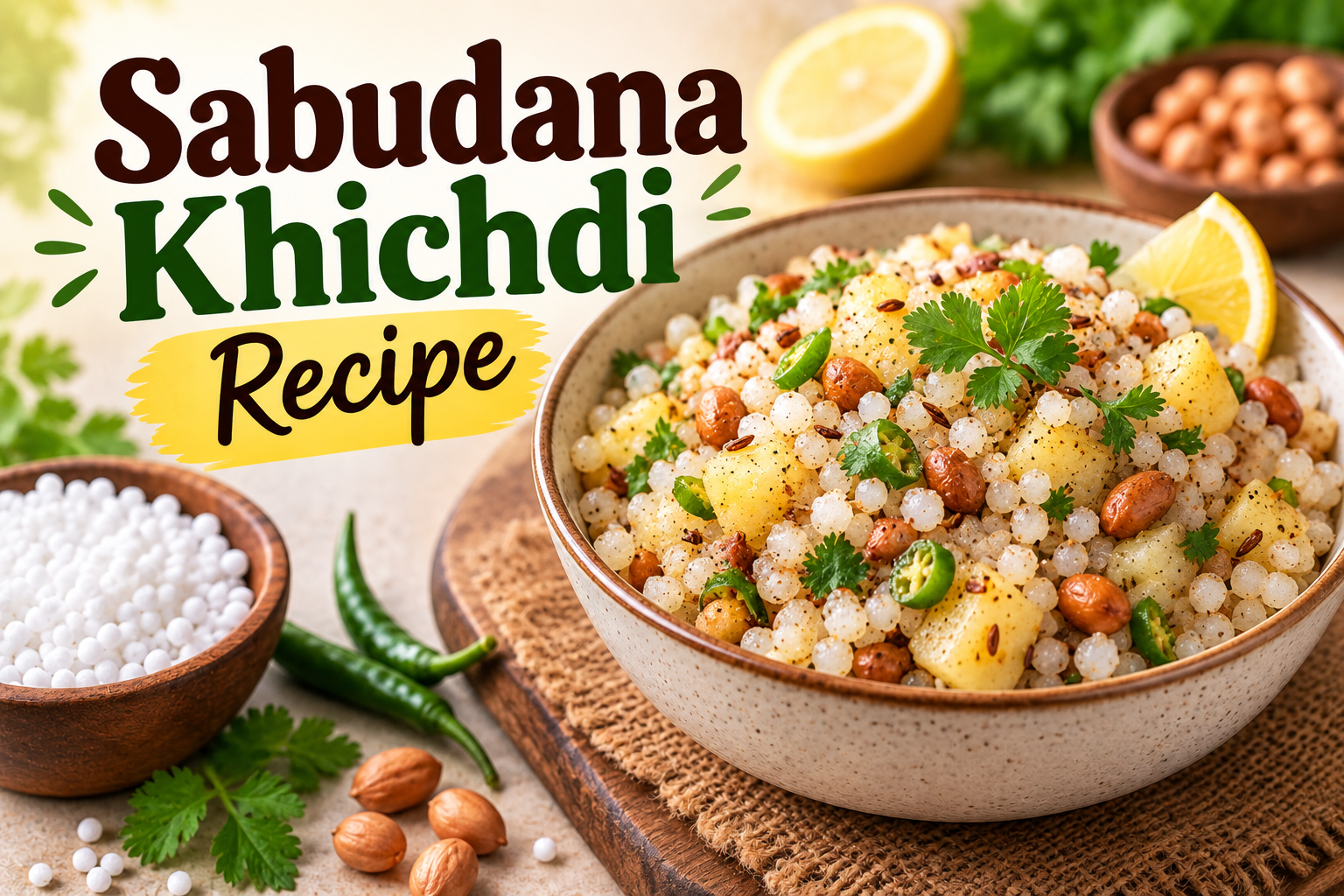
Sabudana Khichdi, also known as Sago Khichdi, is a popular Indian dish made with soaked sabudana, also called sago or tapioca pearls. It is prepared with roasted peanuts, potatoes, green chilies, cumin, lemon juice, and fresh coriander. Sabudana Khichdi is especially popular during fasting days such as Navratri, Maha Shivratri, and Ekadashi, but it is also enjoyed as a breakfast or light meal.
The biggest challenge when making sabudana or sago khichdi at home is getting the right texture. If the sago pearls are soaked with too much water, they can become sticky and mushy. If they are not soaked enough, the tapioca pearls can remain hard in the center. This easy Sabudana Khichdi recipe explains how to soak sago properly, prepare the ingredients, cook the khichdi, and get soft, separate, and flavorful tapioca pearls every time.
Sabudana Khichdi is a traditional Indian preparation made primarily with sabudana, also known as sago or tapioca pearls. The soaked pearls are cooked with roasted peanuts, potatoes, cumin, green chilies, and other simple ingredients.
In different parts of India, sabudana is commonly referred to as sago, while the small white pearls are also called tapioca pearls. Because of this, you may find the dish described as Sabudana Khichdi, Sago Khichdi, or Tapioca Pearl Khichdi.
The dish has a slightly chewy texture from the soaked sago pearls and a nutty flavor from roasted peanuts. Lemon juice and fresh coriander add freshness, while green chilies provide heat.
Sabudana Khichdi is commonly prepared during Hindu fasting because sabudana is considered a suitable fasting ingredient in many Indian households.
1 cup sabudana or sago pearls
1 medium potato, boiled and chopped
½ cup roasted peanuts
1–2 green chilies, finely chopped
1 teaspoon cumin seeds
1–2 tablespoons ghee or oil
½ teaspoon sugar, optional
Salt or rock salt to taste
1 tablespoon fresh lemon juice
Fresh coriander for garnish
1 teaspoon grated ginger
A few curry leaves
1–2 tablespoons grated fresh coconut
A pinch of black pepper
Proper soaking is the most important step when making sabudana or sago khichdi.
Place the sabudana in a bowl and rinse it 2–3 times with water.
Gently rub the sago pearls with your fingers while rinsing. Continue until the water becomes relatively clear.
After washing, add just enough water to reach the level of the sabudana.
Avoid adding a large amount of excess water. Sago pearls absorb water during soaking, and too much water can make them mushy.
Cover the bowl and leave the sabudana to soak for several hours or overnight, depending on the type and size of the pearls.
Different brands of sago can absorb water at slightly different rates, so the texture test is more useful than following a fixed soaking time alone.
Take one soaked sago pearl and press it gently between your fingers.
It should mash easily without having a hard center. If the center is still firm, allow the sabudana to soak for a little longer.
Once properly soaked, drain any remaining water before cooking.
Roast the peanuts until fragrant and lightly golden if they are not already roasted.
Allow them to cool and crush them coarsely. Avoid turning them into a completely smooth powder because small crunchy pieces add texture to the sago khichdi.
Add the soaked and drained sabudana to a bowl.
Mix it with the crushed roasted peanuts, chopped green chilies, salt, and optional sugar.
Mix gently so that the tapioca pearls remain intact.
Heat ghee or oil in a wide pan over medium heat.
Add cumin seeds and allow them to crackle. Add ginger and curry leaves if using.
Add the boiled and chopped potato. Cook for a few minutes until the potato pieces become lightly golden.
Add the prepared sabudana mixture to the pan.
Mix gently and cook over medium-low heat. Avoid continuously stirring because excessive stirring can make the sago pearls sticky.
Cook until most of the sabudana pearls become translucent and look cooked.
This usually takes around 5–8 minutes, depending on the soaking time and type of sabudana.
Do not overcook the tapioca pearls.
Turn off the heat and add fresh lemon juice.
Garnish with chopped coriander and serve warm.
Getting separate, fluffy sago pearls comes down mainly to soaking and cooking technique.
Do not completely submerge the sabudana in excess water while soaking. Too much water is one of the most common reasons for sticky khichdi.
The sago pearls should absorb enough water to become soft throughout. Test one pearl before cooking.
If there is water remaining after soaking, drain it completely before mixing the sabudana with the other ingredients.
A wide pan gives the tapioca pearls more room to cook evenly and allows excess moisture to escape.
Sabudana only needs to become translucent and cooked through. Cooking it for too long can result in a sticky texture.
Mix the sago khichdi gently instead of constantly stirring it.
Sticky sabudana khichdi is usually caused by one or more of these factors:
Too much water during soaking
Sago not drained properly
Over-soaking
Overcooking
Excessive stirring
Using a pan that is too small
Cooking on very high heat
The soaking method can vary slightly depending on the brand and size of sabudana or sago, so adjusting the water and soaking time may be necessary.
Sabudana Khichdi is commonly eaten during fasting periods in many Indian households.
For a fasting-friendly version, ingredients such as rock salt, potatoes, peanuts, ghee, cumin, lemon, and coriander are commonly used.
Fasting rules vary between families and traditions, so ingredients should be adjusted according to individual fasting practices.
Sabudana and sago are primarily sources of carbohydrates, while peanuts contribute protein and healthy fats. Potatoes provide carbohydrates and several nutrients, while lemon and coriander add freshness and flavor.
Because sabudana and potatoes are both carbohydrate-rich, portion size can be important depending on your dietary goals.
Adding a reasonable amount of peanuts and pairing the dish with other nutritious foods can make it part of a balanced meal.
Sabudana Khichdi or Sago Khichdi is best served warm.
You can serve it with:
Fresh yogurt
Lemon wedges
Fresh coriander
Grated coconut
A small spoon of ghee
Roasted peanuts
Some people also enjoy it with a side of plain yogurt for a cooling contrast.
A traditional Maharashtrian-style preparation commonly uses sabudana, peanuts, potatoes, cumin, green chilies, lemon, and fresh coriander.
If you don't want to use potatoes, simply leave them out and increase the amount of peanuts slightly for additional texture.
Fresh grated coconut can be added at the end for a mild sweetness and additional texture.
Add extra green chilies or a small amount of black pepper if you prefer a spicier version.
If you see Sabudana Khichdi and Sago Khichdi used for this dish, they generally refer to the same type of preparation.
| Term | Meaning |
|---|---|
| Sabudana | Common Indian name for tapioca pearls |
| Sago | Common name used for the small starch pearls |
| Tapioca pearls | Common English term for the pearls used in many preparations |
| Sabudana Khichdi | Traditional Indian name of the dish |
| Sago Khichdi | Alternative name for the same preparation |
The exact terminology can vary by region, product, and recipe.
| Step | What to Do |
|---|---|
| 1 | Rinse sabudana or sago pearls |
| 2 | Soak with limited water |
| 3 | Check that pearls are soft |
| 4 | Drain excess water |
| 5 | Mix with peanuts and seasonings |
| 6 | Cook potatoes with cumin |
| 7 | Add sabudana mixture |
| 8 | Cook until translucent |
| 9 | Add lemon and coriander |
| 10 | Serve warm |
Sabudana doesn't need to be swimming in water while soaking. Use enough water for the pearls to absorb moisture without leaving excessive liquid.
Always press a soaked pearl between your fingers before cooking. A hard center usually means it needs more soaking.
Potatoes are a popular ingredient, but too much potato can overpower the texture and flavor of the sago.
A crowded pan can make it difficult for the tapioca pearls to cook evenly.
Once the pearls become translucent, stop cooking. Extended cooking can make the dish sticky.
Sabudana Khichdi tastes best when freshly prepared.
If you need to prepare ingredients ahead of time, you can soak the sabudana, roast and crush the peanuts, and boil the potatoes in advance. Keep the prepared ingredients refrigerated until you're ready to cook.
For the best texture, cook the sago khichdi shortly before serving.
Want to make delicious Sabudana Khichdi at home? Get quality sabudana, sago, peanuts, spices, and other Indian grocery essentials from Vraj Fresh.
A good Sabudana Khichdi recipe comes down to three things: properly soaked sabudana, the right amount of water, and gentle cooking. Once you get the soaking method right, making soft and separate sago pearls becomes much easier.
Whether you call it Sabudana Khichdi, Sago Khichdi, or Tapioca Pearl Khichdi, this traditional dish makes a satisfying breakfast, light meal, or fasting-friendly preparation.
With roasted peanuts, potatoes, cumin, green chilies, lemon, and coriander, you can prepare flavorful sabudana at home without complicated ingredients.
Sabudana Khichdi is an Indian dish made with soaked sabudana, also known as sago or tapioca pearls, along with peanuts, potatoes, cumin, green chilies, lemon, and other ingredients.
Sabudana is the common Indian term used for the small white pearls made from tapioca starch. Sago is another commonly used name, although the exact source and production method can vary by product.
The soaking time depends on the type and size of sabudana. Many varieties work well with several hours of soaking or overnight soaking. The best test is to press a soaked pearl and make sure it has no hard center.
Sticky khichdi can result from excess soaking water, insufficient draining, overcooking, or excessive stirring. Use limited water while soaking and cook the sago pearls gently.
Yes. Potatoes can be skipped. You can use roasted peanuts, coconut, and other suitable ingredients for additional flavor and texture.
Sabudana Khichdi is commonly prepared during fasting in many Indian households. However, fasting rules vary, so check which ingredients are permitted according to your tradition.
Yes. You can use cooking oil instead of ghee. Ghee adds a richer flavor, while oil works well for a lighter preparation.
Cooked sago pearls become mostly translucent and soft. Once they reach this stage, remove the pan from the heat to avoid overcooking.
Yes. Peanuts can be omitted if needed. The texture and flavor will be different, but the recipe can still be prepared with sabudana, potatoes, spices, lemon, and coriander.
Roast the peanuts well, use fresh green chilies, cook the cumin in ghee or oil, and finish the khichdi with fresh lemon juice and coriander.


