


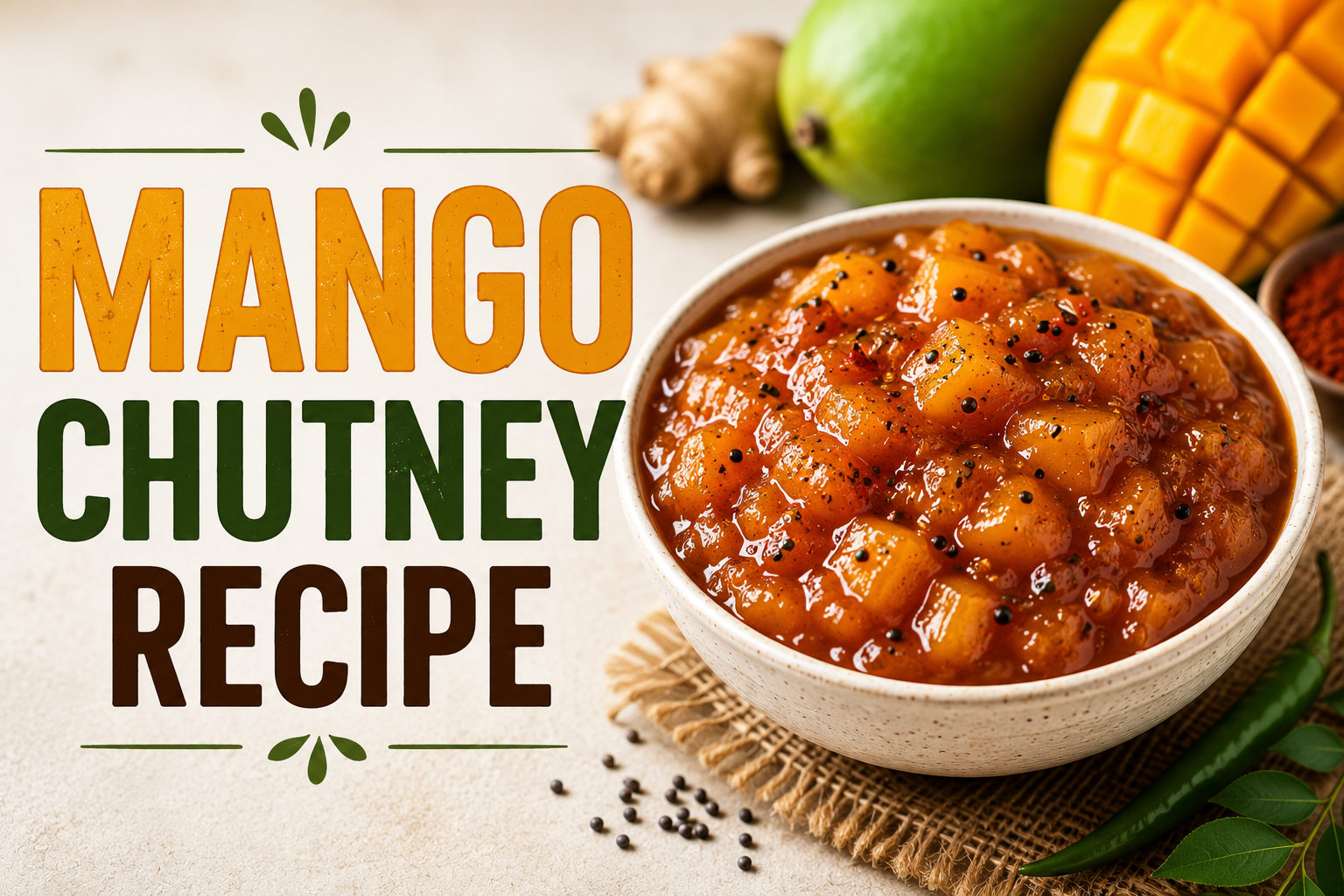
This easy mango chutney recipe combines the sweet, tangy flavor of mangoes with warming spices and a touch of heat. It makes a delicious homemade condiment that can be served with Indian meals, snacks, breads, sandwiches, or grilled foods. Whether you use raw mangoes for a sharper tang or slightly ripe mangoes for a sweeter chutney, this recipe is simple to prepare and easy to customize. Mango chutney is traditionally made in several regional styles, ranging from fresh raw-mango chutneys to thicker, jam-like versions.
Mango chutney is a flavorful condiment made with mangoes, spices, and sweet or sour ingredients. Depending on the recipe, it can be smooth or chunky and range from mildly sweet to spicy and tangy.
Indian-style versions commonly use raw or semi-ripe mangoes with ingredients such as jaggery or sugar, chili, cumin, ginger, and other aromatic spices.
Mango chutney has a distinctive combination of sweet, tangy, spicy, and savory flavors. The mango provides natural fruitiness, while spices add warmth and depth.
The final flavor depends on the mango and sweetener you use. Raw mango creates a sharper, more sour chutney, while semi-ripe mango gives a naturally sweeter and softer flavor.
This homemade mango chutney is easy to prepare and uses simple ingredients that are commonly available in an Indian kitchen. You can adjust the sweetness and spice level according to your preference.
It also works with a wide variety of foods, making it more versatile than a typical side dish. Serve it with Indian breads, snacks, rice dishes, grilled foods, sandwiches, or even a cheese board.
Use about 2 large raw or semi-ripe mangoes, depending on the size. Raw mangoes provide a stronger tang, while semi-ripe mangoes create a sweeter chutney.
Choose mangoes that are firm and free from bruises. Firm fruit also holds its texture better if you prefer a slightly chunky chutney.
Jaggery adds sweetness while bringing a deeper caramel-like flavor to the chutney. You can also use regular sugar if you prefer a cleaner, lighter sweetness.
Adjust the quantity according to how sour your mangoes are. Very sour raw mangoes may require more sweetener to create a balanced flavor.
Fresh ginger adds warmth and a slightly sharp flavor that complements the mango. Finely grate or mince it before adding it to the chutney.
Chili gives the chutney its characteristic spicy kick. Use fresh green chili for a sharper heat or red chili powder for a deeper color and warmth.
You can reduce or increase the amount depending on your spice preference.
Cumin provides an earthy, slightly nutty flavor that works particularly well with tangy mango. Toasting the cumin lightly before adding it can make its aroma more pronounced.
Red chili powder adds both heat and color. Kashmiri chili powder can be used when you want a vibrant red color without making the chutney extremely spicy.
A small amount of salt balances the sweetness and acidity of the mango. Add it gradually and taste the chutney before adding more.
A little oil is used to cook the spices and develop their flavor. You can use a neutral cooking oil so it doesn't overpower the mango.
Wash, peel, and remove the stone from the mangoes. Cut the flesh into small pieces so they cook evenly.
If you're using very raw mangoes, the pieces will be firm and noticeably sour. Slightly ripe mangoes will soften faster and create a naturally sweeter chutney.
Heat oil in a heavy-bottomed pan over medium heat. Add cumin seeds and allow them to sizzle for a few seconds.
This simple tempering step releases the aroma of the cumin and gives the chutney a deeper savory flavor.
Add the grated ginger and chopped green chili to the pan. Sauté for about 30 seconds until fragrant.
Don't cook the ginger and chili for too long because they can burn quickly. Keep the heat moderate and stir continuously.
Add the chopped mango pieces to the pan and mix them with the spices. Cook for a few minutes so the mango starts to soften.
If you're using very firm raw mangoes, you may need slightly more cooking time before adding the sweetener.
Add turmeric, red chili powder, coriander powder, and salt. Stir everything together so the mango pieces are evenly coated.
Cooking the spices briefly with the mango helps develop their flavor without making the chutney overly spicy.
Pour in about ¼ cup of water and mix well. Cover the pan and cook over medium-low heat until the mango becomes tender.
The cooking time can vary depending on how firm the mangoes are. Raw mango chutney recipes commonly cook the fruit until tender before adding the sweetener.
Once the mango has softened, add jaggery or sugar and mix well. The sweetener will dissolve into the mango mixture and create the characteristic sweet-and-tangy flavor.
Let the chutney simmer uncovered until it reaches your preferred consistency. Add a little water if it becomes too thick.
Taste the chutney and adjust the sweetness, salt, or chili according to your preference. The ideal chutney should have a balanced combination of sweet, sour, spicy, and savory flavors.
If the mango is extremely sour, add a little more jaggery. If it tastes too sweet, a small amount of lemon juice or additional raw mango can help balance it.
Continue cooking until the mango pieces are soft and the chutney reaches a thick but spoonable consistency. You can leave some mango pieces intact for a chunky texture or mash them for a smoother chutney.
Turn off the heat and allow the chutney to cool before transferring it to a clean container.
For a smooth mango chutney, cook the mango until very soft and then mash it thoroughly with a spoon or potato masher. You can also blend the cooled chutney for a completely smooth consistency.
A smooth version works particularly well as a spread for sandwiches, wraps, grilled foods, and snacks.
For chunky chutney, cut the mango into slightly larger pieces and avoid overcooking them. Simmer until the pieces become tender but still hold their shape.
This style has more texture and works especially well alongside Indian breads, rice dishes, and savory snacks.
A sweet mango chutney uses more jaggery or sugar and little or no chili. It has a thicker, jam-like consistency and works well as a spread or accompaniment to mild foods.
A spicy mango chutney uses fresh chilies or chili powder for more heat and usually has a stronger savory-spiced flavor. Both styles can be made using the same basic mango chutney recipe.
If your chutney is too spicy, increase the amount of mango or add a little more jaggery to balance the heat. A small amount of additional water can also help dilute the intensity.
Add the sweetener gradually and taste after each addition so you don't make the chutney excessively sweet.
If you prefer a sweeter chutney, increase the amount of jaggery or sugar according to the sourness of the mangoes. Semi-ripe mangoes can also provide more natural sweetness.
Remember that the chutney can taste slightly sharper when hot, so allow it to cool before making the final adjustment.
You can make mango chutney without refined sugar by using jaggery, dates, or naturally sweet ripe mangoes. Jaggery is especially useful because it provides sweetness while adding a deeper flavor.
For a completely unsweetened version, use ripe mangoes and reduce the amount of chili and sour ingredients to create a naturally fruity chutney.
Mango chutney makes a flavorful accompaniment to crispy samosas. The sweet and tangy flavor provides a nice contrast to the savory potato and spice filling.
Serve mango chutney alongside vegetable or onion pakoras for a simple snack. Its sweet-spicy flavor balances the crispy, savory coating.
Mango chutney can be served with roti, paratha, or other Indian flatbreads. It adds moisture and a bright sweet-tangy flavor to the meal.
A spoonful of mango chutney can add extra flavor to simple rice dishes and khichdi. The tanginess works particularly well with mild, comforting meals.
Spread a thin layer of mango chutney inside sandwiches or wraps for a sweet and spicy flavor boost. It pairs particularly well with cheese, grilled vegetables, and savory fillings.
Mango chutney works well alongside grilled vegetables, paneer, chicken, and other savory grilled foods. The fruity acidity helps balance rich and smoky flavors.
Raw mango chutney uses firm green mangoes for a strong sour flavor. Jaggery, chili, and spices can be added to balance the sharpness.
This style is particularly popular during mango season and can be served with everyday Indian meals.
Adding extra fresh ginger creates a warmer and more aromatic chutney. The spicy ginger works particularly well with sweet mango.
This variation is ideal if you enjoy chutneys with a stronger spice profile.
Fresh garlic adds a savory, pungent flavor that works well with sweet and spicy mango. Use a small amount initially because garlic can quickly become the dominant flavor.
Raisins add little bursts of sweetness and texture to the chutney. They work particularly well in thicker, jam-like versions.
For a hotter version, increase the fresh chili or red chili powder. You can also add chili flakes for a more noticeable heat.
Transfer cooled mango chutney to a clean, airtight glass container and refrigerate it. Homemade chutney can keep for a reasonable period when handled and stored properly, but the exact shelf life depends on the recipe, acidity, sugar level, preparation, and storage conditions.
For longer-term preservation, use a tested canning method rather than relying only on refrigeration. Some recipes use vinegar and sugar specifically as part of a preserved chutney preparation.
Yes, mango chutney can be frozen in a suitable airtight freezer container. Divide it into small portions so you can thaw only what you need.
Allow frozen chutney to thaw in the refrigerator and stir it well before serving. The texture may change slightly after freezing, particularly if the chutney contains larger mango pieces.
Firm raw or semi-ripe mangoes are ideal when you want a balanced sweet-and-tangy chutney. Very ripe mangoes will produce a softer and naturally sweeter version.
Don't add all the jaggery at once. Start with less, taste the mango mixture, and gradually increase the sweetness until the acidity is balanced.
Gentle cooking allows the mango and spices to develop their flavors without burning the sugar. Once the jaggery is added, keep the heat moderate and stir regularly.
The chutney will thicken further as it cools. Stop cooking when it is slightly looser than the final consistency you want.
Always taste the chutney before turning off the heat. This is the easiest time to adjust salt, sweetness, acidity, and spice.
Very soft mangoes can make the chutney excessively sweet and mushy. If you're looking for a traditional tangy flavor, choose firm raw or semi-ripe mangoes.
Too much jaggery or sugar can overpower the natural mango flavor. Add it gradually and adjust after tasting.
Once the sweetener is added, keep the heat moderate and stir regularly. Burnt sugar can give the chutney a bitter taste.
The mango should become tender without losing all of its texture unless you're specifically making a smooth chutney.
A good mango chutney should not taste only sweet or sour. Adjust the sweetener, salt, chili, and acidity until all the flavors work together.
The shelf life depends heavily on the recipe and storage method. A refrigerated homemade chutney should be stored in a clean airtight container and checked for any changes in smell, appearance, or texture before use.
For chutneys intended for long-term storage, follow a tested preservation or canning recipe rather than estimating shelf life. Commercially or properly preserved chutneys can have much longer storage times than a simple fresh homemade version.
Make your mango chutney even more flavorful with quality Indian spices, jaggery, and pantry essentials from Vraj Fresh.
Shop authentic Indian ingredients and bring traditional flavors to your kitchen today!
This mango chutney recipe is an easy way to turn fresh mangoes into a flavorful homemade condiment. The combination of mango, jaggery, chili, ginger, cumin, and spices creates a delicious balance of sweet, tangy, spicy, and savory flavors.
You can make it smooth or chunky, mild or spicy, and adjust the sweetness depending on the mangoes you have. Serve it with samosas, pakoras, parathas, rice, sandwiches, grilled foods, or your favorite Indian dishes for an instant burst of flavor.
Firm raw or semi-ripe mangoes are excellent for a tangy mango chutney. They provide enough acidity and texture to balance the sweetness and spices.
Mango chutney can be either sweet, spicy, or a combination of both. The amount of jaggery or sugar and chili can be adjusted according to your preference.
Yes. Raw mango is commonly used for Indian-style mango chutneys because its natural sourness creates a strong sweet-and-tangy flavor when combined with jaggery and spices.
Yes. Ripe or semi-ripe mangoes can be used to make a sweeter and fruitier chutney. You may need less jaggery or sugar because ripe mangoes contain more natural sweetness.
Mango chutney pairs well with samosas, pakoras, paratha, roti, rice, khichdi, sandwiches, grilled vegetables, paneer, and other savory foods.
Cook the chutney uncovered over medium-low heat until excess moisture evaporates. Remember that it will become thicker as it cools, so don't reduce it too much while it is still hot.
Add more mango or a small amount of jaggery to balance the heat. Make adjustments gradually and taste after each addition.
Yes. You can use regular sugar, dates, or naturally sweet ripe mangoes instead. The sweetener can be adjusted based on the type and sourness of the mango.
Yes. Store it in an airtight freezer-safe container and thaw it in the refrigerator before serving. The texture may change slightly after freezing.
Store fresh homemade mango chutney in a clean, airtight container in the refrigerator. For long-term storage, use a properly tested preservation or canning method rather than relying on refrigeration alone.


