


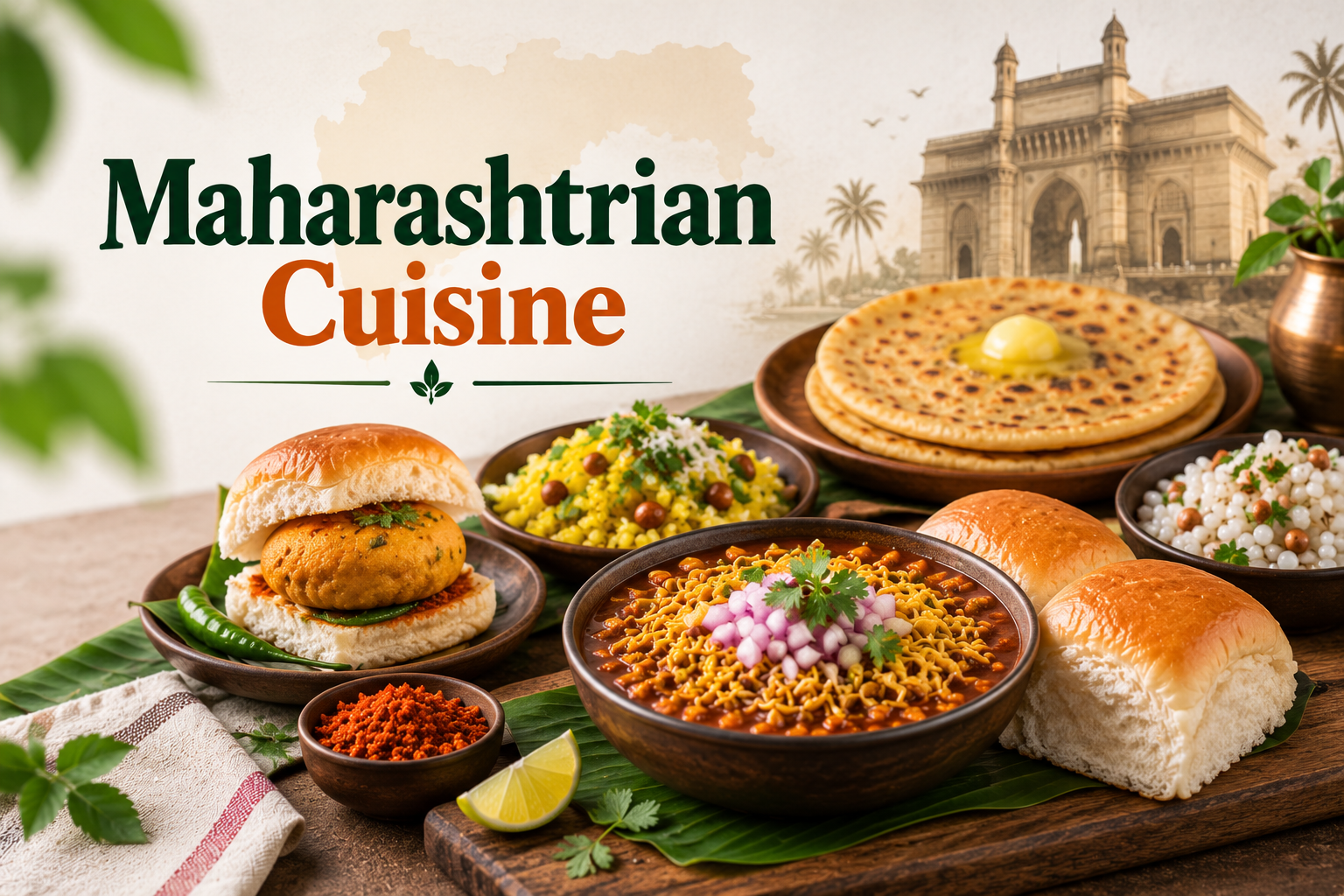
Maharashtrian cuisine is known for its bold flavors, comforting meals, and incredible variety of vegetarian and non-vegetarian dishes. From spicy curries and flavorful rice dishes to crispy snacks and traditional sweets, the food of Maharashtra reflects the state's diverse regions, communities, and food traditions. Whether you are exploring Maharashtrian food for the first time or looking to recreate authentic dishes at home, this guide introduces some of the most popular Maharashtrian dishes and explains what makes each one special.
Maharashtrian cuisine is the traditional food culture of Maharashtra, with recipes that vary significantly between regions. Coastal areas are known for coconut, seafood, and rice-based preparations, while parts of western and central Maharashtra are known for spicy curries, bhakri, legumes, and hearty vegetarian dishes.
Common ingredients include peanuts, coconut, sesame, lentils, gram flour, jaggery, tamarind, kokum, chilies, and a variety of aromatic spices. Many dishes balance spicy, sweet, tangy, and earthy flavors.
One of the defining characteristics of Maharashtrian food is its balance of flavors. A single meal may include spicy vegetables, tangy chutney, mildly sweet preparations, crisp snacks, and cooling accompaniments.
The cuisine also makes excellent use of everyday ingredients. Peanuts, potatoes, onions, lentils, rice, wheat, and seasonal vegetables are transformed into flavorful dishes using regional spice blends and traditional cooking techniques.
Misal Pav is one of the most famous Maharashtrian dishes, especially popular in Maharashtra as a breakfast or snack. It consists of a spicy sprouted lentil curry called misal topped with farsan, onions, coriander, and other garnishes.
It is traditionally served with soft pav and accompaniments such as lemon and yogurt. The combination of spicy, crunchy, tangy, and soft textures makes Misal Pav especially satisfying.
Vada Pav is a beloved Maharashtrian street food made with a deep-fried potato fritter placed inside a soft pav. The potato vada is usually flavored with spices, garlic, green chili, and herbs.
It is commonly served with dry garlic chutney and green or sweet chutney. Simple, inexpensive, and filling, Vada Pav has become one of Maharashtra's most recognizable foods.
Puran Poli is a traditional sweet flatbread prepared with a filling made from cooked chana dal and jaggery. The filling is flavored with cardamom and sometimes nutmeg before being enclosed in wheat-based dough and rolled out.
It is especially associated with festive meals and celebrations. Puran Poli is commonly served warm with ghee and is enjoyed across Maharashtra with regional variations.
Maharashtrian Poha is a popular breakfast made with flattened rice, onions, potatoes, green chilies, peanuts, mustard seeds, and turmeric.
The dish is light but flavorful, with the peanuts providing a pleasant crunch. A squeeze of fresh lemon juice and a sprinkle of coriander add freshness before serving.
Sabudana Khichdi is made using soaked tapioca pearls, roasted peanuts, potatoes, green chilies, cumin, and fresh coriander. It is particularly popular during fasting periods.
The dish has a slightly chewy texture from the sabudana and a nutty flavor from roasted peanuts. Proper soaking is important because it helps prevent the sabudana from becoming sticky.
Bharli Vangi is a traditional stuffed eggplant preparation. Small brinjals are filled with a flavorful mixture that commonly includes coconut, peanuts, spices, and other ingredients before being slowly cooked.
The combination of tender eggplant and aromatic stuffing creates a rich and earthy dish. It pairs beautifully with bhakri or steamed rice.
Batata Bhaji is a simple potato preparation commonly served with Maharashtrian meals and breakfasts. Potatoes are cooked with mustard seeds, turmeric, green chili, curry leaves, and other spices.
It is especially popular alongside puri and is also commonly served as part of breakfast or festive meals. Its simple seasoning allows the natural flavor of the potatoes to shine.
Kothimbir Vadi is a savory snack made primarily with fresh coriander leaves and gram flour. The mixture is seasoned with spices, steamed or cooked, cut into pieces, and then pan-fried or deep-fried.
The result is crisp on the outside with a soft, flavorful center. It is commonly enjoyed with green chutney or other accompaniments.
Thalipeeth is a traditional savory flatbread made from a multigrain flour mixture. Depending on the recipe, it may contain ingredients such as roasted grains, lentils, spices, onions, and fresh herbs.
The dough is traditionally shaped by hand and cooked on a tawa until crisp and golden. Thalipeeth is often served with yogurt, butter, pickle, or chutney.
Zunka Bhakri is a classic Maharashtrian combination of gram flour-based Zunka and bhakri. Zunka is a dry or semi-dry preparation made with besan, onions, chilies, mustard seeds, and spices.
Bhakri is a rustic flatbread commonly made with millet or other grains. Together, they make a simple, hearty meal that represents the everyday cooking traditions of rural Maharashtra.
Amti is a distinctive Maharashtrian dal known for its combination of lentils, spices, and a subtle sweet-tangy flavor. A traditional preparation may use ingredients such as jaggery, tamarind, coconut, and goda masala.
It is usually served with steamed rice and ghee. The balance of dal, spice, sweetness, and acidity makes Amti different from many other Indian dal preparations.
Matki Usal is a spicy sprouted moth bean curry prepared with onions, tomatoes, coconut, and Maharashtrian spices. The sprouts provide a hearty texture and earthy flavor.
It can be enjoyed with chapati, bhakri, or rice. Matki Usal is also one of the important components found in some versions of Misal.
Kanda Bhaji is a popular Maharashtrian onion fritter made with sliced onions, gram flour, green chilies, and spices. Small portions of the mixture are dropped into hot oil and fried until crisp.
These crispy onion fritters are particularly enjoyable with hot tea and chutney. They are a popular snack during rainy weather.
Ukadiche Modak is a traditional Maharashtrian sweet strongly associated with festive celebrations. It consists of a soft steamed rice-flour covering filled with coconut and jaggery flavored with cardamom.
The filling is sweet and aromatic, while the steamed outer layer remains soft and delicate. Modak is especially associated with Ganesh Chaturthi celebrations.
Shrikhand is a creamy dessert made from strained yogurt, sugar, and aromatic ingredients such as cardamom and saffron. It has a thick, smooth texture and a rich sweet flavor.
It is often served chilled and can be paired with puri as part of a traditional Maharashtrian meal. Mango Shrikhand, known as Amrakhand, is another popular variation.
Maharashtrian breakfasts often include dishes that are filling but relatively simple to prepare. Poha, Sabudana Khichdi, Thalipeeth, and Misal Pav are among the popular options.
Many breakfast dishes also work well as snacks throughout the day. Vada Pav, Kothimbir Vadi, and Kanda Bhaji are examples of foods that can easily be enjoyed outside traditional meal times.
Vegetarian food plays an important role in Maharashtrian cuisine. Dishes such as Bharli Vangi, Batata Bhaji, Zunka, Amti, Matki Usal, and Thalipeeth showcase how vegetables, lentils, grains, peanuts, coconut, and spices can be combined into satisfying meals.
The cuisine is especially good at creating flavorful dishes from inexpensive and readily available ingredients.
Maharashtra has a rich snack culture that includes both street foods and homemade preparations. Vada Pav, Kothimbir Vadi, Kanda Bhaji, Misal Pav, and Thalipeeth are excellent examples.
These dishes range from quick fried snacks to more substantial preparations that can serve as breakfast or a light meal.
Maharashtrian desserts often feature ingredients such as jaggery, coconut, dairy, rice flour, wheat flour, and cardamom.
Puran Poli, Ukadiche Modak, and Shrikhand are among the best-known traditional sweets. Each has a distinctive texture and preparation method, making them an important part of Maharashtra's festive food traditions.
Goda masala is a characteristic spice blend used in many Maharashtrian preparations. It typically provides a deep, aromatic flavor without relying solely on heat.
It can be used in dishes such as Amti, Usal, vegetables, rice preparations, and other regional recipes.
Peanuts are widely used in Maharashtrian cooking. They add richness, texture, and a nutty flavor to dishes such as Sabudana Khichdi, chutneys, and stuffed vegetables.
Coconut is particularly important in the cuisine of Maharashtra's coastal regions. Fresh coconut, dried coconut, and coconut-based preparations are used in curries, chutneys, vegetables, and sweets.
Jaggery is used to introduce natural sweetness and balance sour or spicy flavors. It is an important ingredient in preparations such as Puran Poli and Amti.
Kokum is especially common in coastal Maharashtrian cooking. It provides a distinctive sour flavor and is used in beverages, curries, and other preparations.
Maharashtrian cooking uses a variety of spice combinations depending on the dish and region. Goda masala is particularly characteristic of Maharashtrian cuisine, while red chilies, turmeric, cumin, coriander, mustard seeds, sesame, and garlic are also commonly used.
The goal is not always extreme heat. Many traditional dishes focus on creating layers of flavor by combining roasted spices, aromatics, sour ingredients, and sweet elements.
The coastal areas of Maharashtra have a distinct culinary identity influenced by the availability of rice, coconut, kokum, and seafood. Coconut is used extensively in gravies, chutneys, and spice pastes.
Rice-based meals and seafood preparations are particularly important in coastal communities, while vegetarian dishes using coconut and local vegetables are also common.
Food is an important part of Maharashtrian festivals and celebrations. Different occasions feature their own traditional dishes and sweets.
Puran Poli is commonly associated with festive meals, while Ukadiche Modak is strongly connected with Ganesh Chaturthi. Special preparations can also vary according to family traditions and region.
A traditional Maharashtrian meal can include a combination of rice, dal, vegetables, flatbreads, chutneys, pickles, and sweets. The exact dishes depend on the occasion and region.
For a simple meal at home, you could combine bhakri, Bharli Vangi, Amti, rice, chutney, and Shrikhand for a delicious introduction to Maharashtrian flavors.
Fresh coriander, coconut, chilies, onions, and seasonal vegetables can make a significant difference in the flavor of Maharashtrian dishes.
Many recipes benefit from lightly roasted spices or coconut. Roast them over moderate heat and keep stirring to prevent burning.
Don't focus only on spice. Maharashtrian dishes often combine spicy, tangy, sweet, salty, and earthy flavors.
Many traditional vegetable and curry preparations are intended to have a specific consistency. Add water gradually rather than making the dish unnecessarily thin.
Maharashtrian food can range from mild to very spicy depending on the region and recipe. Adjust chilies and chili powder according to your preference while maintaining the overall flavor balance.
| Category | Popular Examples |
|---|---|
| Breakfast | Poha, Sabudana Khichdi, Thalipeeth |
| Street Food | Vada Pav, Misal Pav |
| Vegetarian | Bharli Vangi, Zunka Bhakri, Amti |
| Snacks | Kothimbir Vadi, Kanda Bhaji |
| Flatbreads | Bhakri, Thalipeeth |
| Sweets | Puran Poli, Modak, Shrikhand |
| Sprouted Dishes | Matki Usal, Misal |
Maharashtrian cuisine offers an impressive combination of simple ingredients, traditional techniques, and bold regional flavors. From the street-food favorite Vada Pav to festive Puran Poli and Ukadiche Modak, the cuisine has something for every type of food lover.
If you are new to Maharashtrian food, start with classics such as Misal Pav, Vada Pav, Puran Poli, Sabudana Khichdi, Bharli Vangi, Thalipeeth, and Amti Dal. Once you explore these dishes, you'll discover just how diverse Maharashtra's culinary traditions really are.
Maharashtrian cuisine is the traditional food of Maharashtra, known for its regional variety, bold spices, balanced flavors, and dishes made with ingredients such as lentils, peanuts, coconut, jaggery, grains, and seasonal vegetables.
Popular Maharashtrian dishes include Misal Pav, Vada Pav, Puran Poli, Poha, Sabudana Khichdi, Bharli Vangi, Kothimbir Vadi, Thalipeeth, Zunka Bhakri, Amti Dal, and Ukadiche Modak.
Maharashtra is particularly famous for foods such as Vada Pav, Misal Pav, Puran Poli, Sabudana Khichdi, Thalipeeth, Bhakri, Kothimbir Vadi, and Ukadiche Modak.
Common spices and ingredients include cumin, coriander, turmeric, mustard seeds, red chilies, garlic, sesame, peanuts, coconut, and regional spice blends such as goda masala.
Popular vegetarian Maharashtrian dishes include Bharli Vangi, Zunka Bhakri, Amti Dal, Matki Usal, Batata Bhaji, Thalipeeth, Sabudana Khichdi, and Kothimbir Vadi.
Traditional Maharashtrian sweets include Puran Poli, Ukadiche Modak, Shrikhand, and Amrakhand. These sweets commonly feature ingredients such as jaggery, coconut, dairy, rice flour, and aromatic spices.


