


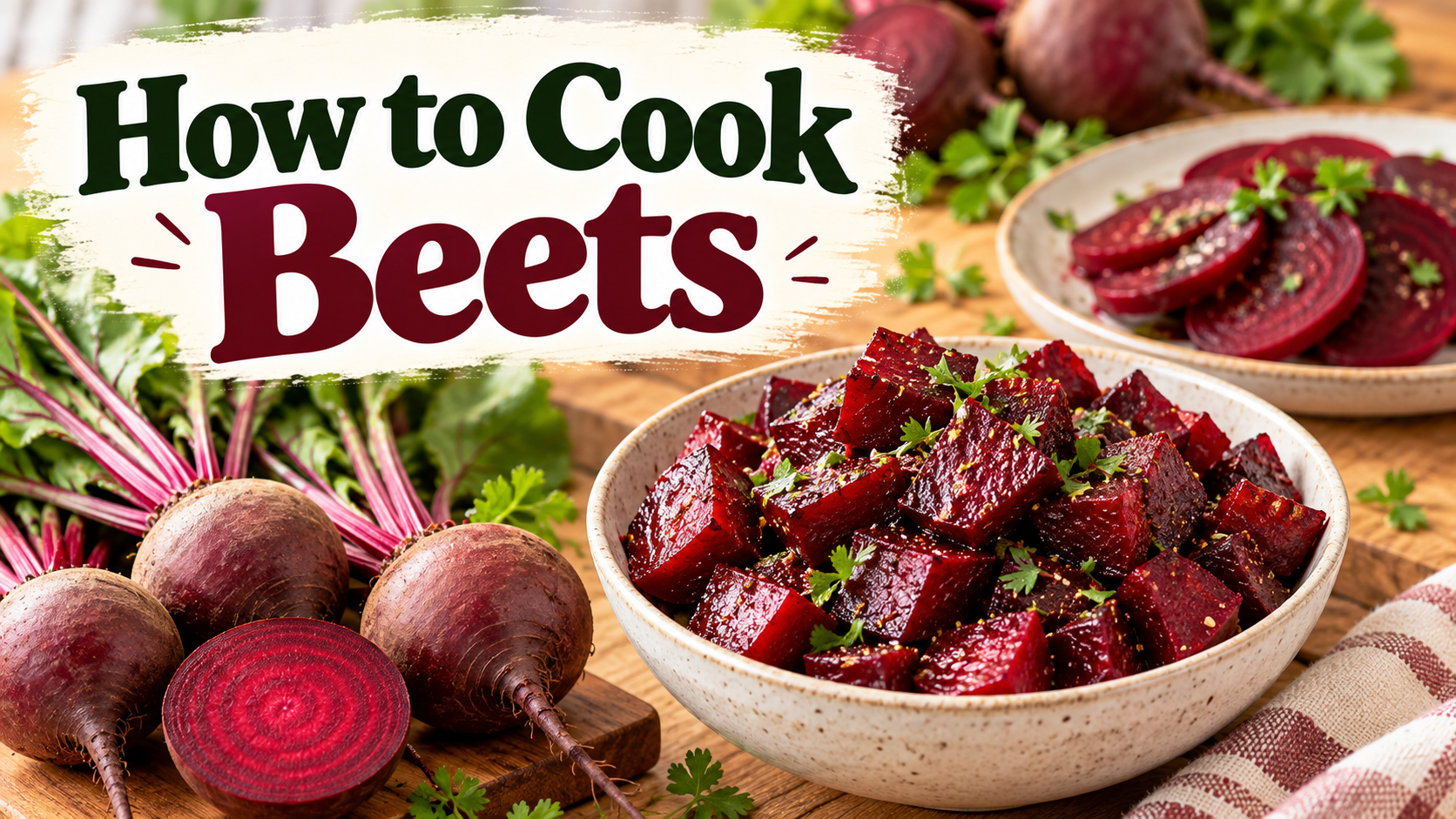
Beets are naturally sweet, earthy, colorful, and surprisingly versatile. You can roast them until tender and caramelized, boil them for a simple side dish, steam them to retain their delicate texture, or even cook them in an air fryer or pressure cooker.
The trick is knowing how to prepare beets, how long to cook them, and which cooking method works best for the dish you're making.
Whether you're cooking beets for a salad, side dish, soup, grain bowl, or simply want to enjoy them with a little butter or seasoning, this guide will show you exactly what to do.
By the end, you'll know how to cook beets from start to finish, including how to wash, trim, peel, season, and store them.
Beets, also called beetroot in many countries, are the edible roots of the beet plant.
The most common variety is the deep red or purple beet, although beets can also be found in golden and striped varieties.
They have a naturally sweet, earthy flavor that becomes even sweeter and more concentrated when roasted.
Beets can be eaten:
Roasted
Boiled
Steamed
Air-fried
Pressure-cooked
Pickled
Raw when thinly sliced or grated
Blended into smoothies
Added to salads and grain bowls
Used in soups such as borscht
One of the best things about beets is that you don't need complicated ingredients to make them taste good.
A little olive oil, salt, black pepper, lemon juice, or fresh herbs can be enough.
Before you start cooking, choose fresh beets whenever possible.
Look for beets that are:
Firm to the touch
Smooth-skinned
Heavy for their size
Free from major soft spots
Free from mold
Similar in size if you're cooking several together
If the beet still has its greens attached, look for greens that appear fresh rather than wilted.
Smaller beets generally cook more quickly and can be especially tender.
Large beets take longer to cook, but they're perfectly suitable for roasting, boiling, or pressure cooking.
If you're cooking multiple beets at once, try to choose ones of similar size so they finish cooking at roughly the same time.
Usually, no.
For most cooking methods, it's easier to leave the skin on while the beets cook.
Keeping the skin on can help the beet retain its juices and makes preparation easier.
Once the beet is cooked and cool enough to handle, the skin often slips or rubs off easily.
You can peel beets before cooking if:
You're cutting them into small cubes
You're making a recipe that requires peeled beets
You prefer to remove the skin first
You're steaming small pieces
For roasting whole beets, however, I recommend leaving the skin on.
Before cooking, give the beets a good rinse under cool running water.
Beets grow underground, so dirt can collect around the surface.
Scrub the outside gently with a vegetable brush or clean kitchen brush to remove dirt.
If the beet still has its leaves attached, cut them off, leaving about 1 inch of stem attached to the beet.
Don't throw the greens away!
Beet greens can be cooked separately like other leafy greens.
Avoid cutting off too much of the bottom before cooking.
Keeping the beet mostly intact helps minimize the amount of juice that escapes during cooking.
For roasting and boiling, you can cook small or medium beets whole.
For faster cooking, cut larger beets into evenly sized pieces.
There isn't just one correct way to cook beets.
The best method depends on the texture and flavor you're looking for.
| Method | Approx. Time | Best For |
|---|---|---|
| Boiling | 30–60 min | Simple tender beets |
| Roasting | 40–60 min | Sweet, caramelized flavor |
| Steaming | 30–45 min | Tender, delicate texture |
| Air frying | 30–45 min | Smaller pieces and crispy edges |
| Pressure cooking | 15–25 min | Fast whole beets |
| Microwave | 8–15 min | Quick small batches |
Cooking time varies depending on beet size and whether you cook them whole or cut them into pieces.
Boiling is one of the easiest ways to cook beets.
It works especially well when you want soft beets for salads, soups, side dishes, or meal prep.
Fresh beets
Water
Salt, optional
Wash the beets thoroughly.
Trim the leaves, leaving about 1 inch of stem.
Place the whole beets in a large pot.
Cover them completely with water.
Bring the water to a boil.
Reduce the heat and simmer.
Cook until a fork or thin knife slides easily into the center.
Remove the beets from the water.
Let them cool until they're comfortable to handle.
Rub or peel away the skin.
Small beets may take around 25–35 minutes.
Medium beets may take around 35–45 minutes.
Large beets can take 45–60 minutes or longer.
The best test is not the clock.
Test the center with a fork or knife. If it slides in easily, the beet is ready.
Roasting is one of my favorite ways to cook beets because it brings out their natural sweetness.
The dry heat helps concentrate their flavor and gives them a delicious tender texture.
Preheat your oven to 400°F (200°C).
Wash and scrub the beets.
Trim the leaves, leaving the skin intact.
Pat the beets dry.
Rub them lightly with olive oil.
Wrap each beet loosely in foil, if desired.
Place them on a baking sheet.
Roast until tender.
Carefully unwrap and let them cool.
Rub off the skins.
Slice or cube and season.
Depending on size, whole beets usually take approximately 40–60 minutes at 400°F (200°C).
Very large beets may require additional time.
If you can easily insert a knife into the center, they're done.
Instead of wrapping the beets individually, peel and cut them into cubes.
Toss them with olive oil, salt, and pepper, then spread them in a single layer on a baking sheet.
Roast until the edges are browned and the centers are tender.
Steaming is another excellent option when you want tender beets without submerging them in water.
Wash the beets.
Trim the greens.
Peel and cut large beets into similar-sized pieces, or steam them whole.
Add water to a pot.
Place a steamer basket above the water.
Add the beets.
Cover with a lid.
Steam until fork-tender.
Remove and let cool.
Peel if necessary.
Steaming generally takes around 30–45 minutes for whole or large pieces, depending on size.
An air fryer is a convenient option when you're cooking a smaller batch.
For the best results, cut the beets into similarly sized pieces.
Wash and peel the beets.
Cut them into cubes or wedges.
Toss with a small amount of olive oil.
Season with salt and pepper.
Place them in the air fryer basket.
Cook at around 375°F (190°C).
Shake or turn them halfway through cooking.
Continue cooking until tender and lightly browned.
Cooking time is usually around 20–30 minutes for small pieces, depending on their size and your air fryer.
A pressure cooker or Instant Pot can make quick work of whole beets.
Wash the beets.
Trim the greens.
Add about 1 cup of water to the pressure cooker.
Place a trivet or steamer basket inside.
Add the beets.
Cook under high pressure until tender.
Allow the pressure to release according to your cooker instructions.
Carefully remove the beets.
Cool and peel.
Whole medium beets may take approximately 15–25 minutes under pressure, with additional time needed for the cooker to come to pressure and release pressure.
Need cooked beets quickly?
The microwave can be one of the fastest methods for small beets or cut pieces.
Wash the beets.
Peel if desired.
Cut them into smaller pieces.
Place them in a microwave-safe dish.
Add a small amount of water.
Cover the dish with a microwave-safe lid or vented cover.
Microwave in short intervals.
Check with a fork.
Continue cooking until tender.
Small pieces can cook in roughly 8–15 minutes, depending on quantity and microwave power.
Don't rely only on cooking time.
The easiest way to check is with a fork or thin knife.
Insert it into the thickest part of the beet.
Your beet is done.
Continue cooking and check again every few minutes.
The center should be tender without being mushy.
This part is surprisingly easy.
Once your beets are cooked and cool enough to handle, gently rub the skin with your fingers or use a paper towel.
The skin should come away fairly easily.
For stubborn areas, use a small vegetable peeler or paring knife.
Wear gloves if you want to avoid staining your hands.
Beet juice can temporarily stain your skin, cutting board, towels, and clothing.
Beets are famous for their beautiful color—and their ability to stain almost everything.
Here are a few simple tricks:
Use a dark-colored cutting board.
Wear kitchen gloves when peeling.
Keep beets away from light-colored clothing.
Wash cutting boards soon after preparation.
Wipe up beet juice immediately.
Use parchment paper when roasting if you want easier cleanup.
And don't worry if your hands turn pink or red after handling beets. The color is usually temporary.
Beets don't need complicated seasoning.
Here are some easy combinations.
Salt
Black pepper
Olive oil
Lemon juice
Fresh parsley
Salt
Black pepper
Balsamic vinegar
Olive oil
A little honey
Salt
Roasted cumin
Black salt
Lemon juice
Fresh cilantro
You can also add cooked beets to yogurt, salads, grain bowls, or roasted vegetable dishes.
Once you have tender cooked beets ready, there are so many ways to use them.
Slice cooked beets and combine them with greens, nuts, cheese, and a simple dressing.
Blend cooked beets with chickpeas, tahini, lemon juice, garlic, and olive oil for a colorful variation of hummus.
Combine roasted beets with other vegetables, grains, and your favorite dressing.
Cooked beets can be blended into a smooth soup or used as a base for beet-based soups.
Cooked and cooled beets can be blended with fruits, yogurt, or other smoothie ingredients.
Sometimes the easiest option is the best.
Serve warm beets with olive oil, salt, pepper, and fresh herbs.
Here are a few things that make a big difference.
Beets should be tender, not falling apart.
Start checking them toward the lower end of the expected cooking time.
If one beet is much larger than the others, it will take longer to cook.
Roasting whole, unpeeled beets helps keep the preparation simple and makes peeling easier afterward.
Fresh beet greens can be washed and cooked separately.
Adding seasoning after cooking lets you adjust the flavor more easily.
Hot beets are difficult to handle.
Allow them to cool enough that you can safely rub away the skin.
No. You can cook beets with the skin on and peel them after they become tender. This is particularly convenient when boiling or roasting whole beets.
It depends on what you want. Roasting produces a sweeter, concentrated flavor, while boiling is simple and convenient. Steaming provides another gentle option.
Cooking time depends on size and method. Whole beets commonly take around 30–60 minutes when boiled or roasted, while smaller pieces cook much faster.
Yes. Beet skin is edible. However, many people prefer to remove it after cooking because it can have a slightly earthy texture.
Beets contain natural pigments that give them their intense red or purple color. These pigments can temporarily stain skin, cutting boards, and fabrics.
Yes. Fresh beet greens can be cooked and eaten. They can be sautéed, steamed, or added to other vegetable dishes.
Absolutely. You can roast, steam, air-fry, microwave, or pressure-cook them.
Roasting can produce a more concentrated and caramelized flavor because the beets aren't submerged in water.
Prep Time: 10 minutes
Cook Time: 40–60 minutes
Total Time: About 50–70 minutes
Servings: 4
4 medium fresh beets
1–2 tablespoons olive oil
½ teaspoon salt
¼ teaspoon black pepper
Fresh herbs, optional
Lemon juice, optional
Preheat your oven to 400°F (200°C).
Wash and scrub the beets thoroughly.
Trim the beet greens, leaving about 1 inch of stem.
Pat the beets dry.
Rub them lightly with olive oil.
Season with salt and black pepper.
Wrap the beets individually in foil or place them in a covered baking dish.
Roast for approximately 40–60 minutes, depending on size.
Check the thickest part with a fork or knife.
Once tender, remove from the oven.
Allow the beets to cool enough to handle.
Rub off the skins.
Slice or cube the beets.
Finish with lemon juice and fresh herbs if desired.
Serve warm or chilled.
Cooking time depends heavily on beet size.
Start checking smaller beets earlier.
If your beets are very large, they may need additional roasting time.
Wear gloves when peeling if you want to avoid staining your hands.
Store leftover cooked beets in an airtight container in the refrigerator.
For a stronger roasted flavor, cut the beets into wedges before roasting.
Ready to try these easy beet recipes? Get fresh beets and other Indian grocery essentials delivered to your doorstep with Vraj Fresh.
Learning how to cook beets doesn't have to be complicated.
If you're looking for the easiest method, boiling is simple and reliable. If you want deeper sweetness and a richer roasted flavor, roasting is an excellent choice. Steaming, air frying, microwaving, and pressure cooking are also useful depending on how much time you have.
The most important thing is to cook the beets until they're fork-tender.
Once they're cooked, you can slice them into salads, add them to bowls, blend them into dips, serve them as a side dish, or simply season them with olive oil, salt, pepper, and lemon.
With a few basic techniques, beets can become one of the easiest vegetables to prepare at home.


