


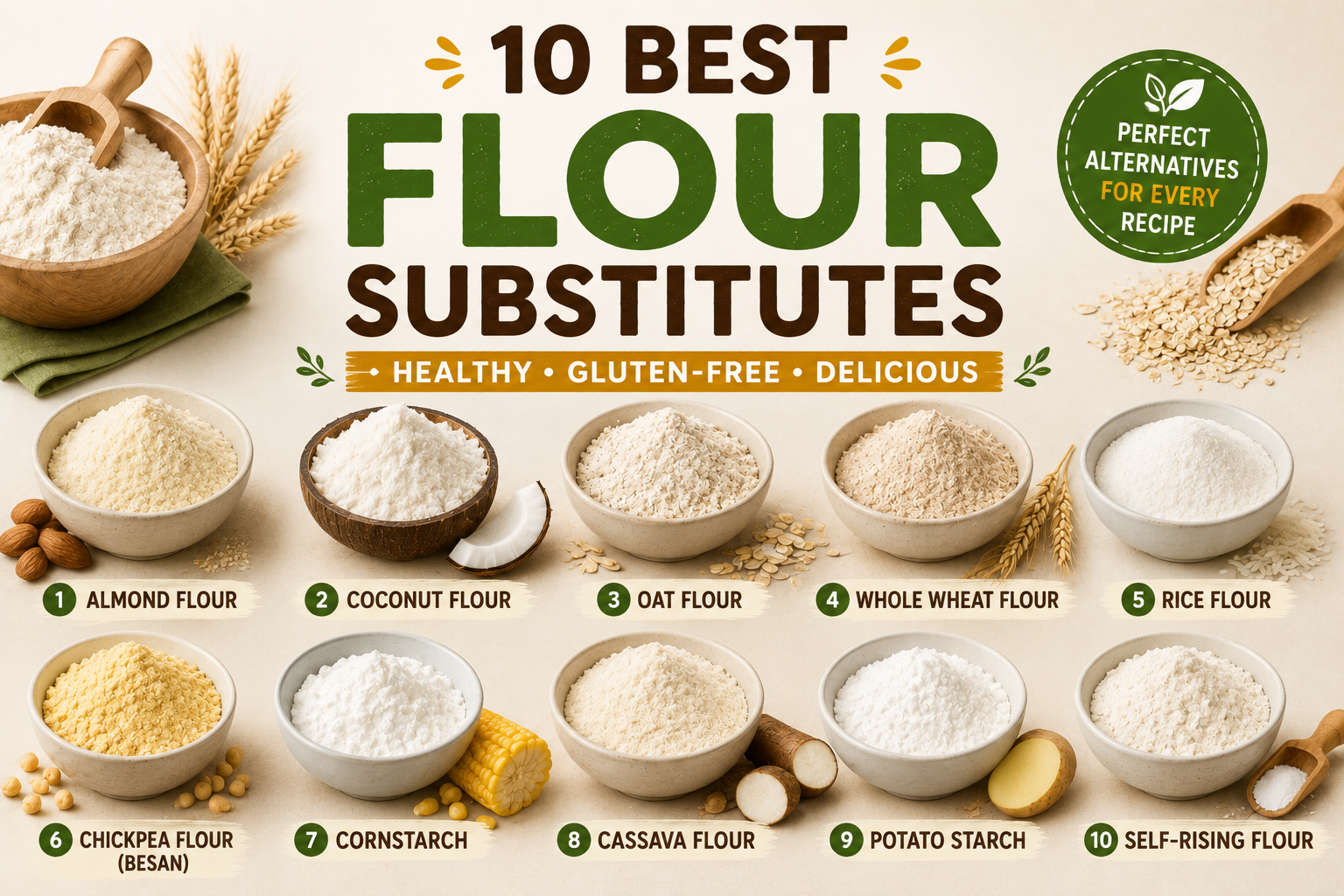
Flour is one of the most common ingredients in cooking and baking, but there are times when you may need a substitute. Whether you've run out of all-purpose flour, follow a gluten-free diet, want a healthier alternative, or simply want to experiment with different textures and flavors, there are plenty of excellent flour substitutes to choose from.
In this guide, we'll explore the 10 best flour substitutes, their uses, substitution ratios, and which recipes they work best in.
You may need a flour substitute for several reasons:
You've run out of all-purpose flour.
You're following a gluten-free diet.
You want a low-carb alternative.
You're baking for someone with wheat allergies.
You're looking to add more nutrients to your recipes.
Fortunately, many alternatives work well in both sweet and savory dishes.
Almond flour is made from finely ground blanched almonds and is naturally gluten-free. It's rich in protein, healthy fats, and vitamin E, making it a popular choice for low-carb and keto baking. It creates moist, tender baked goods with a slightly nutty flavor.
Best For
Substitution Ratio
Use 1:1, but you may need an extra egg for structure.
Coconut flour is produced from dried, ground coconut meat and is highly absorbent. It contains plenty of fiber and adds a mild coconut flavor to recipes. Because it absorbs more liquid than other flours, only a small amount is needed for successful baking.
Best For
Substitution Ratio
Replace 1 cup of flour with about ¼ cup coconut flour, and increase the liquid ingredients.
Oat flour is made by grinding whole oats into a fine powder. It has a naturally sweet flavor and soft texture, making it an excellent option for healthier baking. It's also a great source of fiber and nutrients that support a balanced diet.
Best For
Substitution Ratio
Use 1¼ cups oat flour for every 1 cup of all-purpose flour.
Whole wheat flour is made from the entire wheat kernel, including the bran and germ. It contains more fiber, vitamins, and minerals than refined flour while adding a slightly nutty flavor. It's a nutritious choice for everyday baking and homemade bread.
Best For
Substitution Ratio
Use 1:1, though baked goods may be slightly denser.
Rice flour is a finely milled flour made from white or brown rice. It's naturally gluten-free and provides a light, crisp texture in baked goods and fried foods. It also works well as a thickening agent for soups, sauces, and gravies.
Best For
Substitution Ratio
Use 1:1.
Chickpea flour, also known as besan, is made from ground chickpeas and is widely used in Indian cuisine. It's packed with protein and fiber, making it both nutritious and filling. Its earthy flavor makes it perfect for savory recipes and traditional snacks.
Best For
Substitution Ratio
Use 1:1 in savory recipes.
Cornstarch is extracted from the starchy part of corn and is commonly used to thicken soups, sauces, and gravies. While it isn't a complete flour replacement, it can improve the texture of baked goods when combined with other flours. It also creates a light, crispy coating for fried foods.
Best For
Substitution Ratio
Use according to the recipe, typically in small amounts.
Cassava flour is made from the whole cassava root and has a mild flavor that's similar to wheat flour. It's naturally gluten-free and works well in a variety of baking recipes without significantly altering the taste. Many people prefer it because it closely mimics the texture of all-purpose flour.
Best For
Substitution Ratio
Use 1:1.
Potato starch is extracted from potatoes and is valued for its ability to improve texture and moisture in baked goods. It's frequently used in gluten-free flour blends and helps create light, fluffy results. It also works well as a thickening agent in soups and sauces.
Best For
Substitution Ratio
Use as directed in gluten-free recipes.
Self-rising flour is a convenient blend of all-purpose flour, baking powder, and salt. It's commonly used in recipes that require a quick rise, making it ideal for biscuits, muffins, pancakes, and other baked goods. It saves time by eliminating the need to add separate leavening agents.
Best For
Substitution Ratio
Use 1:1, but omit the baking powder and salt from the recipe.
Read More: Ghee Substitutes
| Flour Substitute | Gluten-Free | Best For | 1:1 Replacement |
|---|---|---|---|
| Almond Flour | ? | Baking | Yes* |
| Coconut Flour | ? | Cakes | No |
| Oat Flour | Optional | Pancakes | No |
| Whole Wheat Flour | ? | Bread | Yes |
| Rice Flour | ? | Baking | Yes |
| Chickpea Flour | ? | Savory Recipes | Yes |
| Cornstarch | ? | Thickening | No |
| Cassava Flour | ? | Baking | Yes |
| Potato Starch | ? | Gluten-Free Baking | No |
| Self-Rising Flour | ? | Cakes & Muffins | Yes |
Low-carb baking
High protein
Gluten-free recipes
Soft baked goods
Mild flavor
Homemade flour alternative
Indian recipes
Protein-rich meals
Savory cooking
A gluten-free option that closely resembles wheat flour
Bread and pizza dough
Everyday baking
Measure accurately, as some flours absorb more liquid than others.
Combine different gluten-free flours for better texture.
Add binding ingredients like eggs or xanthan gum when needed.
Test small batches before making large recipes.
Many flour substitutes offer additional nutritional benefits.
Almond flour is rich in healthy fats and vitamin E.
Oat flour provides fiber that supports heart health.
Chickpea flour is high in protein and iron.
Coconut flour is rich in dietary fiber.
Whole wheat flour contains more vitamins and minerals than refined flour.
Whether you're making rotis, cakes, breads, or gluten-free recipes, Vraj Fresh offers a wide range of high-quality flours, grains, spices, and pantry essentials to help you cook with confidence.
???? Shop Premium Flours and Indian Groceries at Vraj Fresh Today
Choosing the right flour substitute depends on your recipe, dietary needs, and desired texture. Almond flour, oat flour, cassava flour, chickpea flour, and whole wheat flour are among the best alternatives, each offering unique benefits. By understanding how each substitute performs, you can confidently adapt your favorite recipes without compromising on taste or quality.
Cassava flour and whole wheat flour are among the closest substitutes. Almond flour is an excellent gluten-free option for baking.
Yes, but almond flour produces a denser texture and may require additional eggs or binders.
Almond flour, coconut flour, rice flour, chickpea flour, cassava flour, potato starch, and cornstarch are all gluten-free.
Yes. Oat flour works well for pancakes, muffins, cookies, and quick breads, though you may need to adjust the quantity and liquid.
There isn't one healthiest option for every situation. Almond flour is high in protein and healthy fats, oat flour is rich in fiber, and whole wheat flour provides more nutrients than refined flour.
Almond flour, oat flour, cassava flour, and self-rising flour are among the best substitutes, depending on the recipe and desired texture.


