


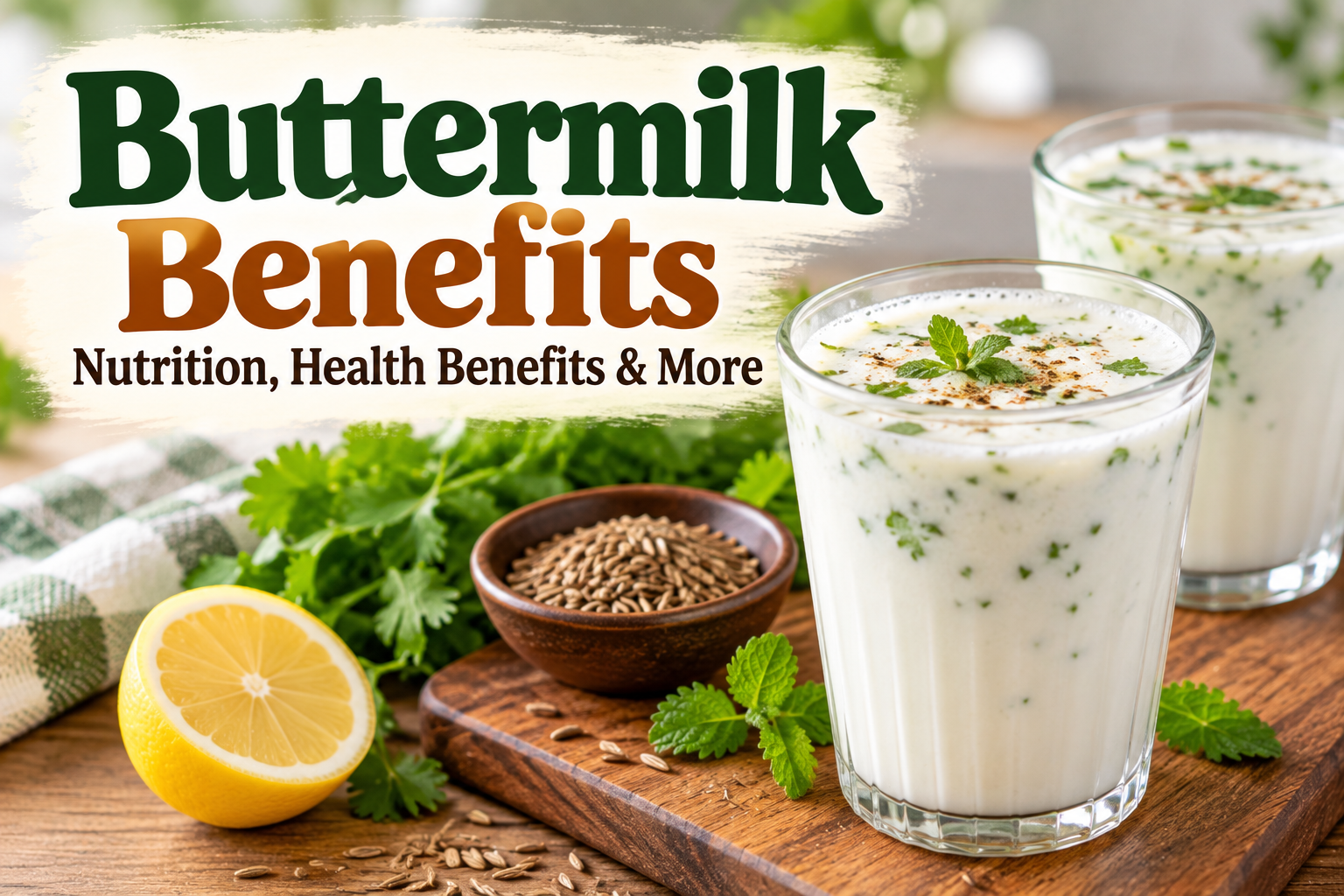
Buttermilk is a refreshing, tangy dairy drink that has been enjoyed in Indian households for generations. Known as chaas, mattha, or buttermilk, it is especially popular during warm weather and is often served with lunch or dinner.
But what are the actual buttermilk benefits? Is buttermilk good for digestion? Does it contain protein and calcium? Is it good for weight management? And how does traditional Indian chaas compare with the cultured buttermilk commonly sold in the USA?
This guide covers the benefits of buttermilk, its nutrition, calories, digestion, hydration, protein, calcium, possible drawbacks, and how to include it in your diet.
Buttermilk is a fermented or cultured dairy drink with a naturally tangy flavor.
There are two products commonly referred to as buttermilk:
Traditional buttermilk: The liquid left after churning cream or yogurt-based preparations, commonly consumed as chaas in India and South Asia.
Cultured buttermilk: A dairy product made by adding lactic-acid-producing cultures to milk. This is the type commonly sold in U.S. supermarkets.
The two aren't exactly the same, so their nutritional profiles and live-culture content can differ.
Traditional Indian chaas is usually much thinner than American cultured buttermilk and is often diluted with water and seasoned with ingredients such as cumin, ginger, cilantro, or salt.
Buttermilk provides several nutrients, including protein, calcium, riboflavin, vitamin B12, phosphorus, and other micronutrients.
For reference, one cup of cultured buttermilk, approximately 245 ml, provides around:
| Nutrient | Approximate Amount |
|---|---|
| Calories | 98 |
| Protein | 8 g |
| Carbohydrates | 12 g |
| Fat | 3 g |
| Calcium | 22% DV |
| Riboflavin | 29% DV |
| Vitamin B12 | 22% DV |
| Sodium | 16% DV |
Actual nutrition varies by brand, fat level, added salt, and whether the product is traditional or cultured.
One of the most commonly associated buttermilk benefits is its potential to be easier to digest than some other dairy products.
Cultured buttermilk contains lactic acid produced during fermentation. Fermentation can change the lactose and protein structure of dairy, which may make cultured dairy easier for some people to tolerate.
However, buttermilk still contains lactose, so people with lactose intolerance may still experience bloating, gas, or digestive discomfort.
Buttermilk is a source of calcium, an important mineral for maintaining normal bones and teeth.
It also provides phosphorus, which works alongside calcium in maintaining bone structure.
Adding calcium-rich foods to a balanced diet can help contribute to overall bone health.
Buttermilk contains protein, with approximately 8 grams per cup for some cultured varieties.
Protein is needed for many functions in the body, including maintaining muscles, tissues, enzymes, and other cellular structures.
For a simple beverage, buttermilk can therefore contribute some protein to your daily diet.
Dairy products can provide vitamin B12, and buttermilk is one source.
Vitamin B12 is involved in red blood cell formation and normal nervous-system function.
If you regularly consume dairy, buttermilk can contribute to your overall vitamin B12 intake.
Buttermilk also contains riboflavin, also known as vitamin B2.
Riboflavin helps the body process nutrients and supports normal cellular function.
One cup of cultured buttermilk can provide a meaningful portion of the daily value for this vitamin.
Traditional Indian chaas contains a large amount of water and is commonly enjoyed as a refreshing beverage.
A lightly seasoned glass of chaas can be an easy way to add fluids to a meal, particularly during hot weather.
For a lower-sodium option, keep added salt moderate and use herbs and spices for flavor.
Plain buttermilk can be relatively low in calories compared with many sweetened beverages.
A cup of cultured buttermilk contains about 98 calories, although calories can vary between products.
Traditional chaas can be even lighter depending on how it is prepared and whether it is diluted with water.
For anyone trying to manage calorie intake, the biggest difference often comes from what is added to the drink.
Fermented dairy products can contain beneficial microorganisms, but not every product labeled buttermilk contains live probiotics.
This is particularly important when comparing traditional Indian buttermilk with cultured products available in the USA.
If you're specifically looking for live cultures, check the product label for information about active or live cultures.
Traditional salted or lightly spiced chaas can be an alternative to soda, sweetened juices, and other high-sugar beverages.
A simple version made with yogurt, water, herbs, and spices can provide a refreshing drink without needing added sugar.
Buttermilk isn't only a beverage.
It can also be used in:
Marinades
Dips
Salad dressings
Pancakes
Biscuits
Muffins
Cakes
Smooth savory drinks
Traditional Indian recipes
Its acidity and tangy flavor make it useful in both sweet and savory cooking.
Buttermilk can be a good choice for digestion for some people, particularly fermented or cultured varieties.
The fermentation process produces lactic acid and changes the dairy's characteristics. Some people who have difficulty digesting regular milk may find cultured dairy easier to tolerate.
However, this does not mean buttermilk is suitable for everyone with digestive problems.
If you are lactose intolerant, you may still experience symptoms after drinking buttermilk. People with a milk allergy should avoid dairy products unless advised otherwise by a healthcare professional.
Buttermilk can fit into a weight-management diet because plain varieties can be relatively low in calories while providing protein and nutrients.
However, buttermilk itself does not cause weight loss.
Your overall calorie intake, food choices, physical activity, sleep, and other factors matter much more.
If you're choosing buttermilk while managing your calorie intake, consider:
Plain rather than sweetened varieties
Minimal added sugar
Moderate added salt
Homemade chaas with yogurt and water
Herbs and spices for flavor
Both provide important nutrients, but they have different textures, flavors, and uses.
| Feature | Buttermilk | Milk |
|---|---|---|
| Taste | Tangy | Mild |
| Texture | Thicker or diluted, depending on type | Creamy/liquid |
| Fermented | Often | Usually no |
| Protein | Provides protein | Provides protein |
| Calcium | Good source | Good source |
| Common use | Drinks, baking, kadhi | Drinking, cooking |
| Flavor | Sour/tangy | Mild |
The best choice depends on what you enjoy and how you plan to use it.
In Indian households, the terms buttermilk and chaas are often used interchangeably.
However, preparation can vary.
Traditional chaas is commonly made by mixing yogurt or curd with water and seasoning it with ingredients such as:
Roasted cumin
Salt
Ginger
Cilantro
Green chili
Mint
American cultured buttermilk is generally thicker and is commonly used for baking.
So while both are tangy dairy drinks, they aren't necessarily identical products.
Buttermilk and chaas are popular summer beverages because they are refreshing and contain plenty of fluid.
A chilled glass of lightly seasoned chaas can be a simple addition to lunch or dinner.
For everyday drinking, avoid making it excessively salty, especially if you are trying to limit sodium.
Making basic chaas at home is easy.
½ cup plain yogurt or curd
1 to 1½ cups cold water
¼ teaspoon roasted cumin powder
A small amount of salt
Fresh cilantro or mint
Add yogurt to a bowl or blender.
Whisk until smooth.
Add cold water and mix well.
Add roasted cumin powder and a small amount of salt.
Add chopped cilantro or mint.
Serve chilled.
You can adjust the water according to how thick or thin you like your chaas.
There isn't one universally required time to drink buttermilk.
Many people enjoy it:
With lunch
With dinner
After a spicy meal
During hot weather
As a refreshing afternoon drink
Your overall diet matters more than choosing a specific time of day.
For most people who tolerate dairy, plain buttermilk can be included as part of a balanced diet.
However, daily intake should still fit your overall nutritional needs.
Pay attention to the product's:
Calories
Sodium
Added sugar
Fat
Serving size
If dairy causes you digestive symptoms, consider speaking with a healthcare professional about whether buttermilk is suitable for you.
Buttermilk isn't suitable for everyone.
People with a milk allergy should avoid buttermilk because it contains milk proteins.
Buttermilk still contains lactose. Some people may tolerate fermented dairy better than regular milk, but others may still develop symptoms.
Some commercial buttermilk products can contain significant amounts of sodium.
Always check the nutrition label if you need to limit sodium.
There is no single recommended amount of buttermilk that applies to everyone.
A typical glass can be around 200–250 ml, but your appropriate serving depends on your overall diet, calorie needs, dairy tolerance, and the specific product.
For homemade chaas, you can adjust the yogurt-to-water ratio based on your preference.
If plain buttermilk feels too bland, try adding:
Roasted cumin
Mint
Cilantro
Ginger
Black pepper
A small amount of salt
Green chili
Curry leaves
For a simple Indian-style chaas, roasted cumin, cilantro, and mint make a flavorful combination.
| Benefit | What Buttermilk Provides |
|---|---|
| Digestion | Fermentation may make it easier for some people to tolerate |
| Bone health | Calcium and phosphorus |
| Protein | About 8 g per cup in some cultured varieties |
| Vitamin B12 | Contributes to daily B12 intake |
| Riboflavin | Good source in cultured varieties |
| Hydration | Water-rich beverage, especially as chaas |
| Calories | Plain varieties can be relatively low in calories |
| Versatility | Useful in drinks, cooking, baking, and marinades |
Vraj Fresh makes it easy to shop for Indian dairy and grocery essentials in the USA. Pick up your favorite ready-to-enjoy options and enjoy a cool, refreshing drink with your next meal.
Buttermilk is a simple, refreshing dairy drink that can provide protein, calcium, vitamin B12, riboflavin, and other nutrients. Traditional chaas can also be an easy way to enjoy a flavorful, low-calorie beverage with meals.
From supporting your overall nutrient intake to adding variety to everyday meals, there are plenty of reasons to keep buttermilk or chaas in your refrigerator.
Just remember that buttermilk isn't a miracle health drink. Choose plain or lightly seasoned varieties, watch added salt and sugar, and consider your own tolerance to dairy.
Buttermilk can be a nutritious dairy option. It provides protein, calcium, riboflavin, vitamin B12, and other nutrients. However, its suitability depends on the specific product and your individual dietary needs.
The main potential benefits of buttermilk include providing protein, calcium, vitamin B12, riboflavin, and phosphorus. Fermented varieties may also be easier for some people to digest than regular milk.
Buttermilk may be easier for some people to digest because fermentation changes lactose and other components of dairy. However, it still contains lactose and may cause symptoms in people who are lactose intolerant.
Plain buttermilk can fit into a weight-management diet because it can be relatively low in calories and provides protein. However, drinking buttermilk alone does not cause weight loss.
Yes, traditional chaas is a popular refreshing summer drink. It provides fluids and can be seasoned with cumin, mint, cilantro, and other spices.
It depends on the type. Some fermented dairy products contain live microorganisms, but not every commercial buttermilk product provides live probiotics. Check the product label if live cultures are important to you.
Neither is universally better. Buttermilk is fermented and has a tangy flavor, while milk is not usually fermented and has a milder taste. Both can provide nutrients such as protein and calcium.
People who tolerate dairy can generally include plain buttermilk as part of a balanced diet. Check the product's sodium, calories, sugar, and serving size, especially if you drink it regularly.
Buttermilk provides protein. Some cultured varieties contain approximately 8 grams of protein per cup, although the amount varies by product.
Buttermilk provides calcium and phosphorus, nutrients that contribute to maintaining normal bone health. It can be one of several calcium-rich foods included in a balanced diet.


